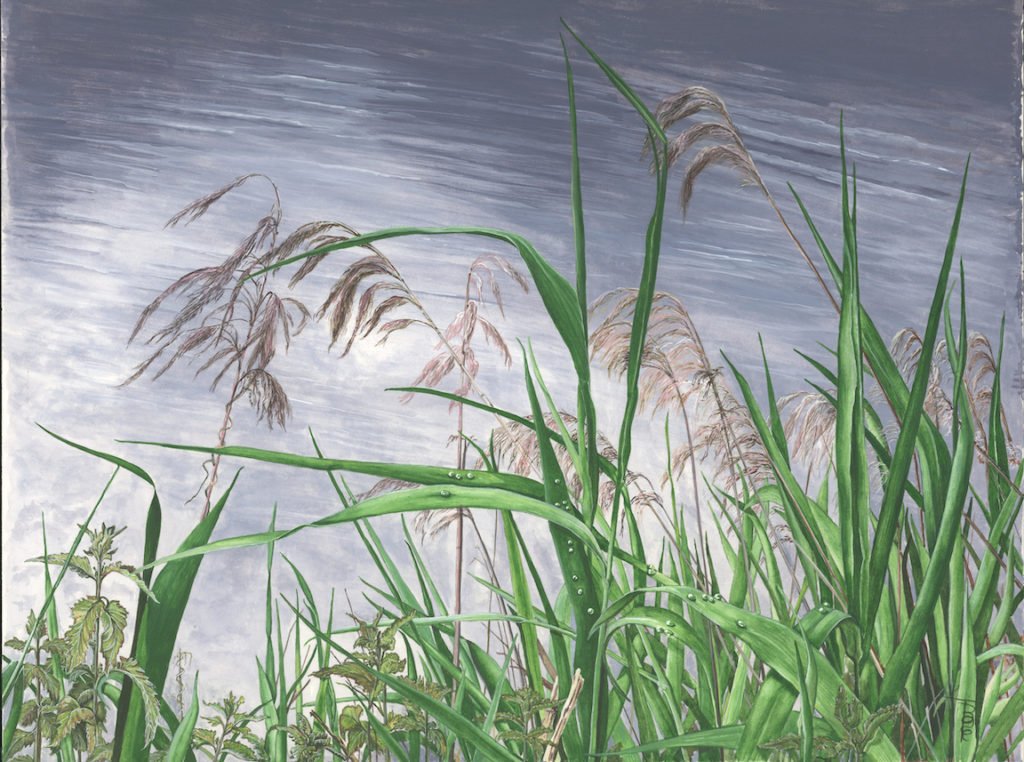
The fifth little book all about the Reed water plant (Phragmites australis), to be published by River Friend, is due out soon. Here is a taster, and please watch out for it on Amazon and other famous bookshops.
RIVER FRIEND: A series of Riverine Small Books by Tina Bone and Sylvia M. Haslam. Book 5. REED—On The Edge
What are reeds (Phragmites) like? To begin with, it is one of the very few plants to be native (not introduced) in all five continents of the world. Imagine working all day with a marvellous sky above and below surrounded by reeds, just a wind-blown rustle and calling birds—an experience not to be forgotten. What are the uses of reeds and reedbeds? Whole human populations can live in and, in extreme cases, nearly entirely upon the reedbed. Hermits, and to some extent monks and nuns, ventured into reed wetlands so that their prayers would purify and sanctify the haunt of demons (St Guthlac, Beowulf). In Europe, the struggle for community existence in the hazy band “twixt land and water”, is usually won by Phragmites. In the Americas, Australasia, Africa and much of Asia, it is usually won by other reedswamp species. Is it just a grass; is it war-like? Yes. A silent battlefield where a plant is NOT “nice” to its neighbour in seeing that “next door” has space to grow, enough light to grow well, enough nutrients and, of course, enough water, just doesn’t happen. For the reed it is an intense and continuing, but silent, battle for survival. There is no peace in the reedbed for Phragmites—just the giant struggle for existence….
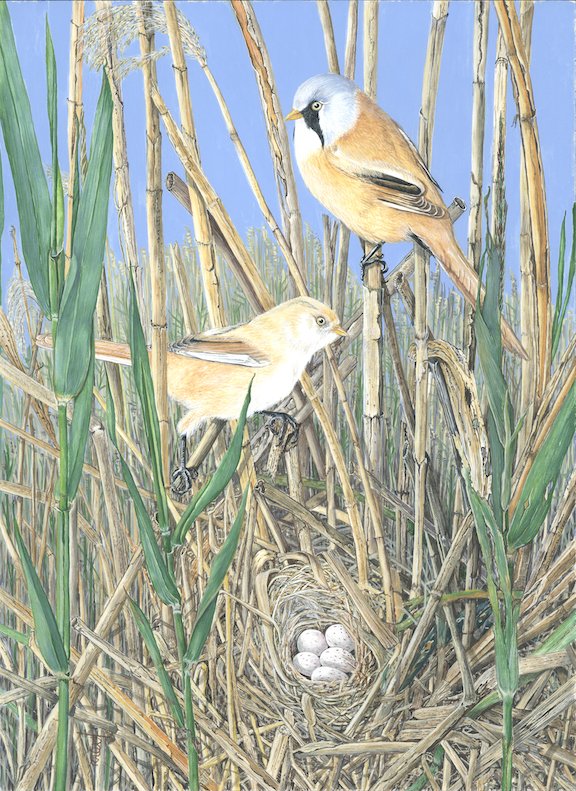
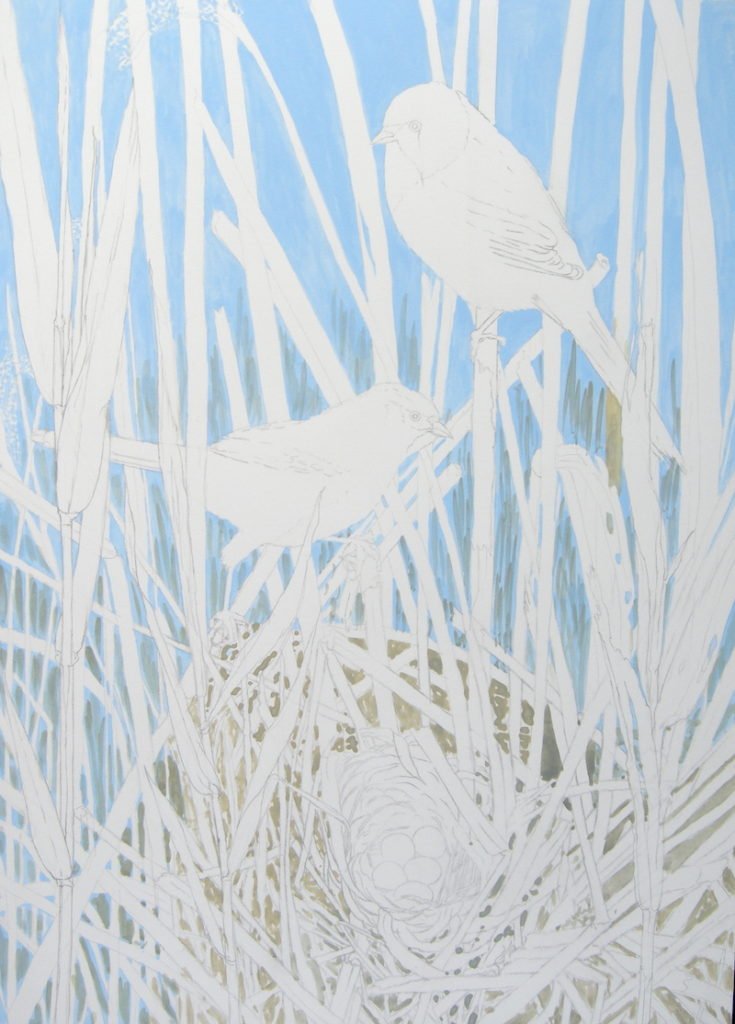
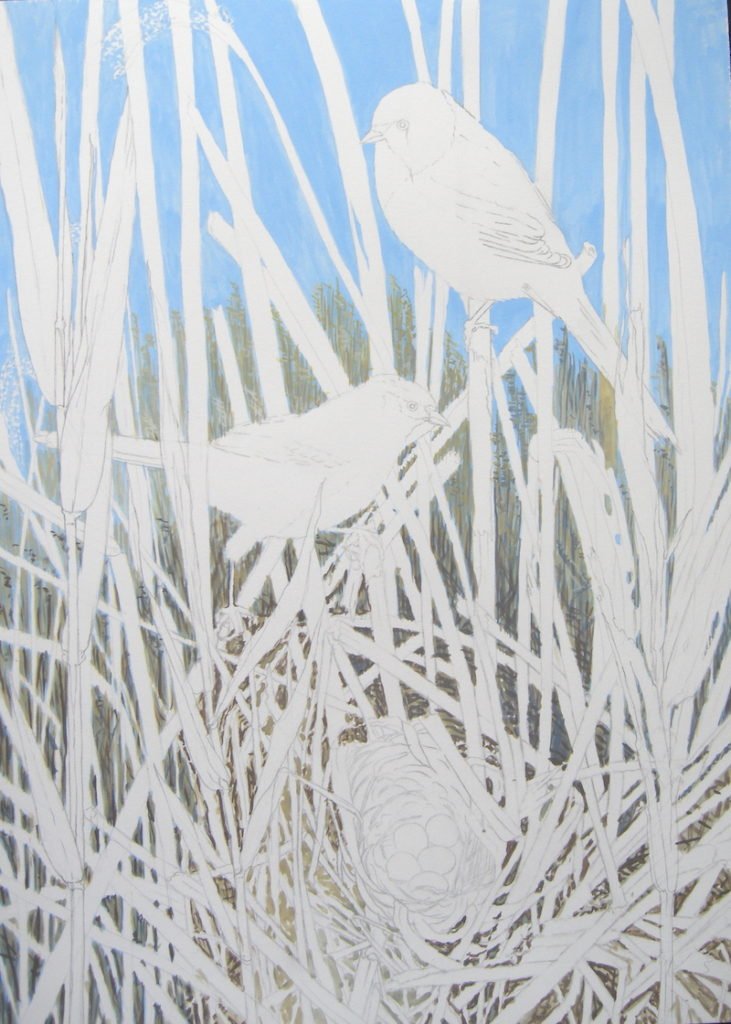
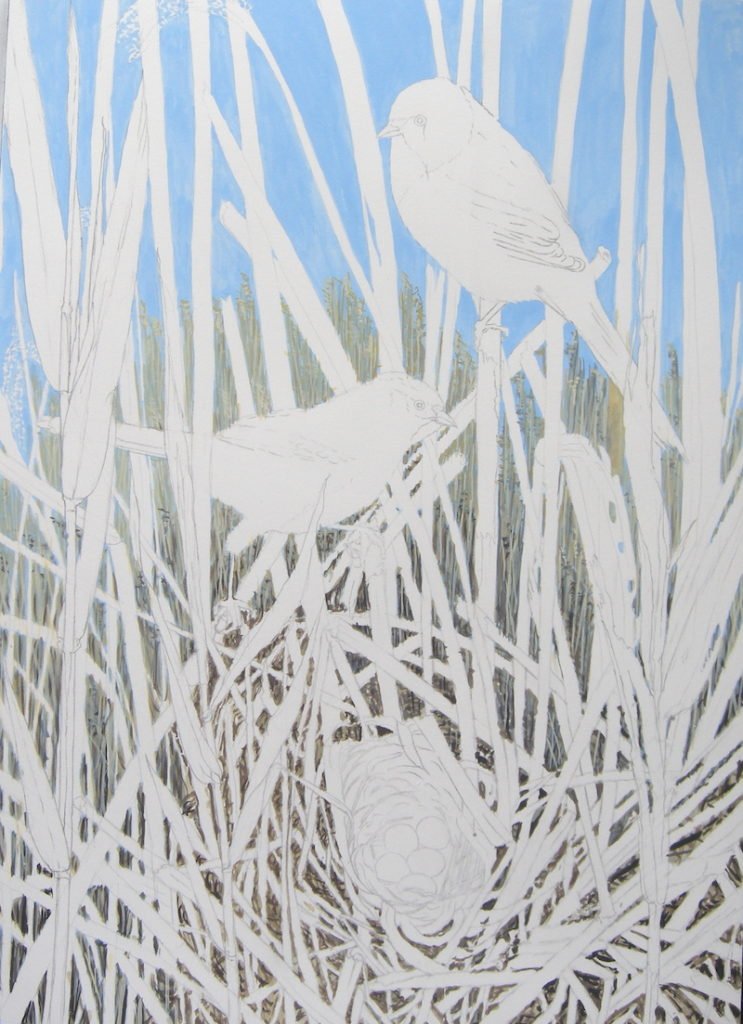
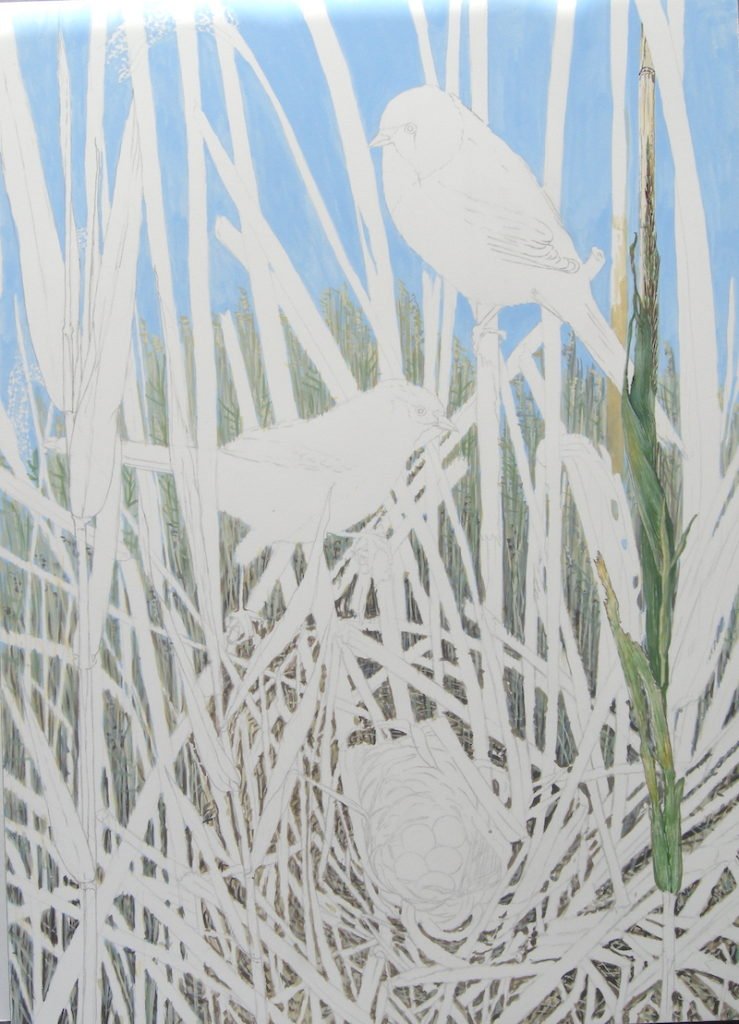
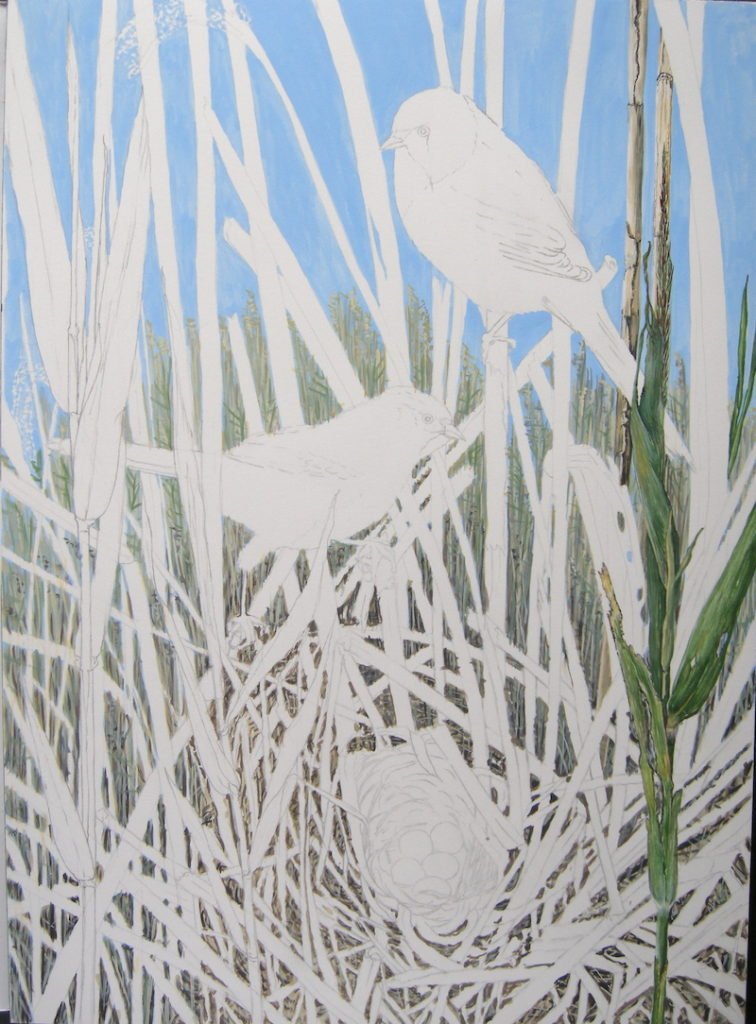
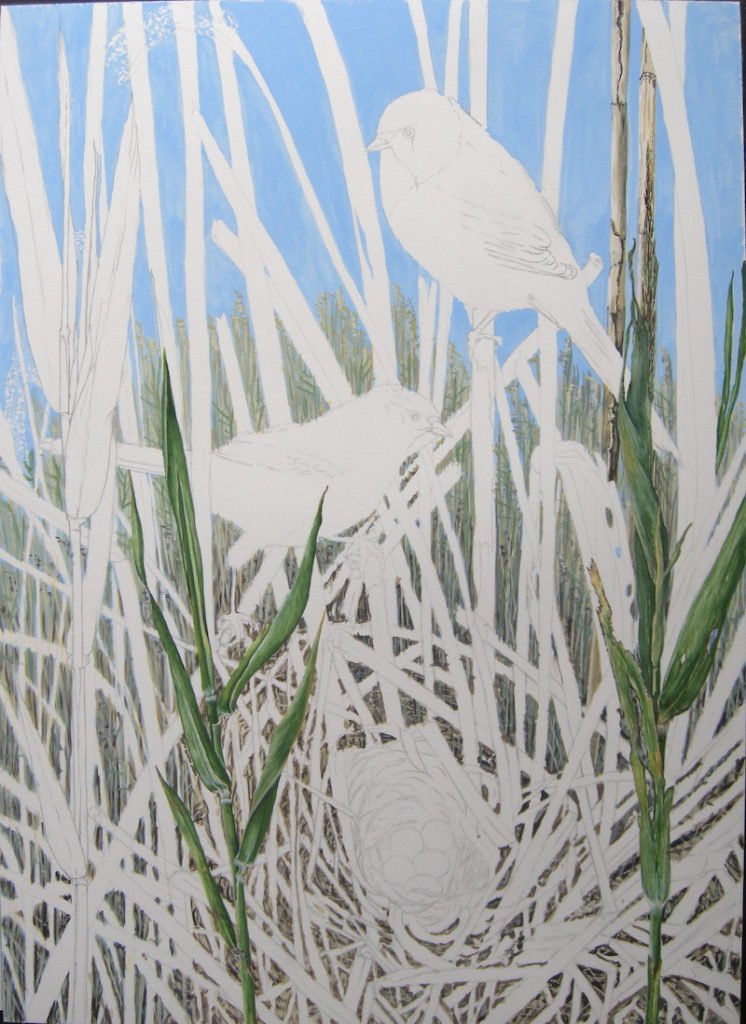
Fig. 1. Apart from its invaluable resource for humans, many animals and birds live and breed in the reedbed. For example, Reed Warblers and Bearded Tits (or Bearded Reedlings). Bearded Reedlings eat mainly reed seeds in winter and soft-bodied insects which gather poolside during the summer. Their nests are built with reed leaves and old fluffy seed heads. The figure shows a male bird with black moustache, and a more plain female, and eggs in a nest in the swaying reed stems.
CONTENTS Introduction Boring? Belligerent? Brilliant? Uses Different wetland species and how they interact Introduction Reedswamp into open water (historically common) Seasonal patterns Root toxins and short grass The Scramblers Management of reedbeds for some (human) use Ways to Dominate Plant factors Outside factors acting in mixed stands Reedswamp to Trees Conclusion References List of Stand-alone Titles in the River Friend Series About the Authors
This little painting for Book 5 in the River Friend Series (REED: ON THE EDGE) is going along quite nicely. Lots of fiddly bits, which you come to expect with my work, but great fun. It is just so annoying that I take so long to paint something!
Just started the illustrations for the next River Friend book: “REED: ON THE EDGE”, number five in the series. There are lots of nice things to say about reeds, both from a commercial and a leisure point of view. If you think a reed is dull, then this little book will enlighten you and broaden your mind. Not sure how long it will take to do all the drawings and paintings, but it should be out in the next couple of months. I will post when it is available.
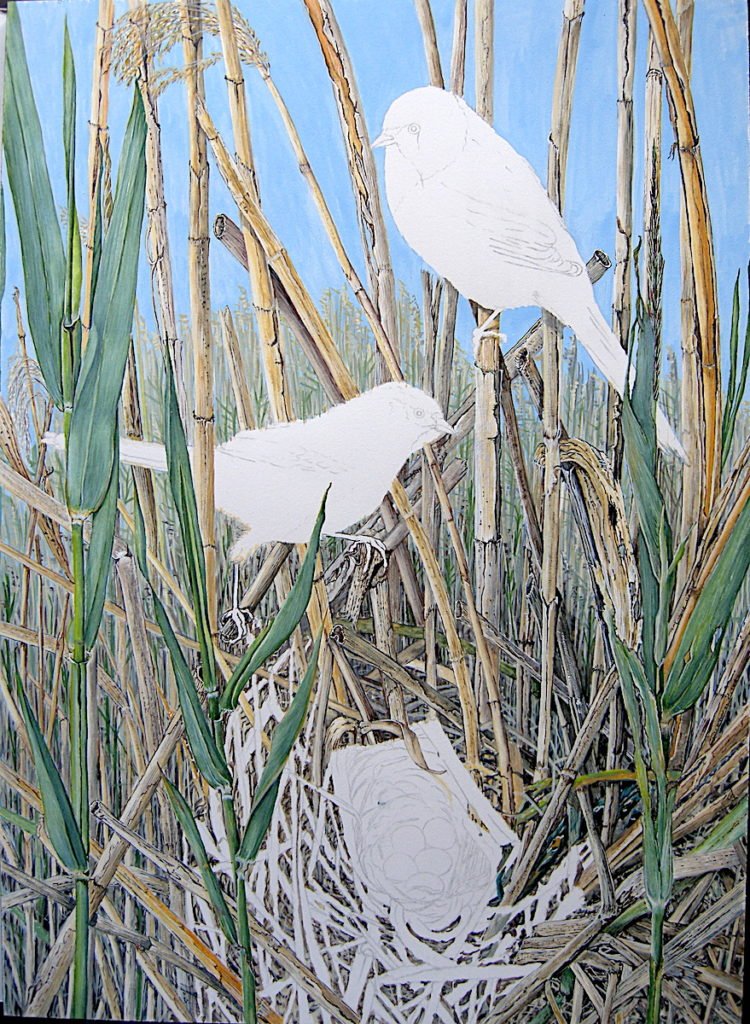
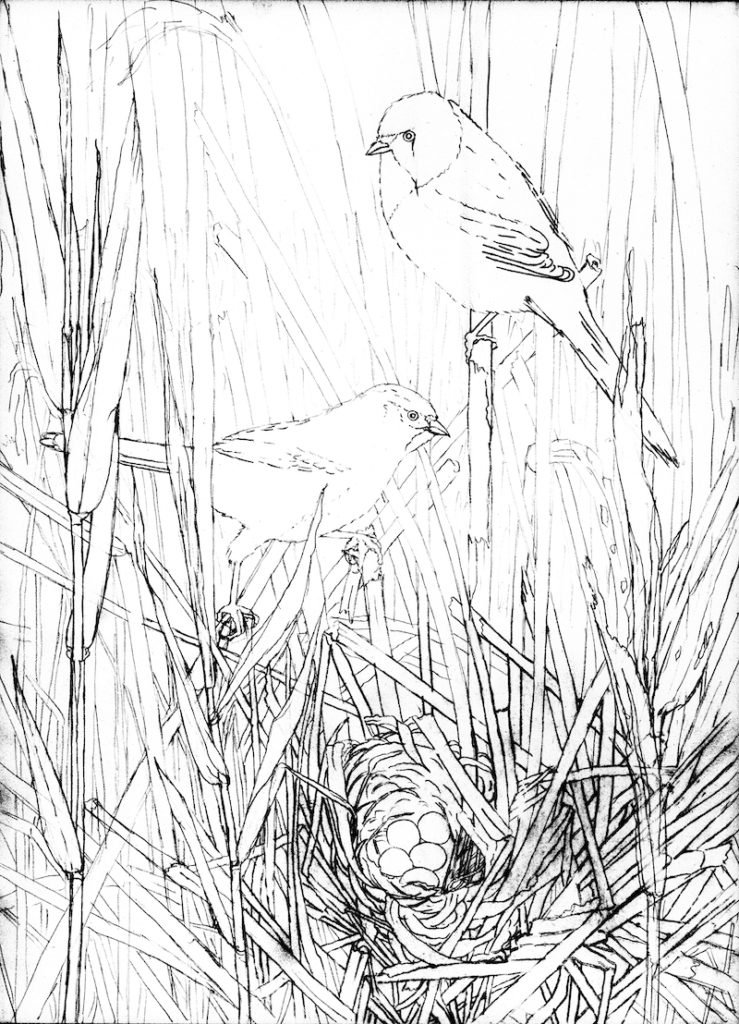
Here are a few progress pictures of Figure 1: The Almighty Reed and Reedlings (Artist Code 2012) in the book. Note the first picture (pencil sketch on Aquarelle Arches 140lb water colour paper 14″ x 10″) is enhanced otherwise you would be unable to see it! So apologies for the uneven/thick lines.
Reedlings (Bearded Tits) live and breed amongst the reeds, usually near the edge of a reed stand. Lovely little birds with a characteristic “Ping, ping” call.The text in the book mentions blue sky, so the background is nice and blue.Getting the right tonal values and paint strokes for the background reed structure made me think rather.…So, layer upon layer of subtle browns and creams to get the desired effectWent out and cut some reeds nearby for accurate portrayal (along Bourn Brook which will be another book in the series: Stream Story 2—eventually!)Have to paint the green reeds first because, even though they have been in water since plucked, they are drying out and shrivelling up (what a nuisance!).Two green stems done, just one more on the left, then I can get to the old reeds, birds and nest, which is usually made from old reed stems and leaves as well as being lined with the feathery-soft seed heads of last year’s reeds. The eggs are creamy white with a pinkish hue and little brown marks—I purchased an old birds’ eggs book, from a secondhand book shop, which has proved to be a valuable resource.
This little painting, which received a Highly Commended award in the latest Patchings Festival (online) exhibition (The Artist, and Leisure Painter) has now gone to its new home. The buyers visited the studio and we had tea and cakes on the patio (all socially distanced of course!). A lovely farewell to a little water colour painting which, on and off, took four years to complete. PICTURE PROFILE
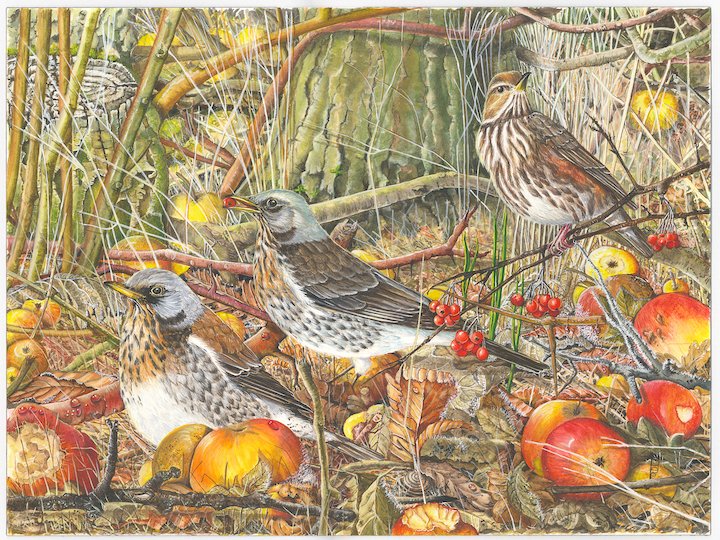
Artist Code: 1604. Completed 9th March 2020. “Three New Blades” (Fieldfares and Redwing) SOLD April 2020 to private buyer. Water colour on Aquarelle Arches 100% hot pressed cotton rag. Unframed size 12″ x 9″.
I have just completed typesetting (I hope for the last time before publishing) the fourth book in the River Friend Series I am co-authoring with Sylvia Haslam.
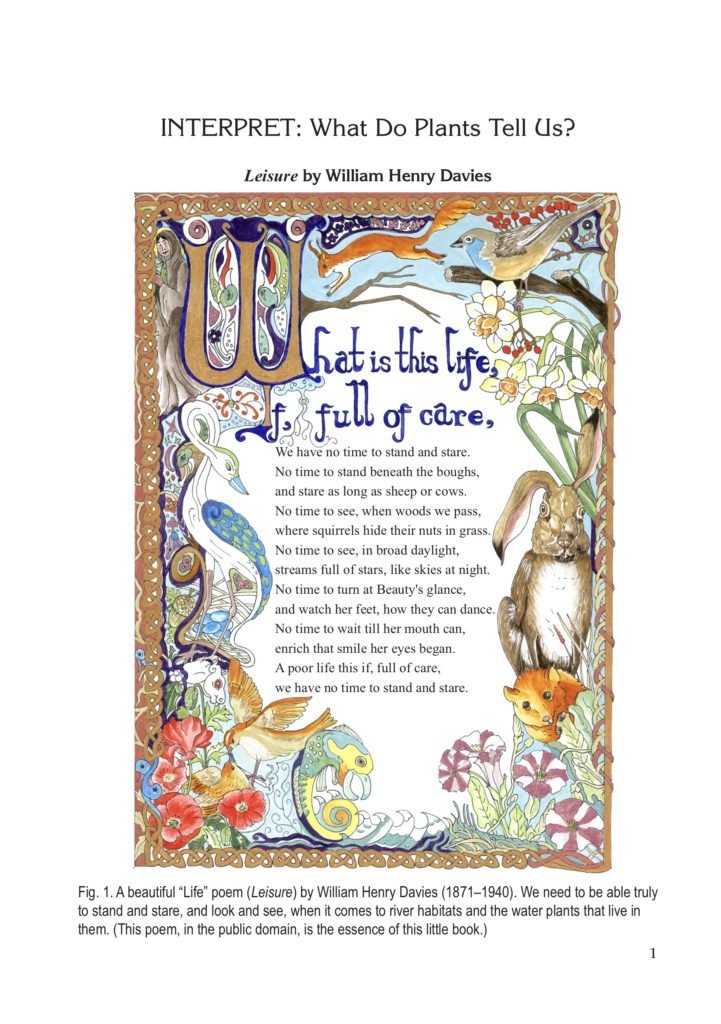
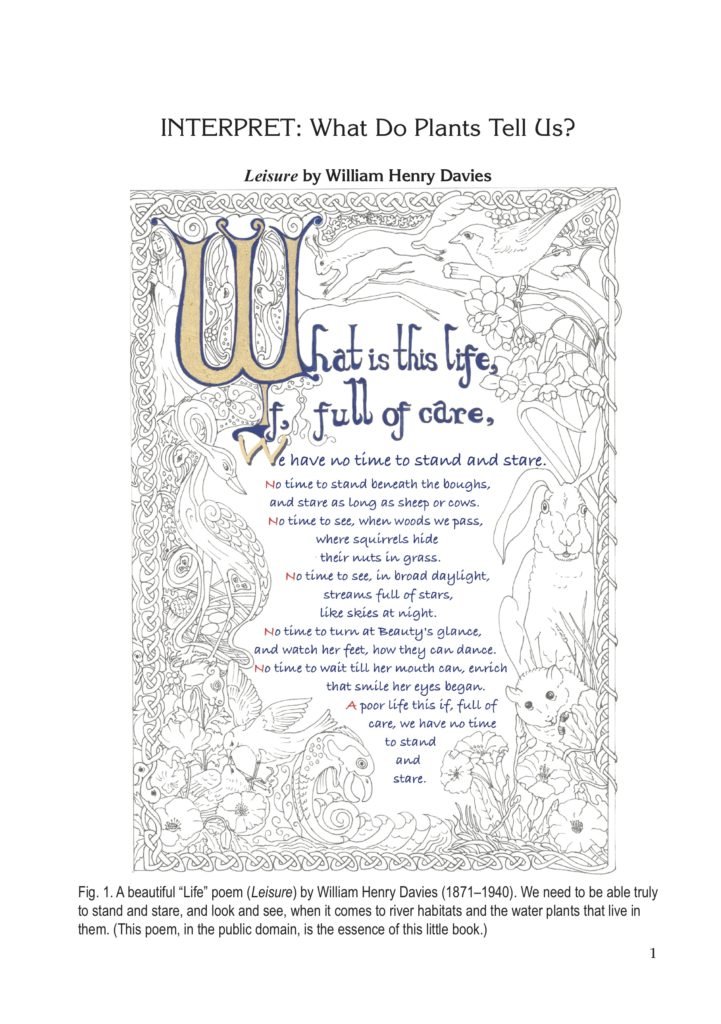
The first page in this book shows the famous poem by William Henry Davies (1871-1940) “Leisure” surrounded by an illuminary border which I composed and outlined with pen and ink. This version is currently in the final typeset.
However, last week I purchased some new paints. Daniel Smith Iridescent water colours and over the weekend I decided to try them out by colouring up the original ink drawing illumination. The colours are: Electric Blue, Ruby, Copper, Topaz, White, Aussie Red Gold, Aztec Gold, as well as Imperial Purple (which is not iridescent but a gorgeous vivid purple – quite royal!).
The paints were beautiful to use and I mixed them with ordinary water colour to see what other effects I could achieve. The results are a lovely luminescent painting; a screen view here does not do them justice. I can’t wait to try them out on botanical work (I recently purchased some strong all-black water colour paper), and a Golden pheasant painting I am currently working on will probably receive a bit of iridescent treatment!
Which would you prefer to see as the starter page in the fourth book: “INTERPRET: What Do Plants Tell Us?”. Other titles in the series are listed on our River Friend website.
National Women’s’ Register 60th Anniversary Wednesday, 26th February 2020, 2.30–4.30pm The Athenæum, Bury St Edmunds
Water Colour Workshop by Tina Bone (Tina’s Fine Art UK)
“Ernie…and we had the fastest Art-Class in the West”. Well, East actually! A Fellow Iceni Botanical Artist, who had volunteered to run an Art Class at the National Womens Register 60th Anniversary celebrations, found she had double-booked herself and asked if someone could help out. I jumped at the chance to perform my second tutorship. I said “Yes” before really finding out about it and was a bit shocked when told the class would be for two hours only.
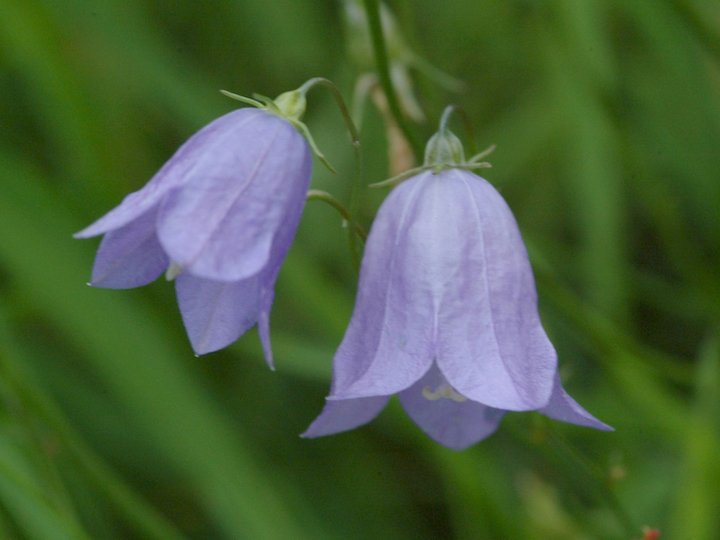
The lovely little Harebell (Campanula rotundifolia L.) The subject of the Workshop
The theme of the workshop had already been fairly settled (Breckland Flowers), so I capitalised on that title and came up with: “Breckland Flora and Elementary Water Colour Art Workshop”. The main reason being that, in two hours, the teaching had to be elementary.
Setting thoughts to paper I came up with the idea that a full-on worksheet, distributed to the students before the event, would be the right way to go, and promptly set about composing it. Then I suddenly remembered that in February there are no Breckland flowers—what a dampener. So I turned my attention to the fact that we could use photographs instead (unacceptable if we were doing a “proper” botanical painting).
I studied the list of botanical paintings which had been published in the Iceni Botanical Artist’s book: Breckland Wild Flowers, Heaths and Grasslands*. I just loved the beautiful and delicate little harebell painting and decided that this would be a good subject for our two-hour, fast-painting-session. The artist had several lovely resource photographs which she allowed me to use and she also lent the original to me to put on display on the day. (*Advert: Books can be purchased from: Jarrolds, Ceres Bookshop in Swaffham, Brandon Country Park, and from the IBA website)
So, with a quick look-up about the (most interesting) Brecklands themselves, the resource photographs, and some very quick working drawings and colour cards I managed to concoct a programme which I thought could be carried out by multi-artistic students and myself in two hours. Click HERE to download the pdf worksheet, in the hope that it might be of interest to budding artists.
I was literally gobsmacked by the beautiful work that resulted after just two hours—it was a wonderful experience, and I thanked the students for attending. Below is a little timepiece I have put together of the workshop progress, and below that is a fuller version of events if you prefer to linger here longer.
Here is a little slide show of the day’s events. It is easier to see if viewed full screen.
And here is a bit more information about the whole day:
On
the day, it was good weather (after a real threat of snow!); suddenly
my husband decided he would come too—but
only because the golf course was closed!!
He valiantly packed the car for me (all equipment and materials for
the day were supplied by me) and off we set. The workshop was due to
start at 2.30pm; we left at 11.15am. This was a good thing because
when we got there the streets were closed and the satnav took us on
an unexpected route. As we were going down a narrow street “she”
suddenly said,”You have reached your destination on the left”.
All we could see was a big archway that led into a hotel. But I could
see the Angel Car Park through the big archway, so instructed husband
to back up and we drove through it! (Got our hand smacked because
apparently that was for hotel guests only and not visitors to the
Athenæum.)
However, we managed to meet up with the organiser of the event
and
her husband in
the car park
who very kindly helped with carrying all the gear up to the first
floor. It was an extremely good thing that hubby did come purely
because the Angel Car Park is a short-term one, so he was able to
drop off and pick up—although he did get lost before finding his
way
to the proper car park!
I
had limited the workshop to 10 students because I only had equipment
and materials for that number and we ended up with a very pleasing 9.
After setting out the workstations hubby had arrived back and we sat
and ate our sandwich lunch, but with the beautiful aroma of a
wonderful cooked three-course meal being eaten by all the ladies who
attended the event which made my cheese sandwich taste very dull. But
refreshed and raring to go, hubby set off to savour the delights of
Bury’s old town and gardens (he
does like walking, as he does it a lot round the golf course) whilst
I demonstrated my skills to the 9 ladies,
who appeared to be glowing with contentment after their beautiful
meal and morning talks, and were now ready to try their hand at water
colour painting.
I
had a planned checklist for when to do what, but threw all that out
of the window because people like to ask questions, and I have to
remember what I am doing, and it
always takes longer to do something than the time allocated, and that
gets worse as one gets older…so I just played it by ear.
First
of all I talked about what we were aiming to do and mentioned that it
does not matter if mistakes are made—”Screw it up and start
again,
but most of all enjoy yourselves”.
I hurriedly showed them how to draw and trace their drawings onto
good paper, using the pre-drawn work-cards I had done and moved on to
showing
how to put
paint to the paper after they had completed their drawings. I even
showed them how to cut out a tracing element by using a lightbox
(although none opted to use it). They all drew lovely harebells;
some traced my drawing provided in the worksheet, others drew from
scratch by using the photographic resources, others again made up
their own compositions and some just traced the photographs. So lots
of different types of drawing, but all achieved good results.
These 9 remarkable ladies, some of whom had never picked up a pencil or a paintbrush, showed that an awful lot can be done and learned from a 2-hour session. Every student produced a beautiful piece of artwork, even progressing to the painting stage (although it helped that I had mixed the blues and greens beforehand).
What a day! It took ages to fit all the gear back into their respective boxes and load up the car again, and I suddenly felt very tired. Hubby suggested that we go for a meal in one of our favourite pubs on the way home, so that I did not have to cook our usual evening meal. Of course I was grateful for that and ended the day with a delicious steak, ale and mushroom pie at the Square and Compass pub in Great Shelford. We arrived home around 8.45pm and, after watching an episode of “Shakespeare & Hathaway” (or rather some of it because I kept falling a sleep), I slinked, very happily, off to bed before 10.30pm!
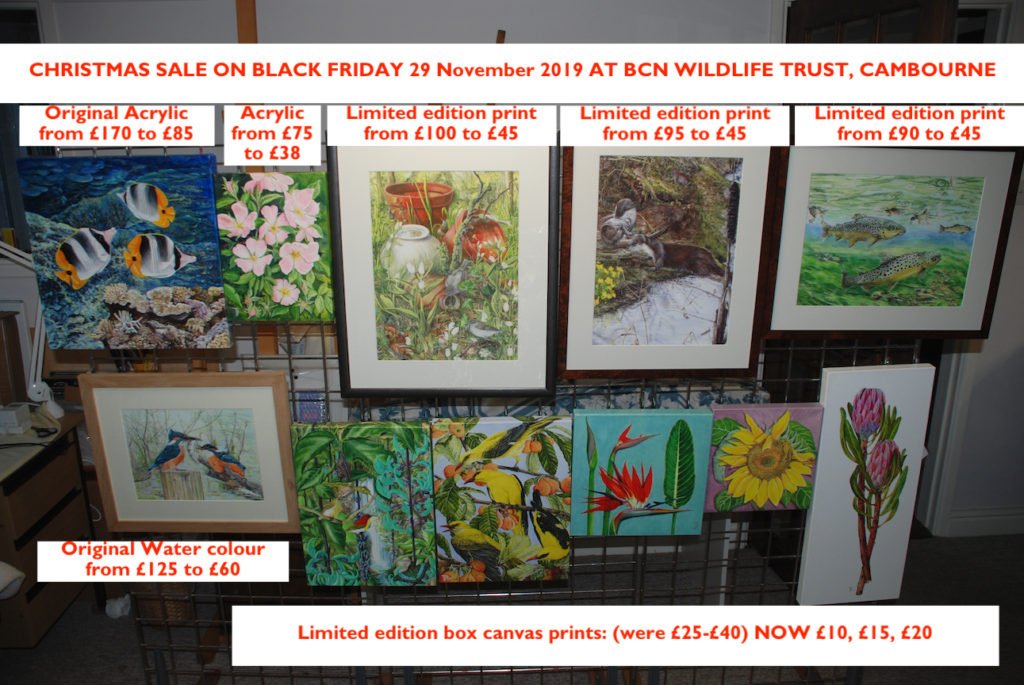
As I need to make room for new artwork and gifts, I am having a big Black Friday/Christmas sale at the BCN Wildlife Trust’s Christmas Fayre, The Manor House, Cambourne (CB23 6DH), tomorrow, 29th November 2019—3.00pm to 6.00pm. (See end of post for event details.)
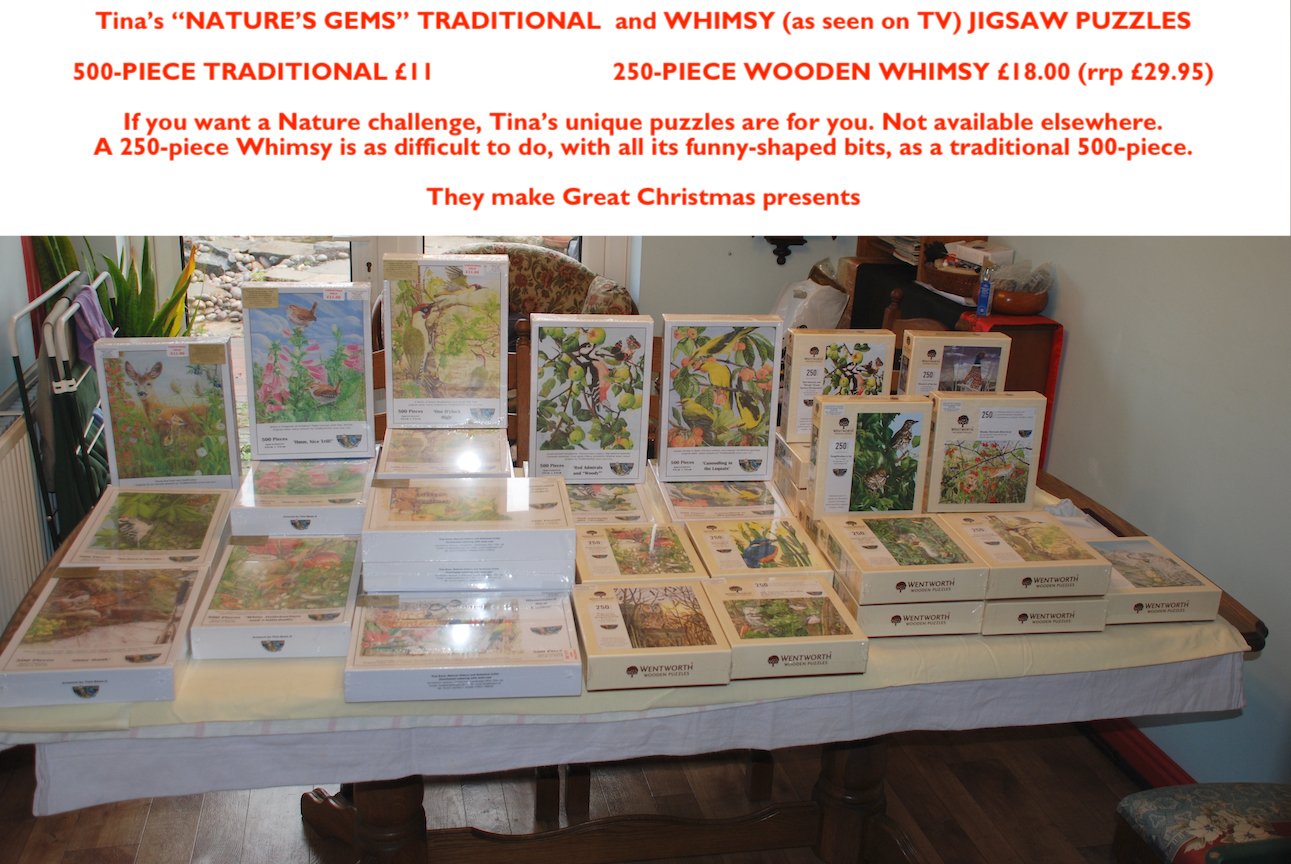
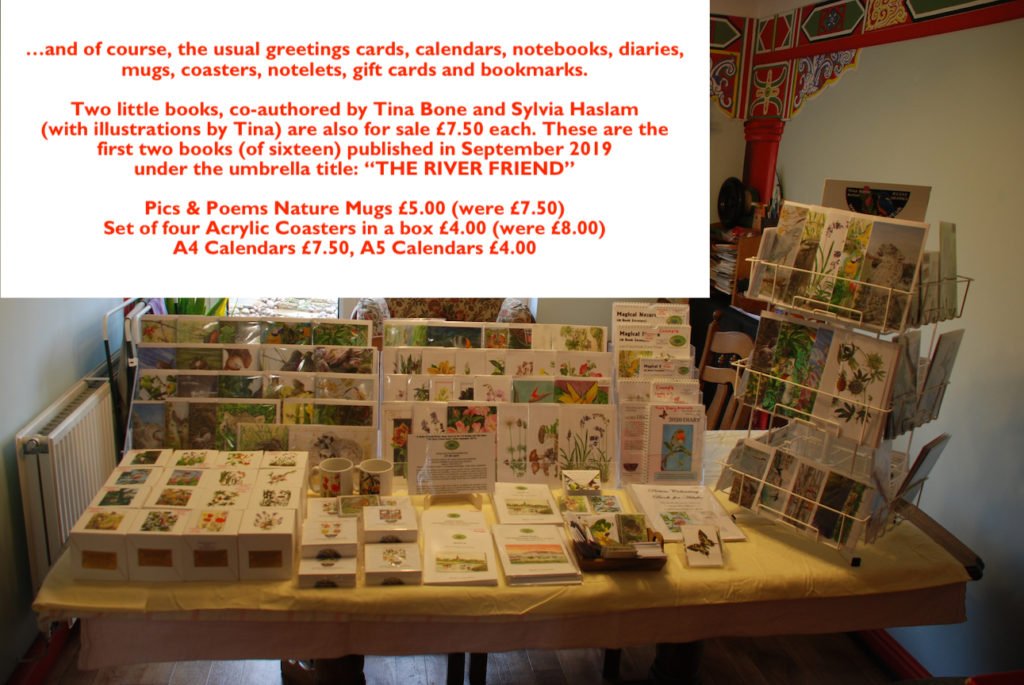
Please see below for the rather extravagant price drops of originals, prints, jigsaw puzzles, and other Christmas gifts: all a bargain!!!!
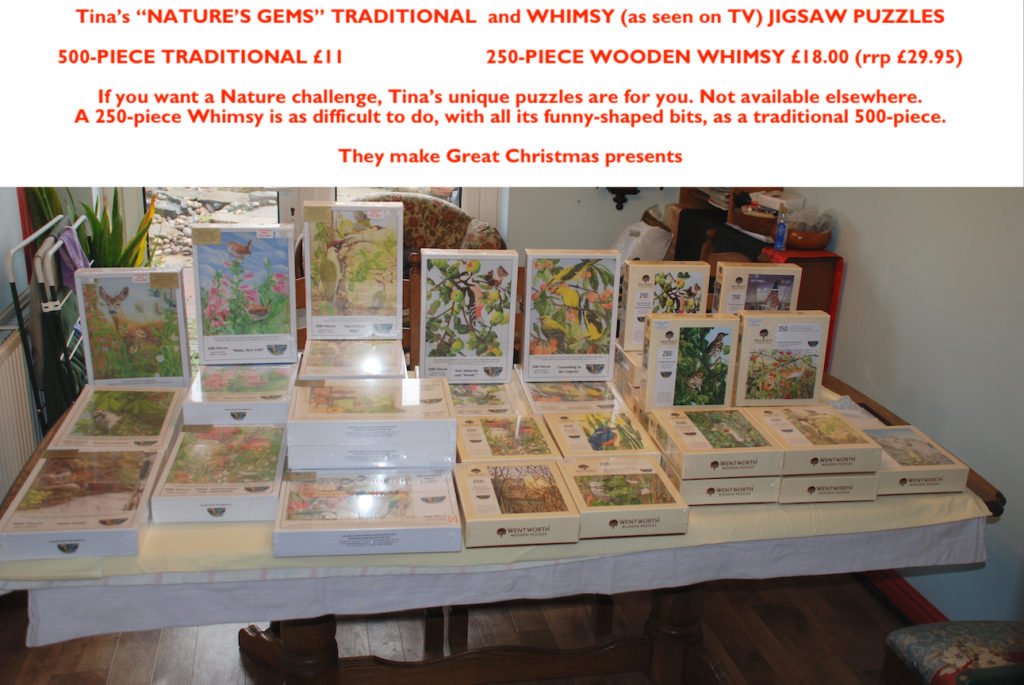
Original Acrylic Box canvases, Original water colour, Box Canvas limited edition prints, and framed limited edition printsNature’s Gems series of traditional and Whimsy Jigsaw Puzzles. Pictures are all Tina’s paintings and all the jigsaws are complex and a great challenge!More Christmas Present goodies!It will be lovely to see old friends who came last year, and smashing to meet new ones!!!
I shall have a stand in the Craft Marquee at Gransden on Saturday 28th September 2019 and look forward to welcoming everyone to the event. It is a splendid day out for all the family and there is much variety of events and items for sale. Do come along and enjoy the whole day and I look forward to seeing old and new friends and anybody else who wishes to speak with me and view my wares. All welcome.
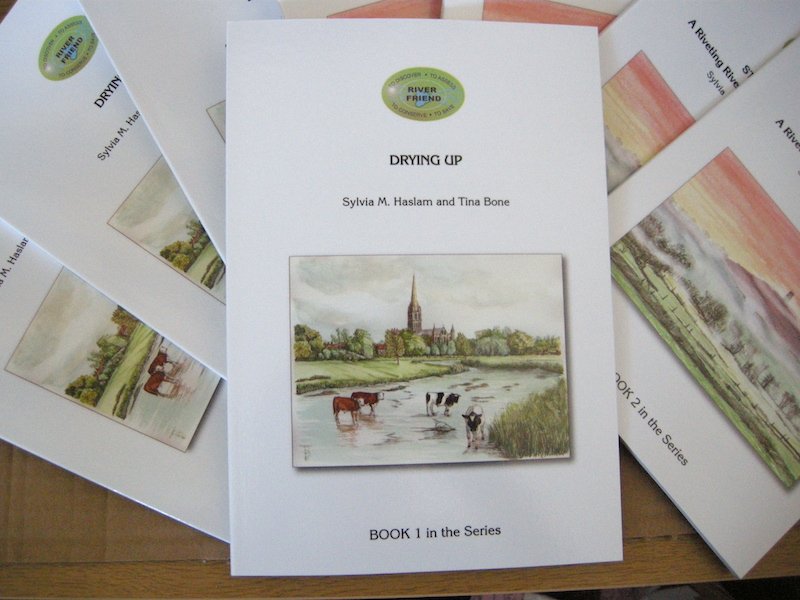
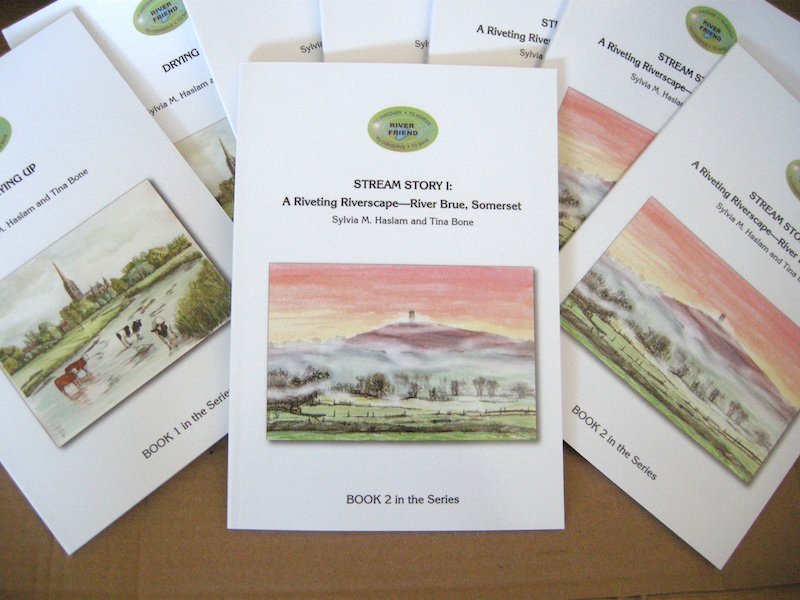
BRAND NEW PUBLISHED THIS WEEK: two paperback books about rivers under the umbrella name of River Friend. A5 small books co-authored by Sylvia M. Haslam and Tina Bone, and illustrated by Tina Bone.
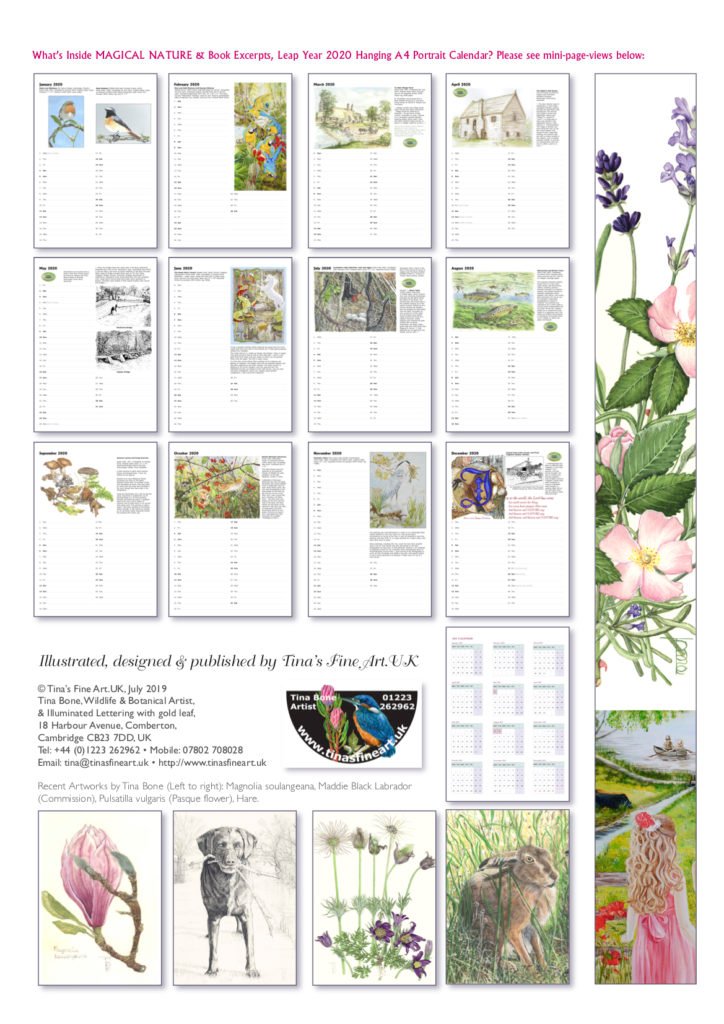
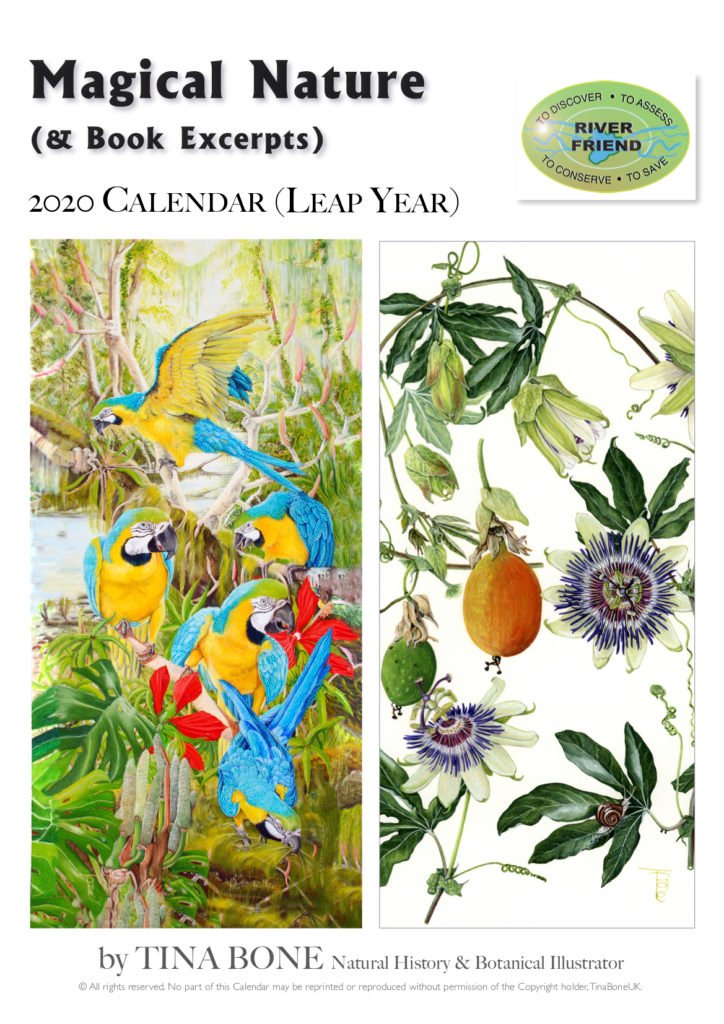
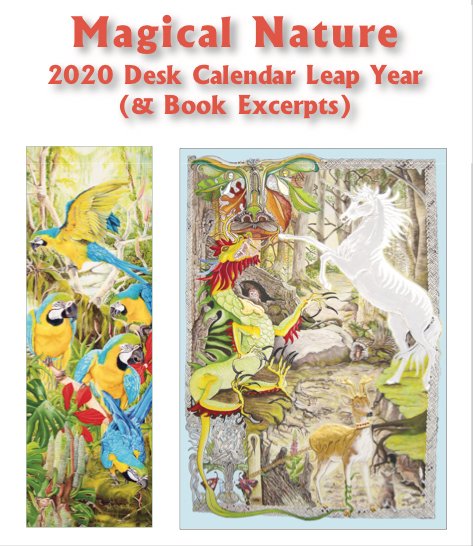
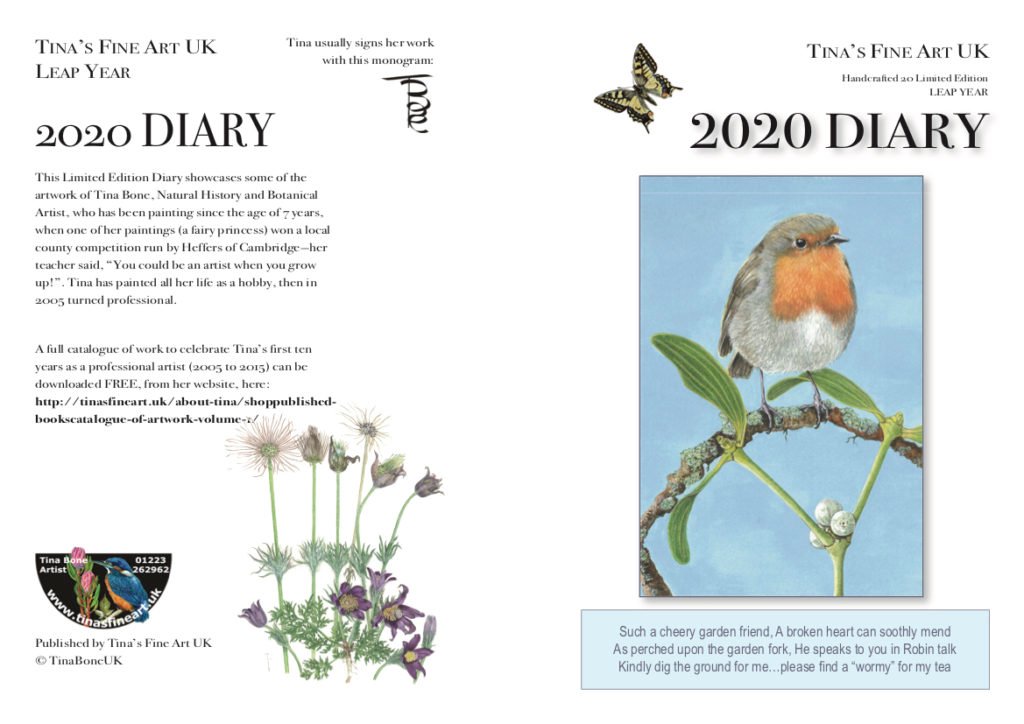
2020 Leap Year Calendars: A4/A5 Hanging, CD Desk Calendar (in plastic case)