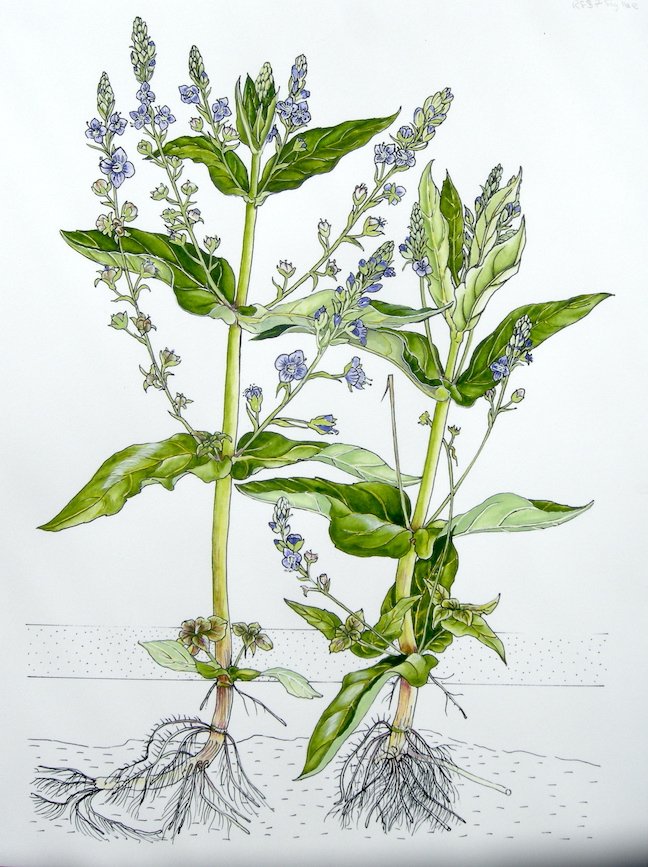
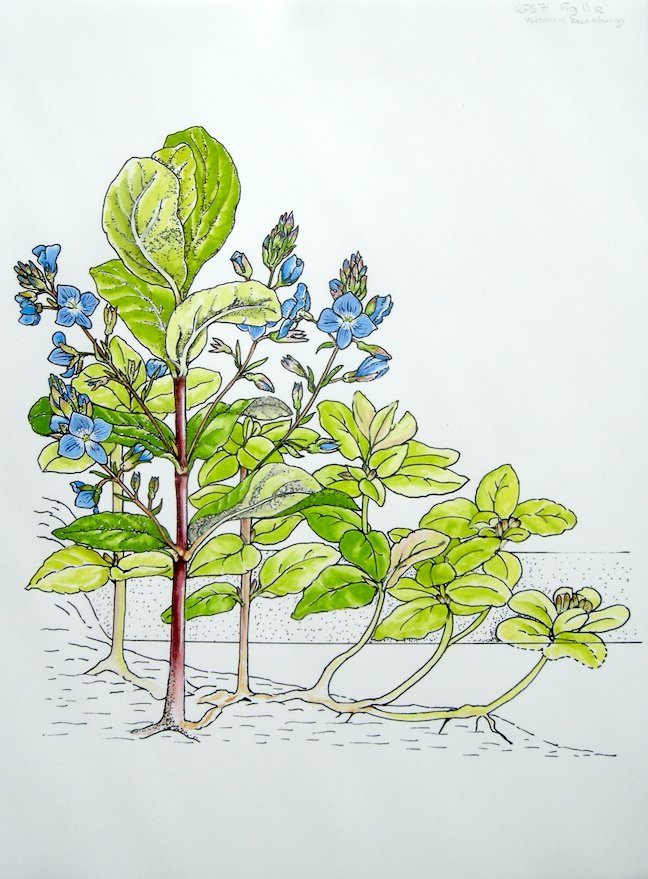
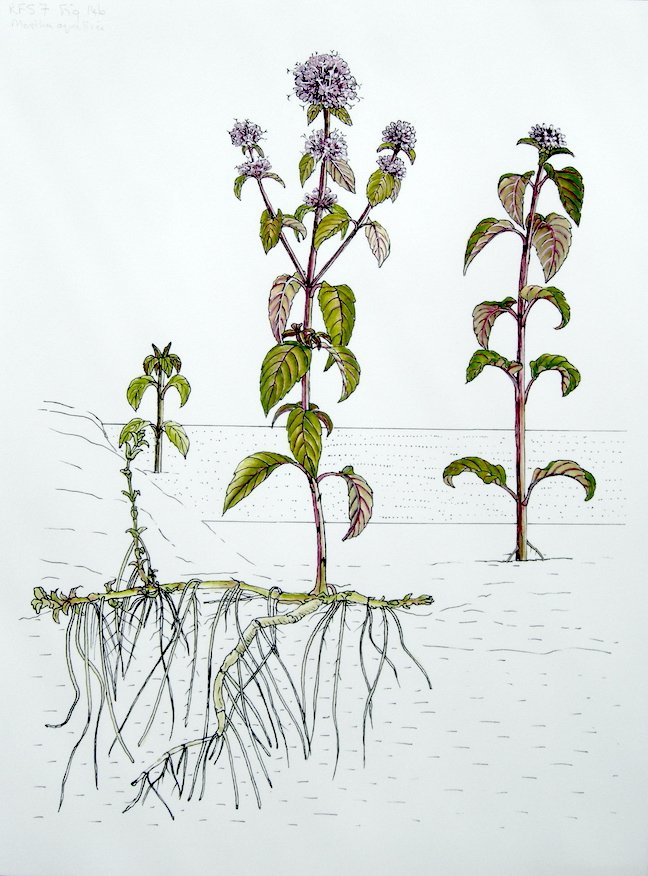
I am hoping to publish the seventh little book in our River Friend Series within the next couple of months. With many other projects going on, it has taken some time to push through this particular book entitled “Water: Clean and Dirty”. Here are three little illustrations which are destined to be in it (only photographs at this stage I am afraid; they will look much better once professionally scanned!). Originals were pen and ink only so I scanned them and printed them onto water colour paper and put in a colour wash (media = printers ink and water colour).
Water Speedwell (Veronicaanagallis-aquatica agg)Brooklime (Veronica beccabunga)Water Mint (Mentha aquatica)
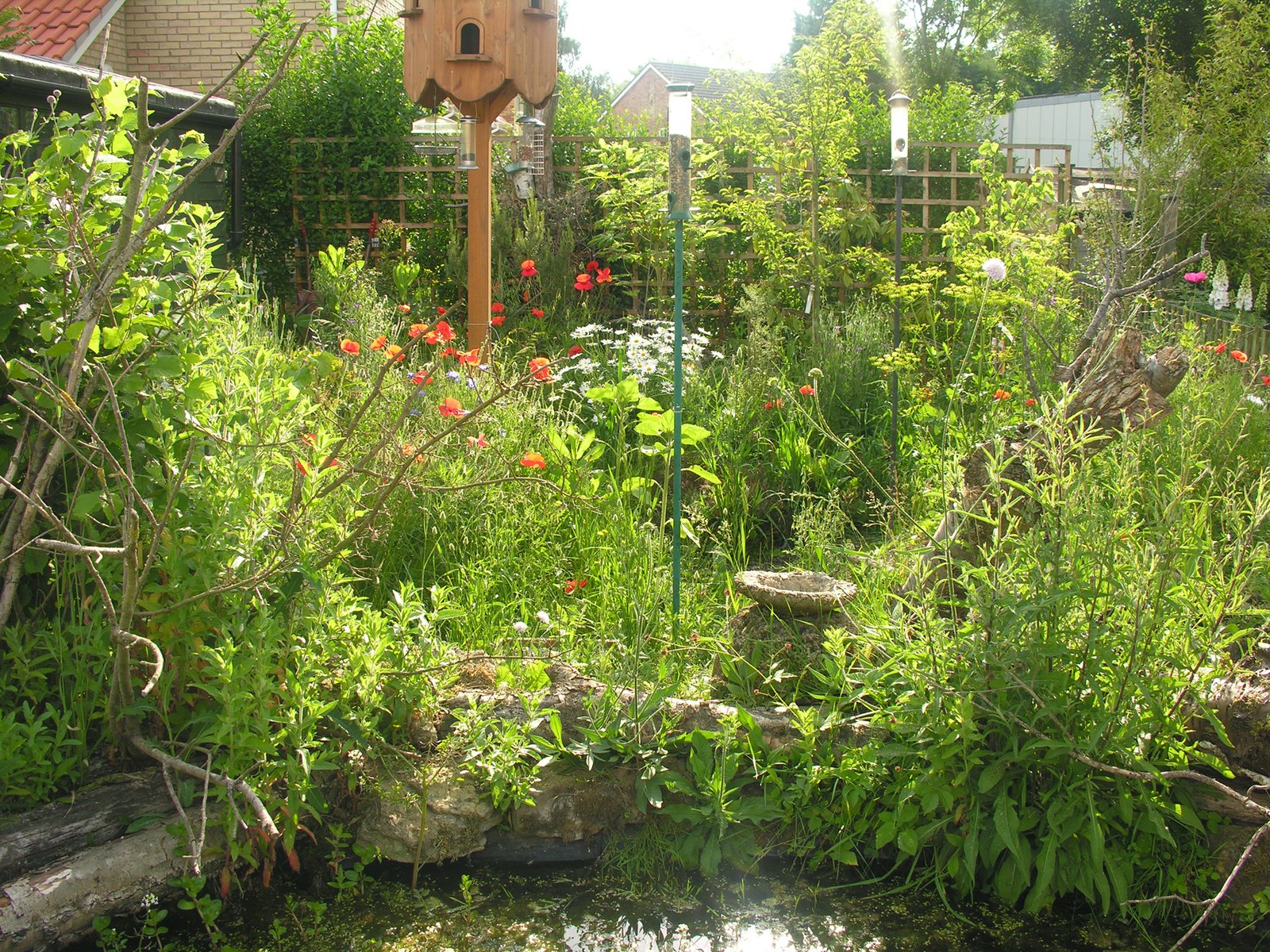
It is not a strange title really. My little wild garden has changed enormously since its original inception when we had myriad visiting animals and birds, as well as hubbie’s vegetable patch beyond. There was also a beautiful privet hedge along the bottom, which, along with mature ash trees, was supposed to be protected from removal, but which have now been removed (housing development). The photograph shows the original wild garden design which flourished with all manner of incumbents. We had hedgehogs, pheasants, muntjac, woodmice, the occasional black rat (which, in full view, chomped the seeds of common vetch), and black and grey squirrels. Birds galore included chaffinches, greenfinches, goldfinches, longtailed tits, coal tits, blue tits, great tits, red poll, starlings, blackbirds, crows, magpies, jackdaws. Amphibians and reptiles: common frog (about 50), two little toads, common newts, grass snake (from next door’s compost heap). We even had a green parakeet visit the bird feeders (view story here).
2008: Original little wild garden, veggie patch and privet hedge.This photograph was taken in June 2010 just after the trees (and dovecote) were planted. The dovecote cost £400 and disintegrated in December 2020 (husband called it my “Brown” elephant! As you can see, wild flowers and grasses are abundant, even sunflowers sprung up from dropped bird seed. Sprigs of the privet hedge are still in view, but disappeared soon after, and now (2019) a 6ft solid wooden fence has been constructed, blocking even more light – but the shade-loving wild plants such as aconite, snowdrop, lesser celandine and stinking hellebore will hopefully still grow.
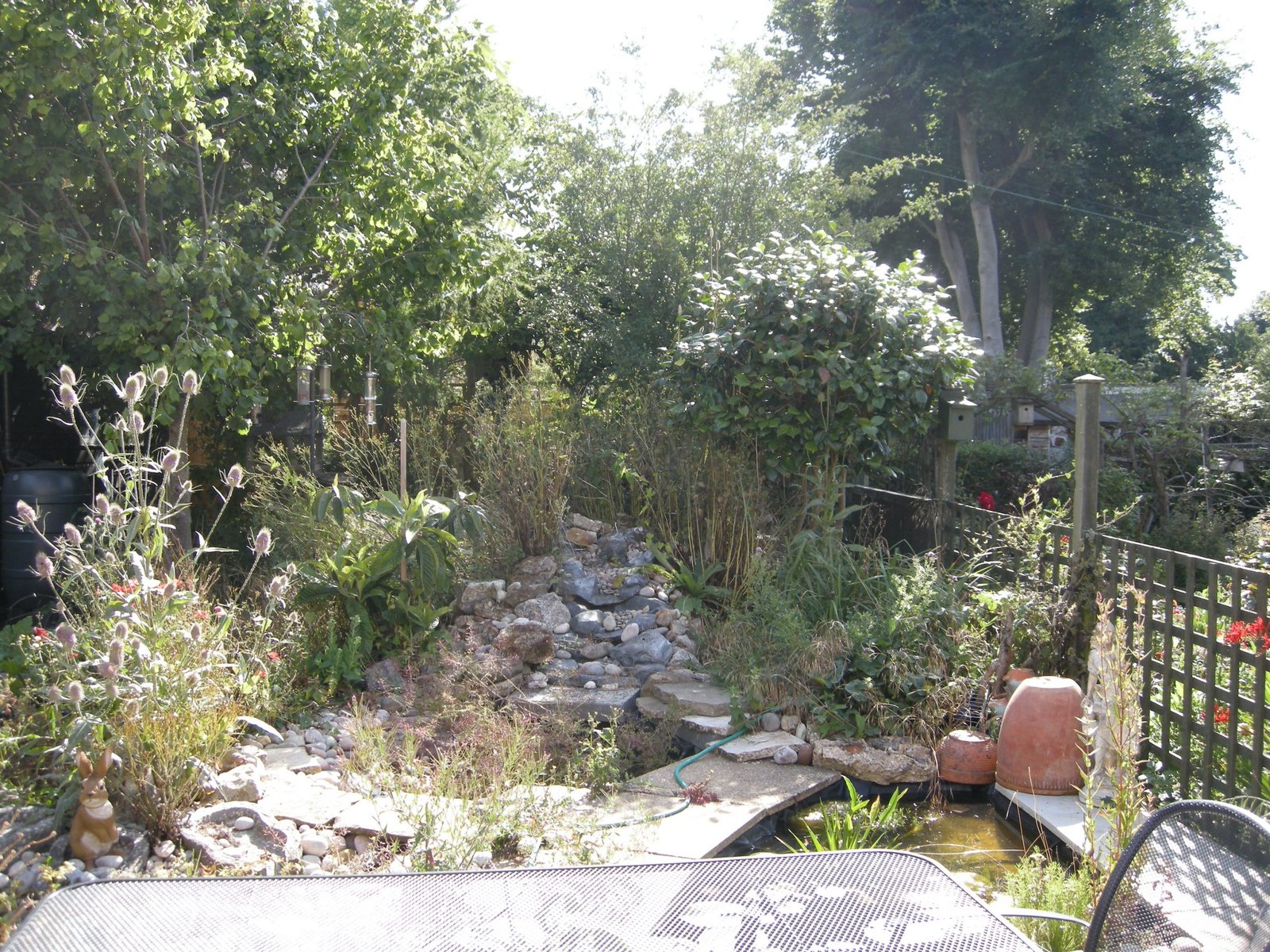
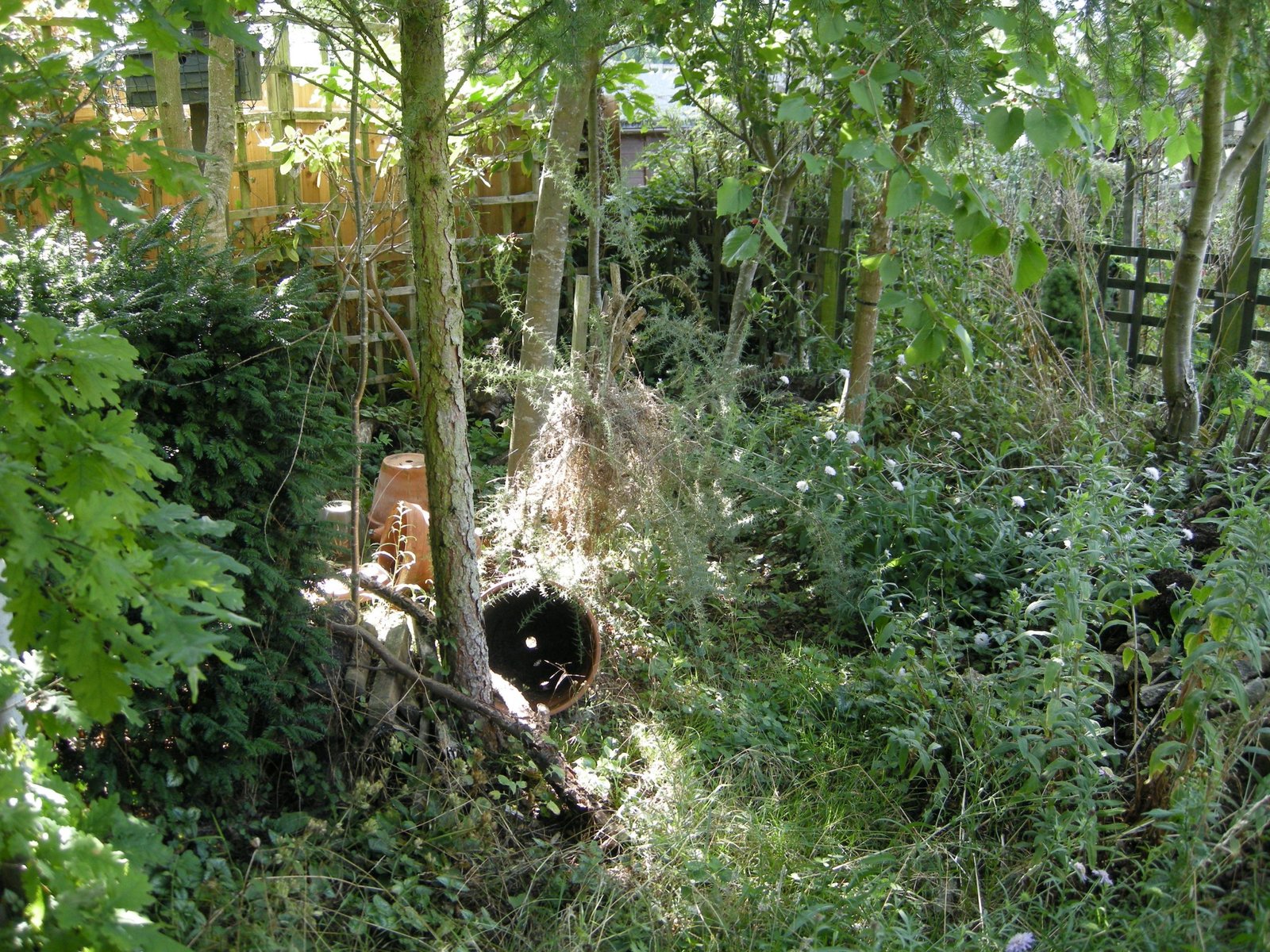
After the removal of ash trees and the privet hedge by the owner of the new property at the rear of our garden, I planted lots of trees to shield the view of the new buildings which had taken away our beautiful green-space views (and, sadly, for a while my sanity—there is so much heartache and sadness associated with losing nature, when the loss of the trees and hedges which we had enjoyed for over 40 years were very suddenly not there). Planted tree species include: holly (x2), yew, rowan, walnut, oak, cobnut, horse chestnut, larch, Scots pine, crab apple, sweet chestnut, hawthorn, box, gorse, cooking apple, mulberry, and a loquat and olive tree which have since been moved to the front of our house to the Mediterranean herb garden where they are more protected from the cold.
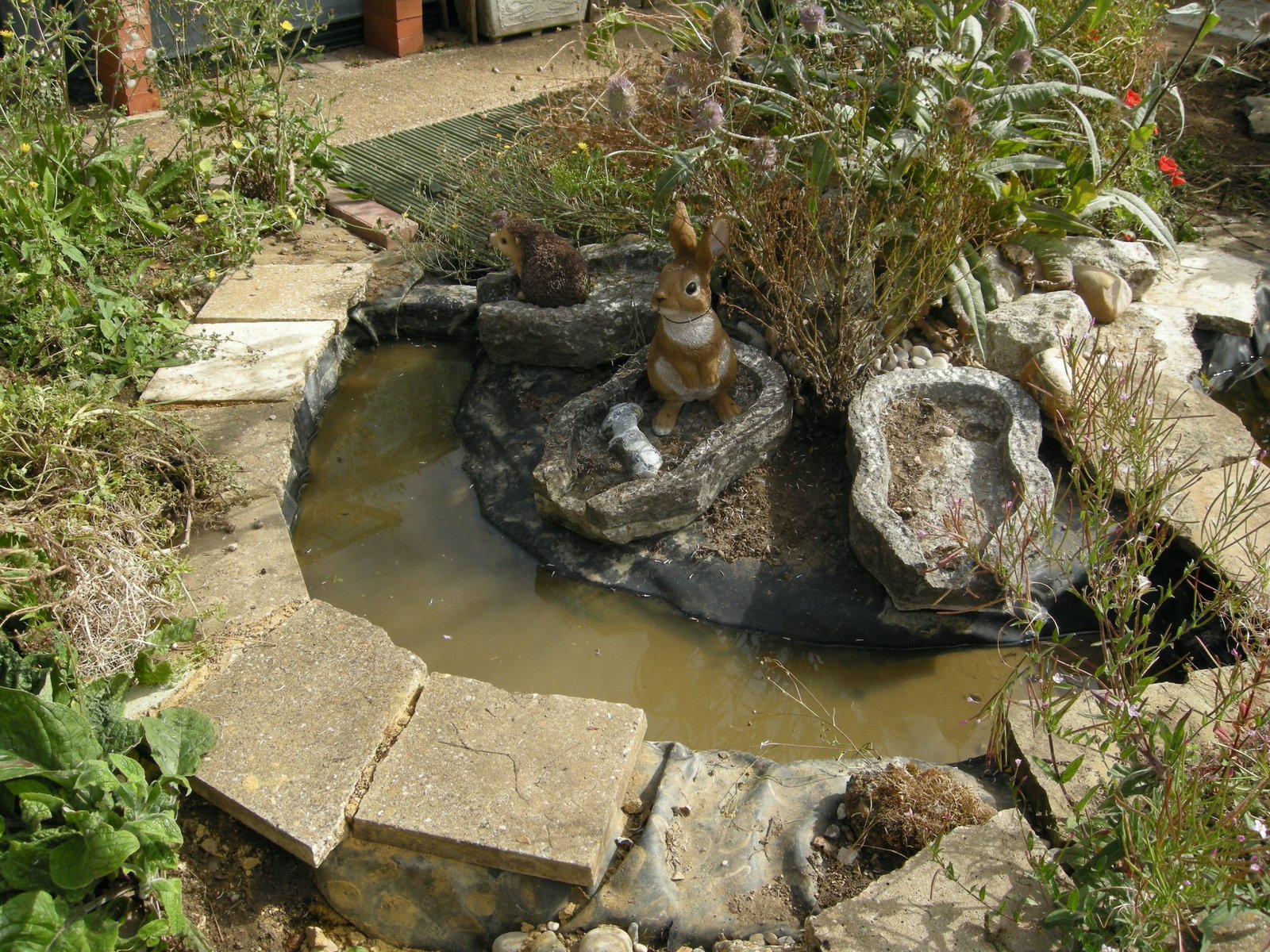
The cobnut, left, has since been removed because it ran amok! Note the large beech tree, centre, is in the telephone exchange beyond our garden, which has now been viciously “pruned”…and as we do not get any animals now I succumbed to “pretend” ones! Note the horrid colour stream with no plant life. When we first put in the stream I had water cress growing in it, but everything deteriorated over the summer. No wildlife, not even a frog or newt!Left, oak, yew, horse chestnut (behind) rowan (skinny stick) larch, crab apple, gorse in front, sweet chestnut and cooking apple. The big leaves top right belong to the mulberry tree which fruited for the first time in 2020.
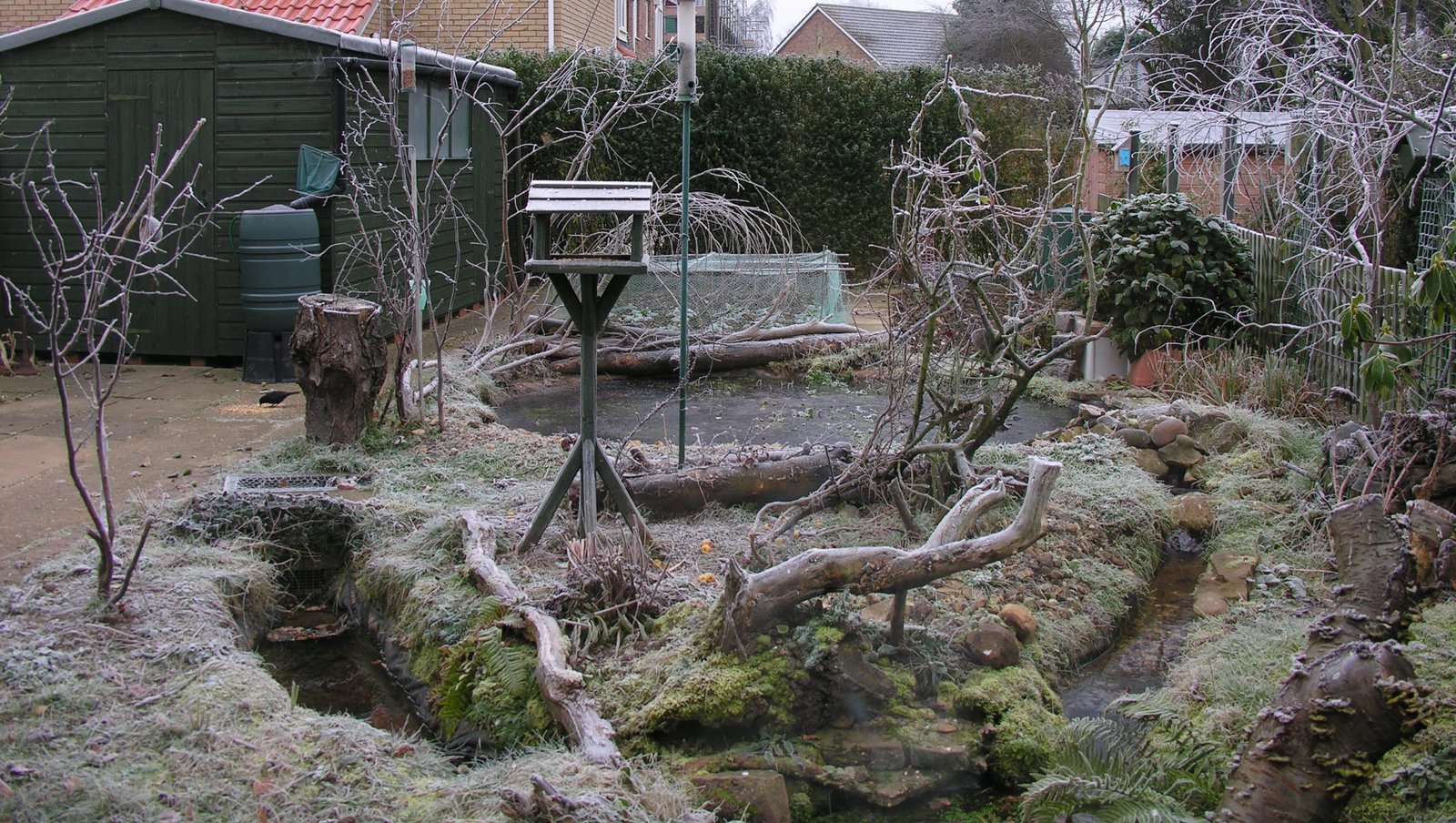
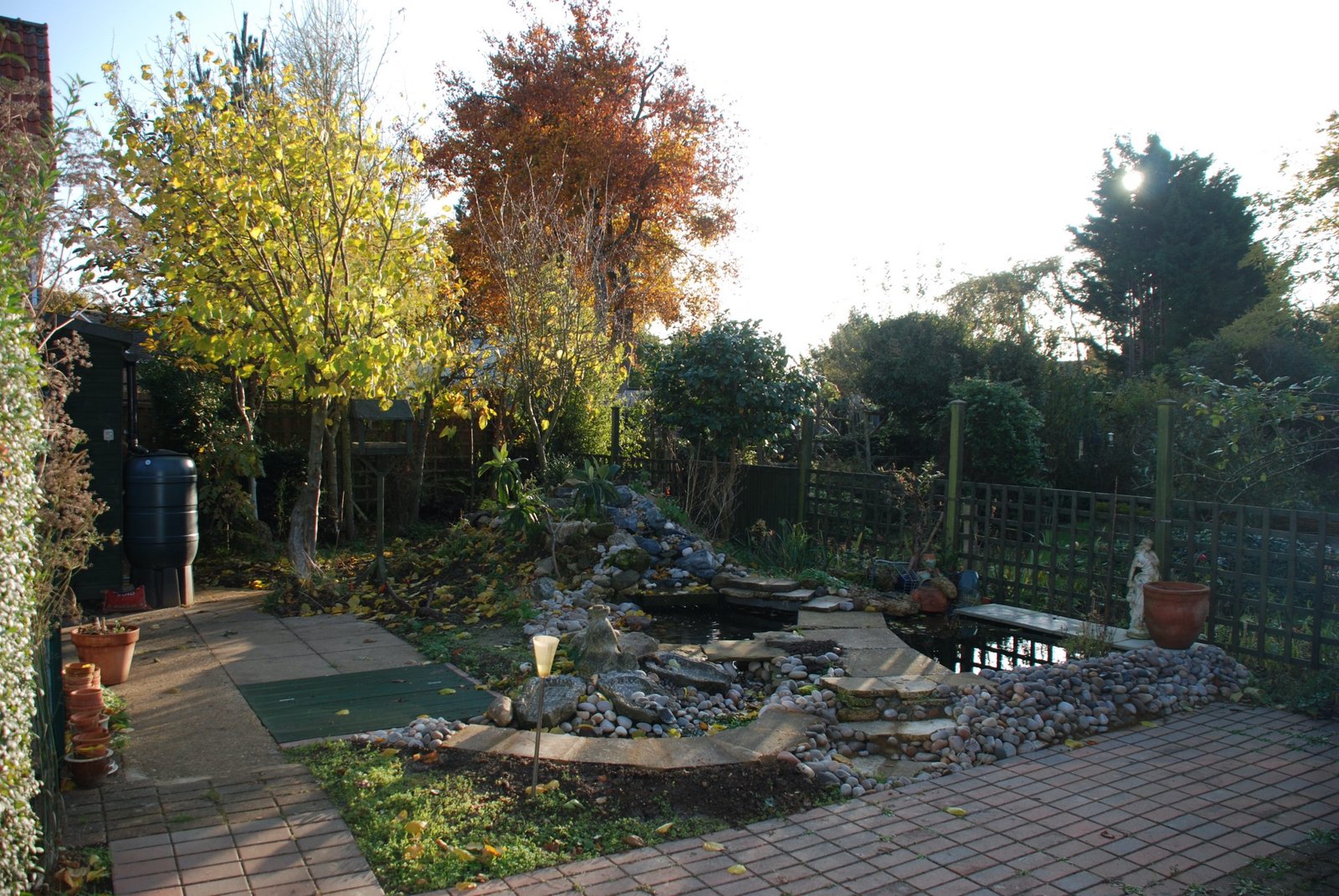
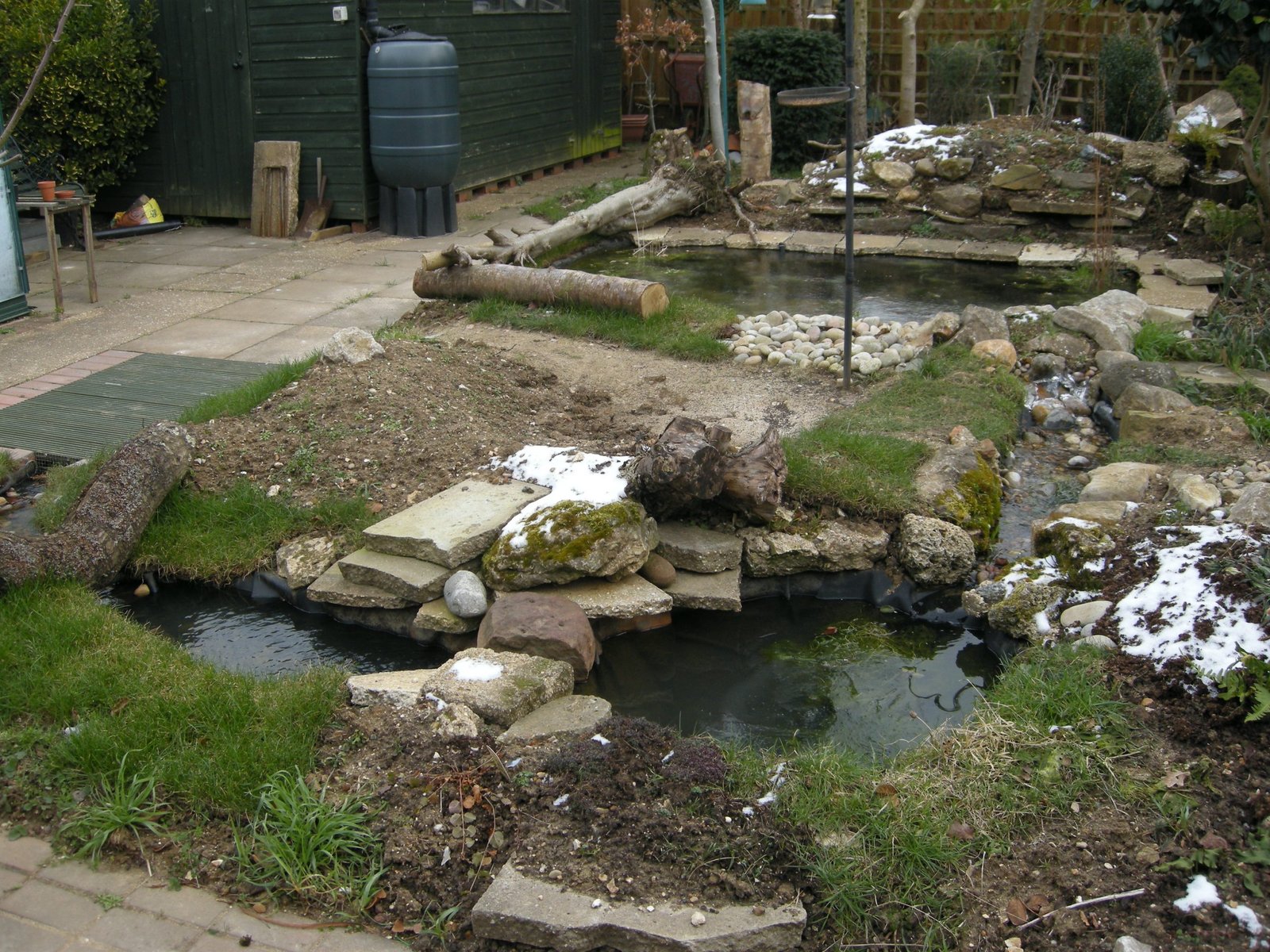
And so to the present. After much deliberation and angst, it has come to what you see below. The outlook is promising. The “chalk” stream is functioning well (Ranunculus is growing), and blackbirds and starlings have started to bathe again. The transported water plants in the pond appear to have survived, although the pond is now used so much by pigeons for their daily bath, there is much green algae growing due to the added feather-dust and poo nutrients. (Sadly, my 2021 big garden birdwatch only listed 2 blackbirds, 2 starlings, 2 wood pigeons, 2 ring-necked doves and 3 greenfinches, which have not been around for a couple of years or more.) I await the spring to see what flowers pop up, including the Pasqueflower whose seeds I will be planting on my little south-facing chalk hill which you can see in the next photograph left of centre with a large piece of chalk stone at the top! Because we are mostly clay-based soil, I have had to improvise a bit – but it is working.
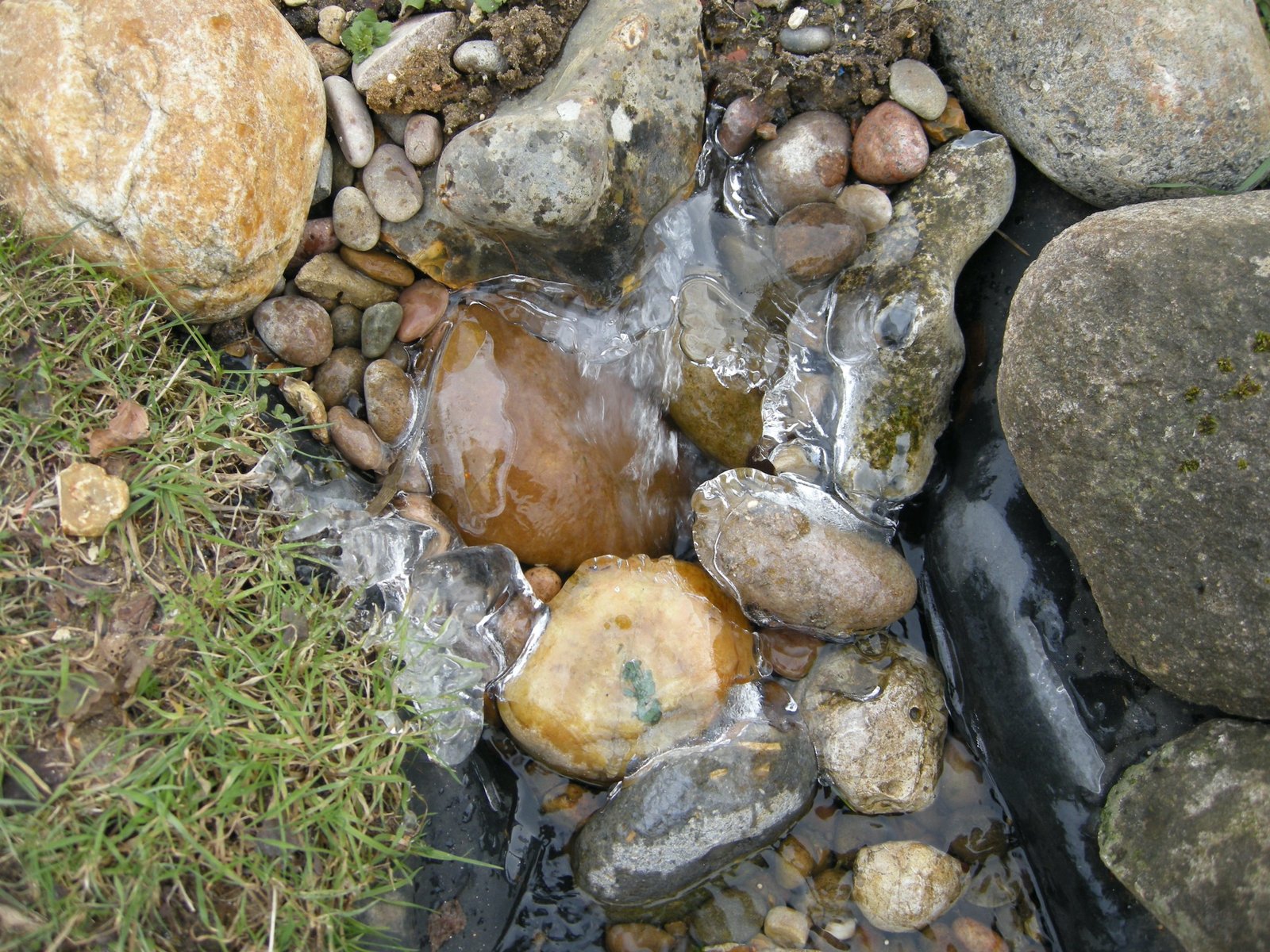
Taken this morning (14 February – ooh, Valentine’s Day!). You can see to the left of the pond that the trunk of the cobnut tree is lying prostrate to provide nourishment for insect critters etc. The log lying in front of it is one of five which I purchased from a Norfolk farmer for £20 (we managed a few days away in the caravan in October 2020) and which are dotted about the garden and will soon be “old” wood which the insects love (I hope we get lesser stag beetles again which we had in the original garden under an old cherry stump (read the story here)……and our “bubbling” spring had a ring of beautiful ice shards this morning, where it rises miraculously from the ground.
I have quite a few packets of wild seed to sprinkle about, plus I purchased some wild flower plugs last year (some of which have survived!) and intend to plant them soon. Hopefully there will be an abundance of flowers like I had before. One can only hope!
The fifth little book all about the Reed water plant (Phragmites australis), to be published by River Friend, is due out soon. Here is a taster, and please watch out for it on Amazon and other famous bookshops.
RIVER FRIEND: A series of Riverine Small Books by Tina Bone and Sylvia M. Haslam. Book 5. REED—On The Edge
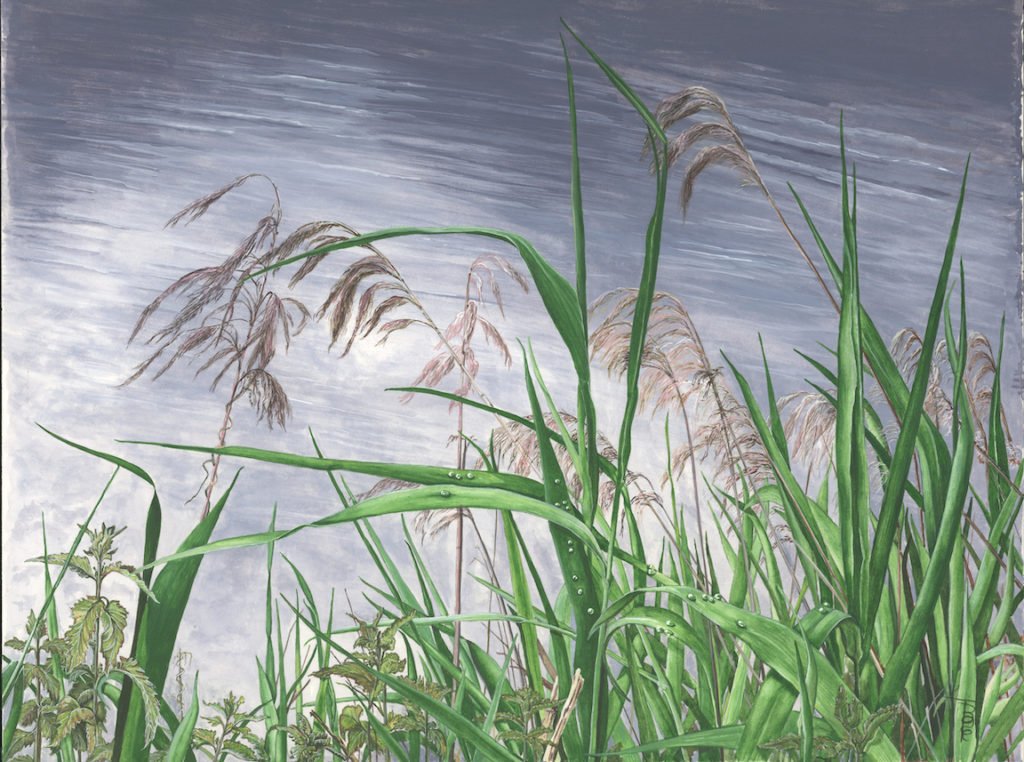
What are reeds (Phragmites) like? To begin with, it is one of the very few plants to be native (not introduced) in all five continents of the world. Imagine working all day with a marvellous sky above and below surrounded by reeds, just a wind-blown rustle and calling birds—an experience not to be forgotten. What are the uses of reeds and reedbeds? Whole human populations can live in and, in extreme cases, nearly entirely upon the reedbed. Hermits, and to some extent monks and nuns, ventured into reed wetlands so that their prayers would purify and sanctify the haunt of demons (St Guthlac, Beowulf). In Europe, the struggle for community existence in the hazy band “twixt land and water”, is usually won by Phragmites. In the Americas, Australasia, Africa and much of Asia, it is usually won by other reedswamp species. Is it just a grass; is it war-like? Yes. A silent battlefield where a plant is NOT “nice” to its neighbour in seeing that “next door” has space to grow, enough light to grow well, enough nutrients and, of course, enough water, just doesn’t happen. For the reed it is an intense and continuing, but silent, battle for survival. There is no peace in the reedbed for Phragmites—just the giant struggle for existence….
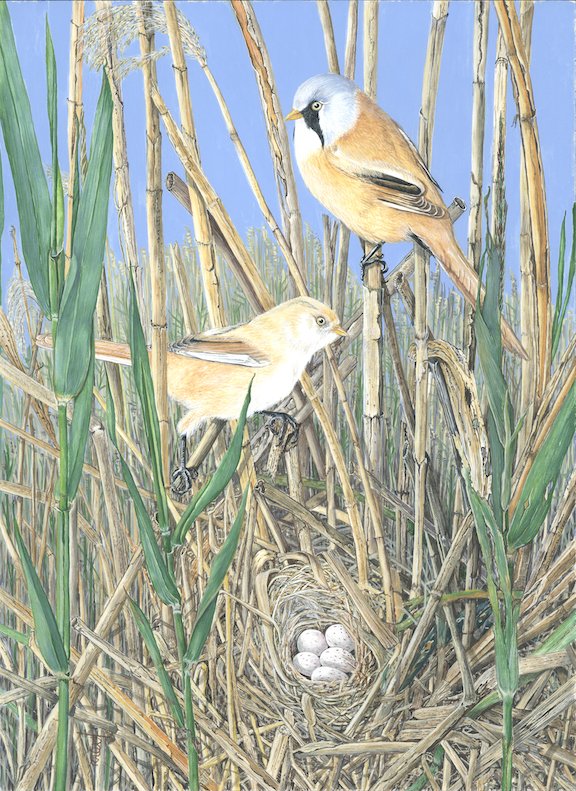
Fig. 1. Apart from its invaluable resource for humans, many animals and birds live and breed in the reedbed. For example, Reed Warblers and Bearded Tits (or Bearded Reedlings). Bearded Reedlings eat mainly reed seeds in winter and soft-bodied insects which gather poolside during the summer. Their nests are built with reed leaves and old fluffy seed heads. The figure shows a male bird with black moustache, and a more plain female, and eggs in a nest in the swaying reed stems.
CONTENTS Introduction Boring? Belligerent? Brilliant? Uses Different wetland species and how they interact Introduction Reedswamp into open water (historically common) Seasonal patterns Root toxins and short grass The Scramblers Management of reedbeds for some (human) use Ways to Dominate Plant factors Outside factors acting in mixed stands Reedswamp to Trees Conclusion References List of Stand-alone Titles in the River Friend Series About the Authors