Posted on

REED—ON THE EDGE. Fifth book in the River Friend Series out 21st October 2020

The fifth little book all about the Reed water plant (Phragmites australis), to be published by River Friend, is due out soon. Here is a taster, and please watch out for it on Amazon and other famous bookshops.
RIVER FRIEND: A series of Riverine Small Books by Tina Bone and Sylvia M. Haslam. Book 5. REED—On The Edge
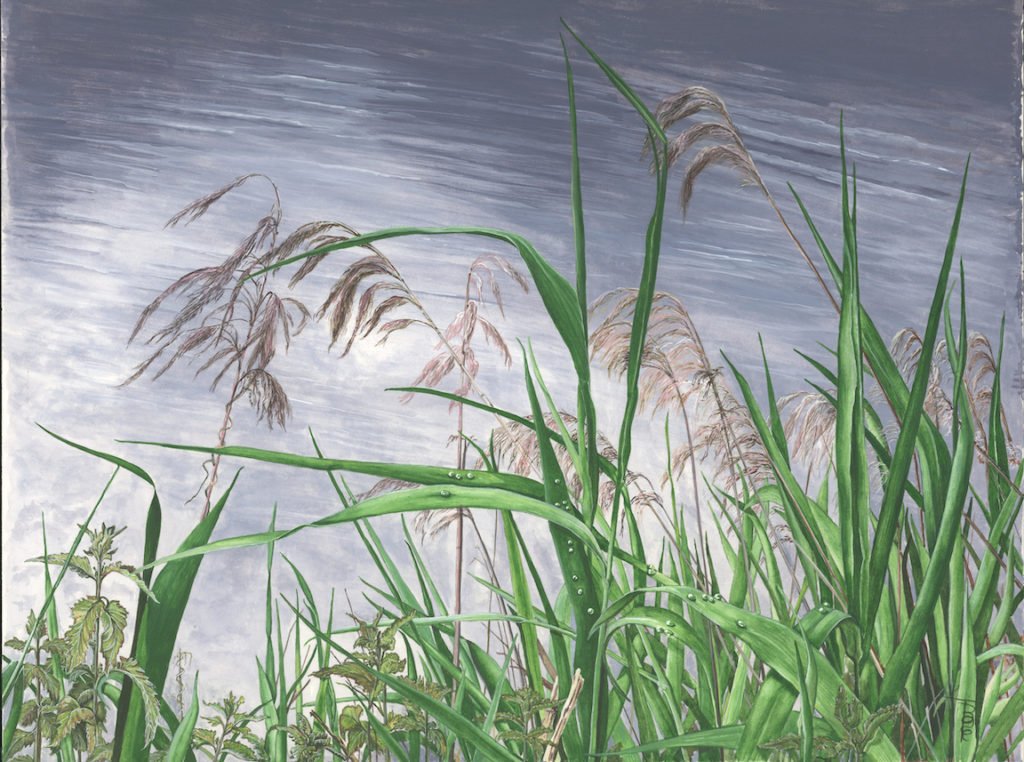
What are reeds (Phragmites) like? To begin with, it is one of the very few plants to be native (not introduced) in all five continents of the world.
Imagine working all day with a marvellous sky above and below surrounded by reeds, just a wind-blown rustle and calling birds—an experience not to be forgotten.
What are the uses of reeds and reedbeds? Whole human populations can live in and, in extreme cases, nearly entirely upon the reedbed. Hermits, and to some extent monks and nuns, ventured into reed wetlands so that their prayers would purify and sanctify the haunt of demons (St Guthlac, Beowulf).
In Europe, the struggle for community existence in the hazy band “twixt land and water”, is usually won by Phragmites. In the Americas, Australasia, Africa and much of Asia, it is usually won by other reedswamp species.
Is it just a grass; is it war-like? Yes. A silent battlefield where a plant is NOT “nice” to its neighbour in seeing that “next door” has space to grow, enough light to grow well, enough nutrients and, of course, enough water, just doesn’t happen. For the reed it is an intense and continuing, but silent, battle for survival. There is no peace in the reedbed for Phragmites—just the giant struggle for existence….
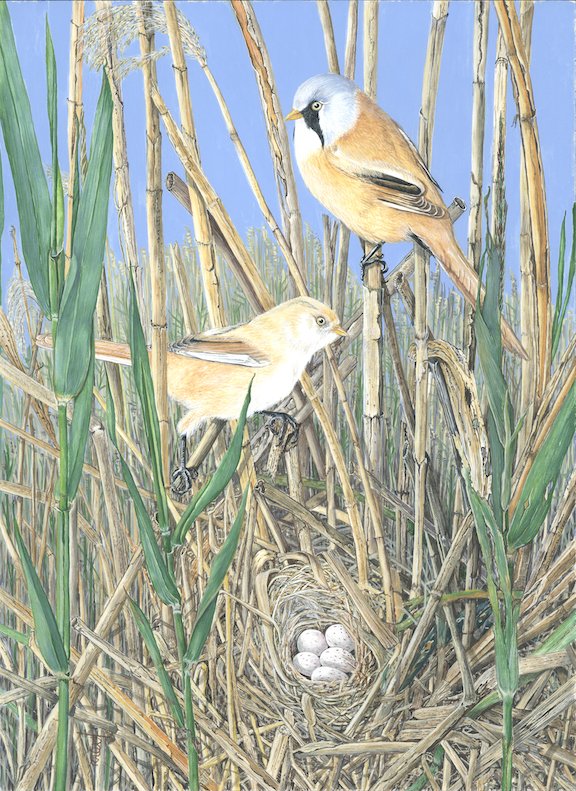
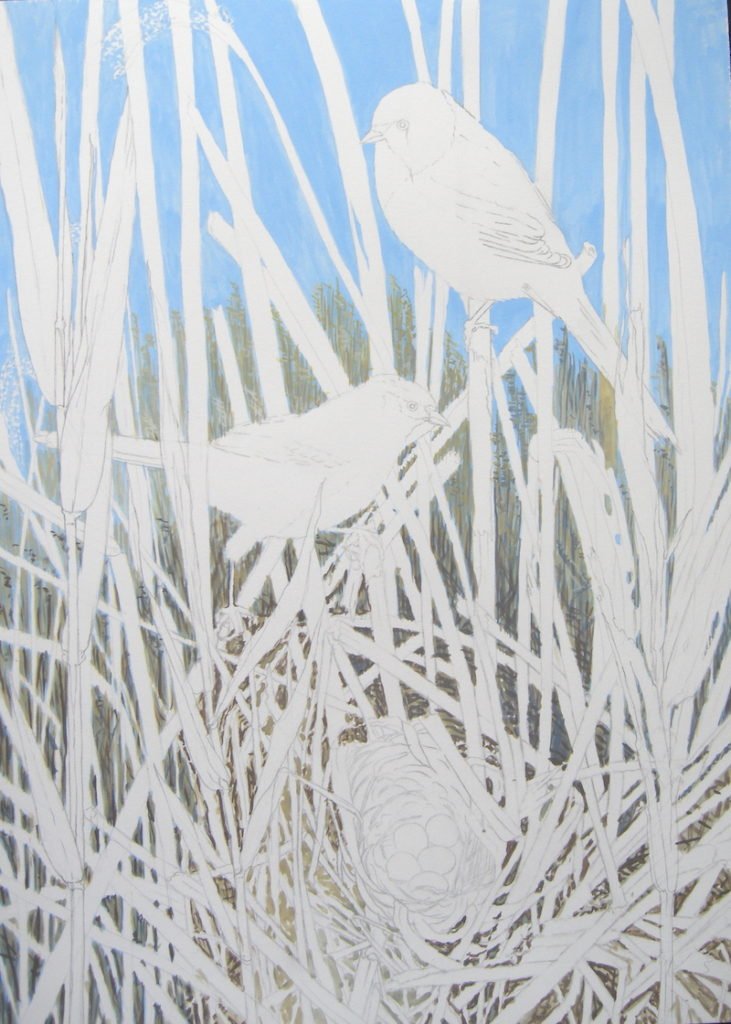
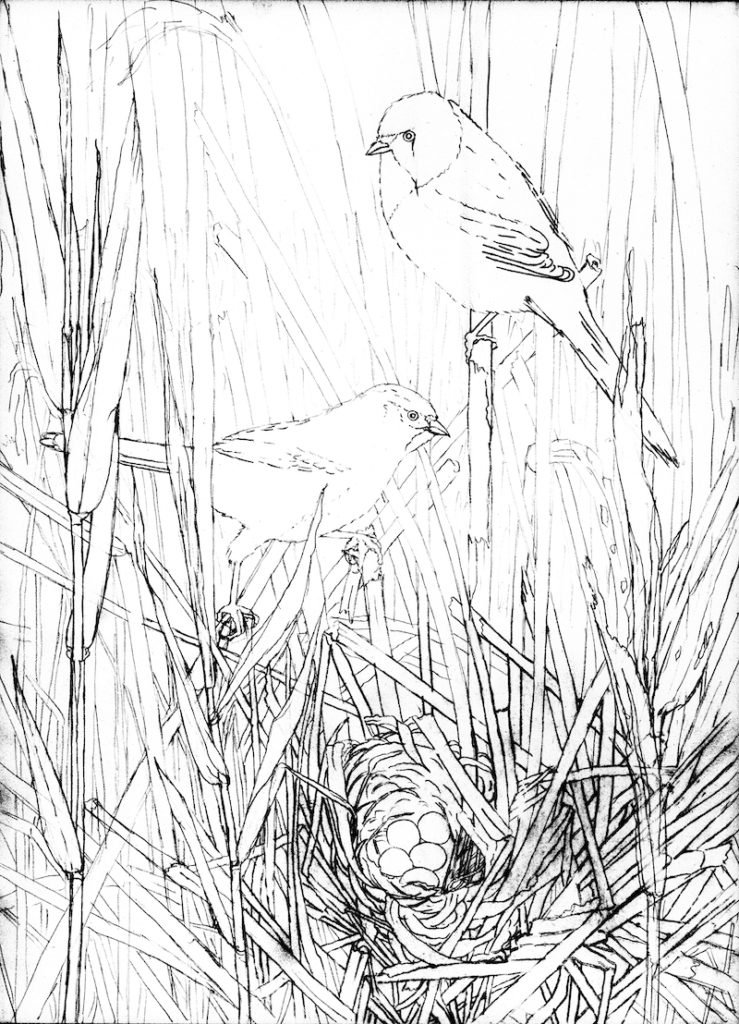
Fig. 1. Apart from its invaluable resource for humans, many animals and birds live and breed in the reedbed. For example, Reed Warblers and Bearded Tits (or Bearded Reedlings). Bearded Reedlings eat mainly reed seeds in winter and soft-bodied insects which gather poolside during the summer. Their nests are built with reed leaves and old fluffy seed heads. The figure shows a male bird with black moustache, and a more plain female, and eggs in a nest in the swaying reed stems.

CONTENTS
Introduction
Boring?
Belligerent?
Brilliant?
Uses
Different wetland species and how they interact
Introduction
Reedswamp into open water (historically common)
Seasonal patterns
Root toxins and short grass
The Scramblers
Management of reedbeds for some (human) use
Ways to Dominate
Plant factors
Outside factors acting in mixed stands
Reedswamp to Trees
Conclusion
References
List of Stand-alone Titles in the River Friend Series
About the Authors
Posted on

2012 The Almighty Reed and Reedlings

Just started the illustrations for the next River Friend book: “REED: ON THE EDGE”, number five in the series. There are lots of nice things to say about reeds, both from a commercial and a leisure point of view. If you think a reed is dull, then this little book will enlighten you and broaden your mind. Not sure how long it will take to do all the drawings and paintings, but it should be out in the next couple of months. I will post when it is available.

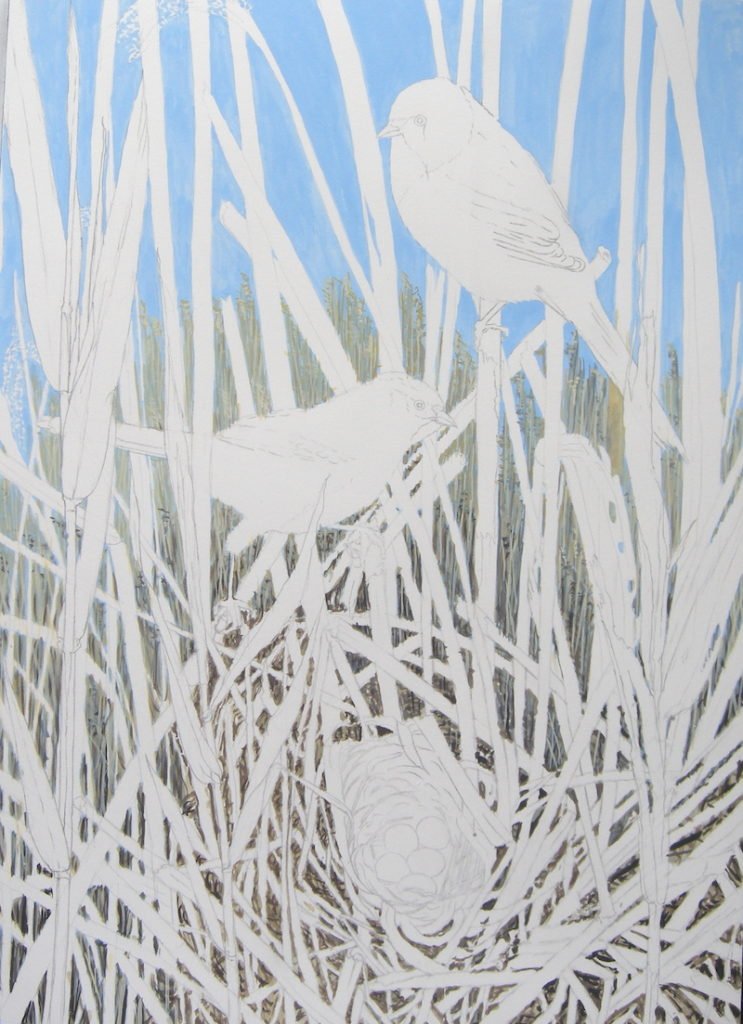
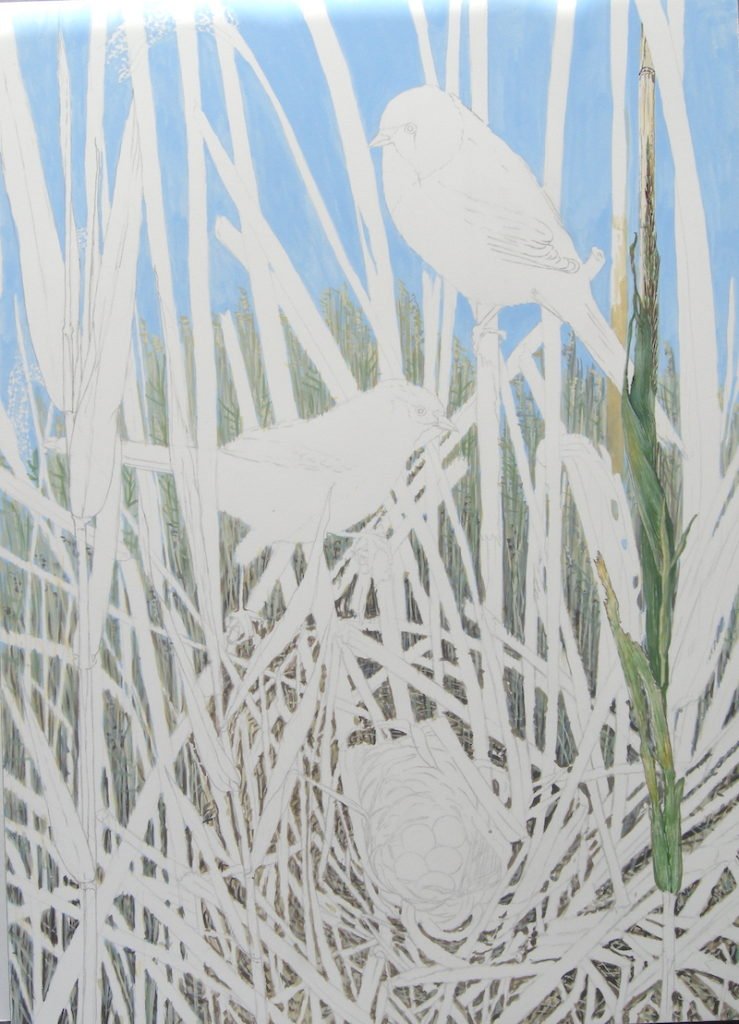
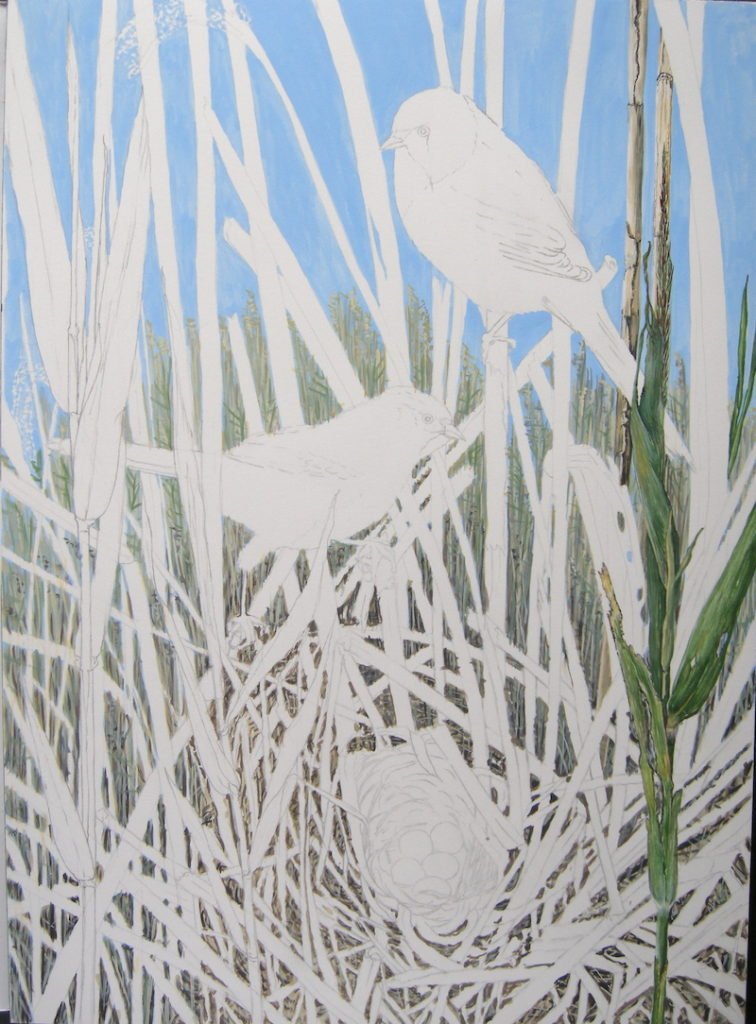
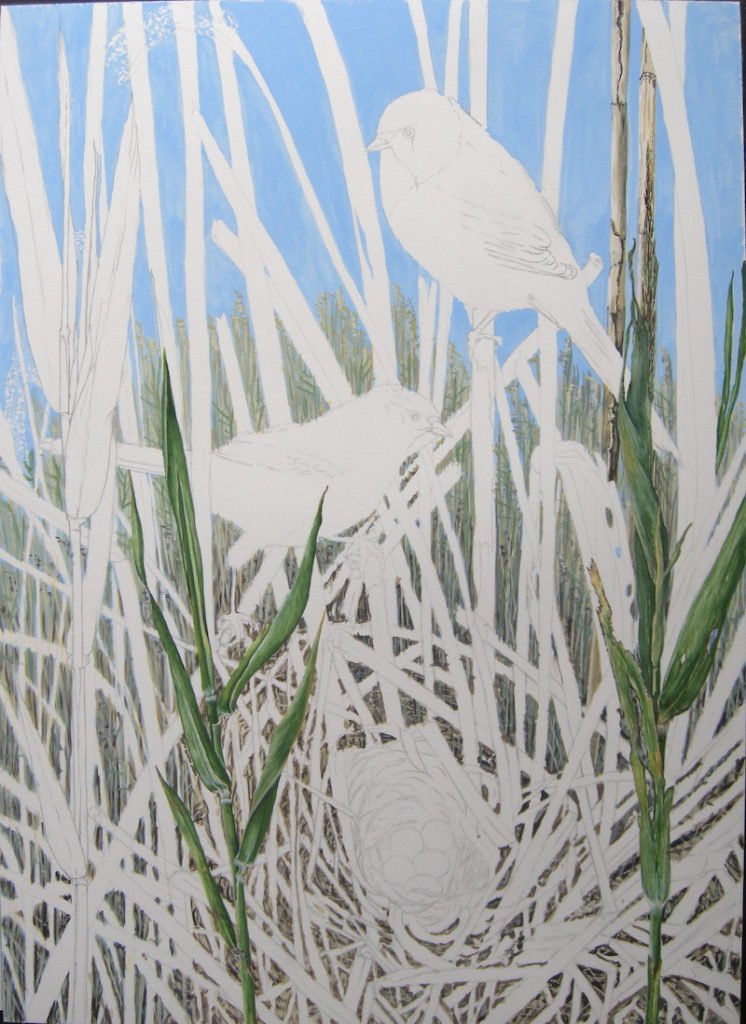
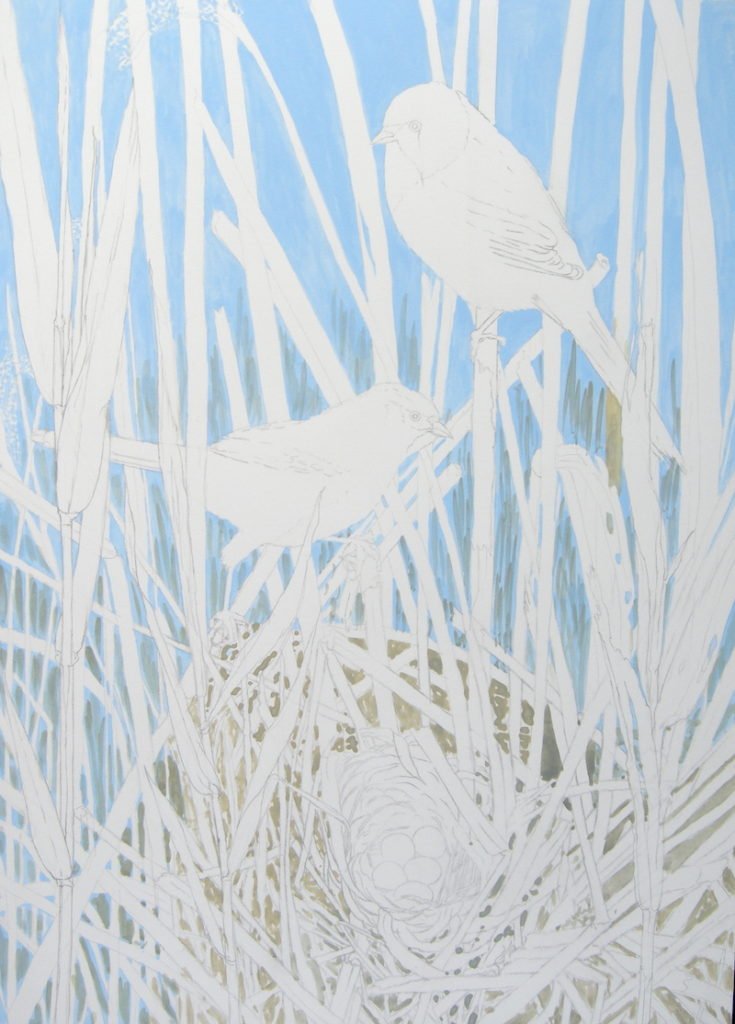
Here are a few progress pictures of Figure 1: The Almighty Reed and Reedlings (Artist Code 2012) in the book. Note the first picture (pencil sketch on Aquarelle Arches 140lb water colour paper 14″ x 10″) is enhanced otherwise you would be unable to see it! So apologies for the uneven/thick lines.

Reedlings (Bearded Tits) live and breed amongst the reeds, usually near the edge of a reed stand. Lovely little birds with a characteristic “Ping, ping” call.
The text in the book mentions blue sky, so the background is nice and blue.
Getting the right tonal values and paint strokes for the background reed structure made me think rather.
…So, layer upon layer of subtle browns and creams to get the desired effect
Went out and cut some reeds nearby for accurate portrayal (along Bourn Brook which will be another book in the series: Stream Story 2—eventually!)
Have to paint the green reeds first because, even though they have been in water since plucked, they are drying out and shrivelling up (what a nuisance!).
Two green stems done, just one more on the left, then I can get to the old reeds, birds and nest, which is usually made from old reed stems and leaves as well as being lined with the feathery-soft seed heads of last year’s reeds. The eggs are creamy white with a pinkish hue and little brown marks—I purchased an old birds’ eggs book, from a secondhand book shop, which has proved to be a valuable resource.