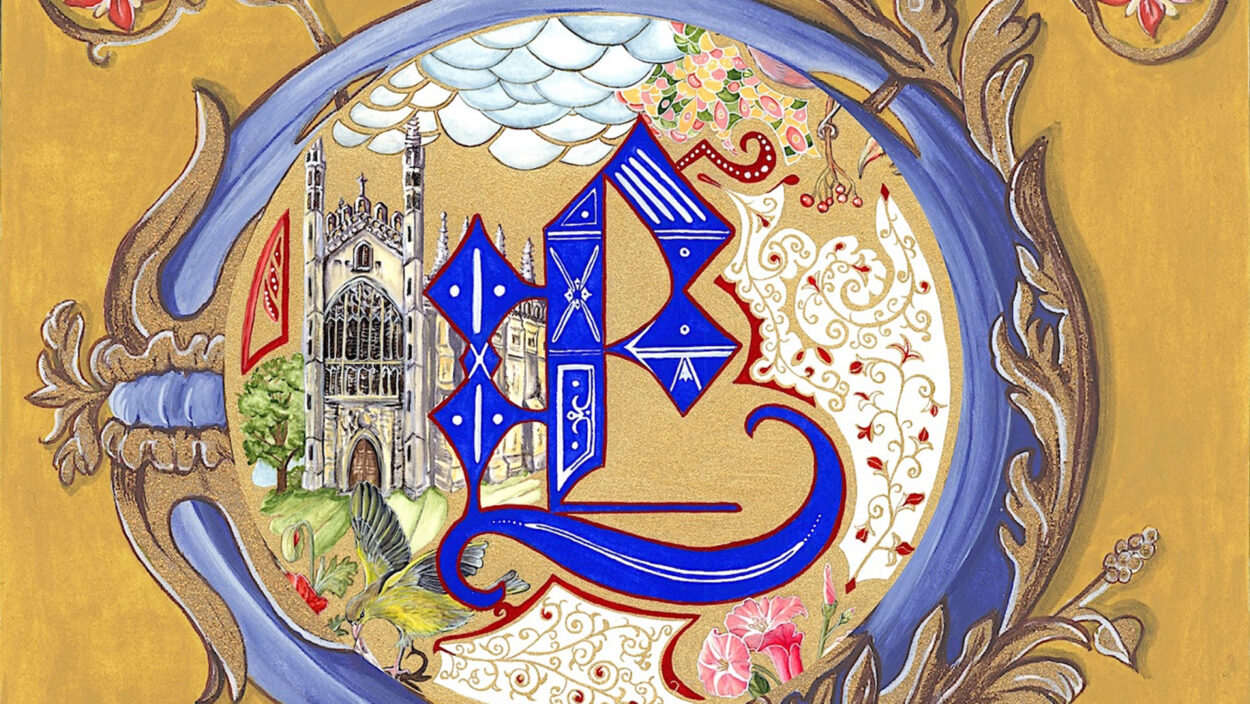
I just attended a lovely day learning how to paint on vellum with one of our IBA members, Jackie Day, as tutor. It was a very splendid day as reported by member, Doreen Taylor, in her report below (and below that is a little film of snapshots of the day):
On Wednesday 8th May seven IBA members gathered together at Santon Downham Village hall for our latest group tutorial workshop, “Painting on Vellum”, with Jackie Day. It was a joyfully sunny spring morning: the trees looking scrumptious in green taffeta, buttercups showing off in the fresh green grass, and the sky a clear watercolour blue. After the obligatory coffee and biscuits we settled down to learn all about the nature of vellum. What it is, which is calf skin, how it is prepared for painting and how it behaves under an artist’s brush. For example, if vellum gets wet, as it dries it will revert back to the curves of its original shape. Unlike paper, the paint will just sit on the surface of vellum, so it is easily disturbed. On the plus side, as long as the paint is a non-staining (transparent) colour, any mistakes are easy to remove. It is a demanding support and needs to be handled with care. It will not tolerate grease so must be held in place only by its four corners. Being a bit of a shape-shifter it is sensitive to the air quality around it so in framing it needs to be anchored by the top edge only, giving it freedom to expand or contract at will. Painting on vellum is a slow, ultra careful process of dry brush work in thin layers, using very fine brushes with a touch as gentle as painting on a butterfly wing. What is nice is that colours can actually be mixed on the surface layer by careful layering—each layer of colour showing through the next with a resultant vibrancy which is not possible on paper. So areas of differing colour, say on a leaf, can be blended together with much more control. Big bonus in my book! We had our lunchtime break outside in glorious sunshine, enjoying chatting to each other as we always do. Then it was back to our paint brushes, and a tranquil and productive afternoon. Unusually for us the chattering soon dwindled into the silence of being totally absorbed in what we were trying to do. A lesson in mindfulness if ever there was one. Jackie was an excellent tutor, making the class extra nice by thoughtfully providing background music of gentle birdsong (Birdsong.FM). At the end of the afternoon it was time to gather round and admire each other’s work. The results were stunning, especially for first timers painting on Vellum. Thank you again Jackie from all of us for a hugely enjoyable and profitable day. And I for one can’t wait to carry on with this fascinating and ancient craft that is painting on vellum. (Doreen Taylor)
I AM GIVING A ONE-DAY WORKSHOP (adults) IN THE LADY CHAPEL, ELY CATHEDRAL ON 12TH OCTOBER 2023: DESIGN AND PAINT AN ILLUMINATED LETTER. PRICE £40
Suitable for all levels, if you fancy a day’s creative painting in this beautiful chapel, tickets are available direct from the Box office at Ely: CLICK HERE TO BOOK YOUR PLACE
ALSO: AN ART EXHIBITION CELEBRATING THE LIFE OF QUEEN ETHELDREDA: HERBALS AND HARVEST IN THE LADY CHAPEL, ELY CATHEDRAL
Friday 29 September – Friday 13 October
The Iceni Botanical Artists (IBA) are a group of artists based in East Anglia. The members use a wide range of styles, techniques and mediums to depict the plant world, as well as striving for botanical excellence. Their aim is to promote the creation and enjoyment of botanical art and illustration. Some of their members have work held in National collections at Kew and the Royal Horticultural Society.
Each year the IBA have one or two exhibitions, usually in Norfolk, Suffolk or Cambridgeshire. This year they are proud to be able to exhibit in the Lady Chapel for the first time, as part of the Cathedral’s year to celebrate the life of Queen Etheldreda. The theme of the exhibition will reflect her life in flowers and plants, the recently planted Ely Physic Garden, and Harvest Festival celebrations.
All the work exhibited will be for sale, as well as cards, prints, and an IBA 2024 calendar. Two workshops will be held during the exhibition for those interested in learning about botanical art, or for the more experienced to refine existing skills. These workshops can be booked via the links below:
National Women’s’ Register 60th Anniversary Wednesday, 26th February 2020, 2.30–4.30pm The Athenæum, Bury St Edmunds
Water Colour Workshop by Tina Bone (Tina’s Fine Art UK)
“Ernie…and we had the fastest Art-Class in the West”. Well, East actually! A Fellow Iceni Botanical Artist, who had volunteered to run an Art Class at the National Womens Register 60th Anniversary celebrations, found she had double-booked herself and asked if someone could help out. I jumped at the chance to perform my second tutorship. I said “Yes” before really finding out about it and was a bit shocked when told the class would be for two hours only.
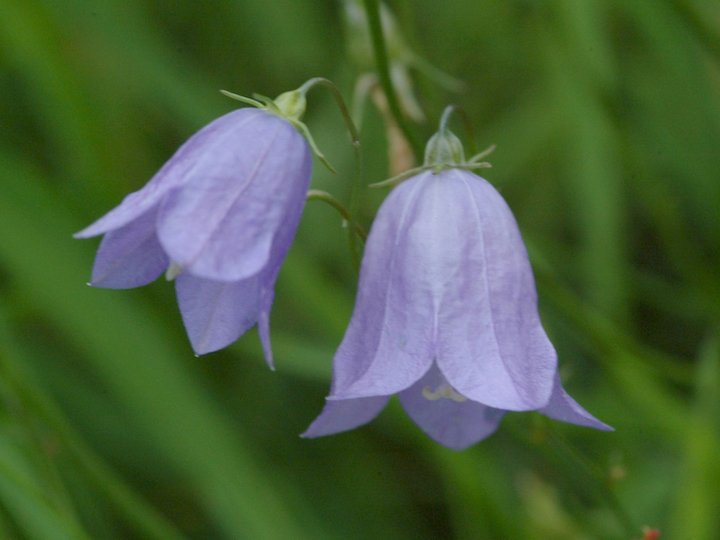
The lovely little Harebell (Campanula rotundifolia L.) The subject of the Workshop
The theme of the workshop had already been fairly settled (Breckland Flowers), so I capitalised on that title and came up with: “Breckland Flora and Elementary Water Colour Art Workshop”. The main reason being that, in two hours, the teaching had to be elementary.
Setting thoughts to paper I came up with the idea that a full-on worksheet, distributed to the students before the event, would be the right way to go, and promptly set about composing it. Then I suddenly remembered that in February there are no Breckland flowers—what a dampener. So I turned my attention to the fact that we could use photographs instead (unacceptable if we were doing a “proper” botanical painting).
I studied the list of botanical paintings which had been published in the Iceni Botanical Artist’s book: Breckland Wild Flowers, Heaths and Grasslands*. I just loved the beautiful and delicate little harebell painting and decided that this would be a good subject for our two-hour, fast-painting-session. The artist had several lovely resource photographs which she allowed me to use and she also lent the original to me to put on display on the day. (*Advert: Books can be purchased from: Jarrolds, Ceres Bookshop in Swaffham, Brandon Country Park, and from the IBA website)
So, with a quick look-up about the (most interesting) Brecklands themselves, the resource photographs, and some very quick working drawings and colour cards I managed to concoct a programme which I thought could be carried out by multi-artistic students and myself in two hours. Click HERE to download the pdf worksheet, in the hope that it might be of interest to budding artists.
I was literally gobsmacked by the beautiful work that resulted after just two hours—it was a wonderful experience, and I thanked the students for attending. Below is a little timepiece I have put together of the workshop progress, and below that is a fuller version of events if you prefer to linger here longer.
Here is a little slide show of the day’s events. It is easier to see if viewed full screen.
And here is a bit more information about the whole day:
On
the day, it was good weather (after a real threat of snow!); suddenly
my husband decided he would come too—but
only because the golf course was closed!!
He valiantly packed the car for me (all equipment and materials for
the day were supplied by me) and off we set. The workshop was due to
start at 2.30pm; we left at 11.15am. This was a good thing because
when we got there the streets were closed and the satnav took us on
an unexpected route. As we were going down a narrow street “she”
suddenly said,”You have reached your destination on the left”.
All we could see was a big archway that led into a hotel. But I could
see the Angel Car Park through the big archway, so instructed husband
to back up and we drove through it! (Got our hand smacked because
apparently that was for hotel guests only and not visitors to the
Athenæum.)
However, we managed to meet up with the organiser of the event
and
her husband in
the car park
who very kindly helped with carrying all the gear up to the first
floor. It was an extremely good thing that hubby did come purely
because the Angel Car Park is a short-term one, so he was able to
drop off and pick up—although he did get lost before finding his
way
to the proper car park!
I
had limited the workshop to 10 students because I only had equipment
and materials for that number and we ended up with a very pleasing 9.
After setting out the workstations hubby had arrived back and we sat
and ate our sandwich lunch, but with the beautiful aroma of a
wonderful cooked three-course meal being eaten by all the ladies who
attended the event which made my cheese sandwich taste very dull. But
refreshed and raring to go, hubby set off to savour the delights of
Bury’s old town and gardens (he
does like walking, as he does it a lot round the golf course) whilst
I demonstrated my skills to the 9 ladies,
who appeared to be glowing with contentment after their beautiful
meal and morning talks, and were now ready to try their hand at water
colour painting.
I
had a planned checklist for when to do what, but threw all that out
of the window because people like to ask questions, and I have to
remember what I am doing, and it
always takes longer to do something than the time allocated, and that
gets worse as one gets older…so I just played it by ear.
First
of all I talked about what we were aiming to do and mentioned that it
does not matter if mistakes are made—”Screw it up and start
again,
but most of all enjoy yourselves”.
I hurriedly showed them how to draw and trace their drawings onto
good paper, using the pre-drawn work-cards I had done and moved on to
showing
how to put
paint to the paper after they had completed their drawings. I even
showed them how to cut out a tracing element by using a lightbox
(although none opted to use it). They all drew lovely harebells;
some traced my drawing provided in the worksheet, others drew from
scratch by using the photographic resources, others again made up
their own compositions and some just traced the photographs. So lots
of different types of drawing, but all achieved good results.
These 9 remarkable ladies, some of whom had never picked up a pencil or a paintbrush, showed that an awful lot can be done and learned from a 2-hour session. Every student produced a beautiful piece of artwork, even progressing to the painting stage (although it helped that I had mixed the blues and greens beforehand).
What a day! It took ages to fit all the gear back into their respective boxes and load up the car again, and I suddenly felt very tired. Hubby suggested that we go for a meal in one of our favourite pubs on the way home, so that I did not have to cook our usual evening meal. Of course I was grateful for that and ended the day with a delicious steak, ale and mushroom pie at the Square and Compass pub in Great Shelford. We arrived home around 8.45pm and, after watching an episode of “Shakespeare & Hathaway” (or rather some of it because I kept falling a sleep), I slinked, very happily, off to bed before 10.30pm!