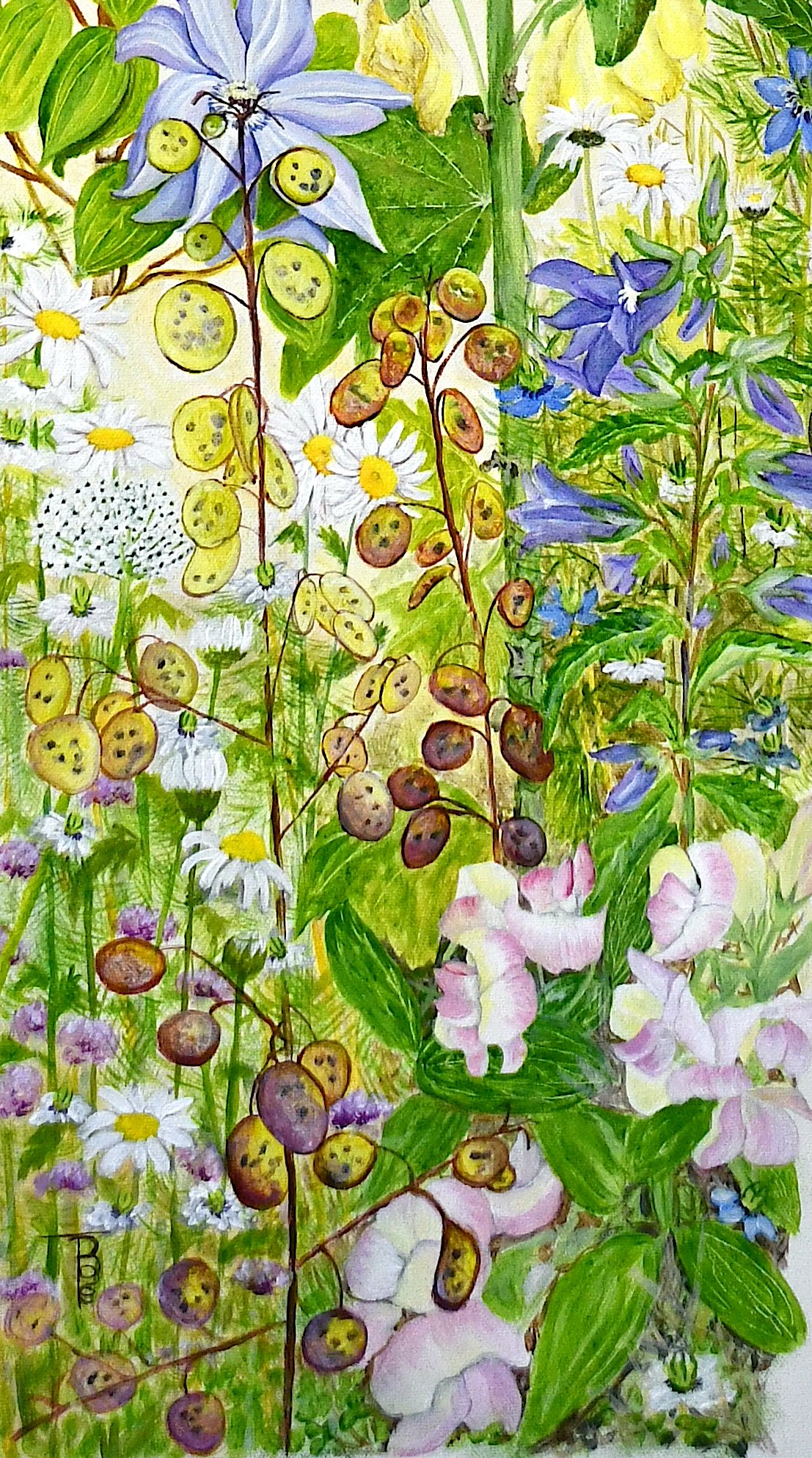
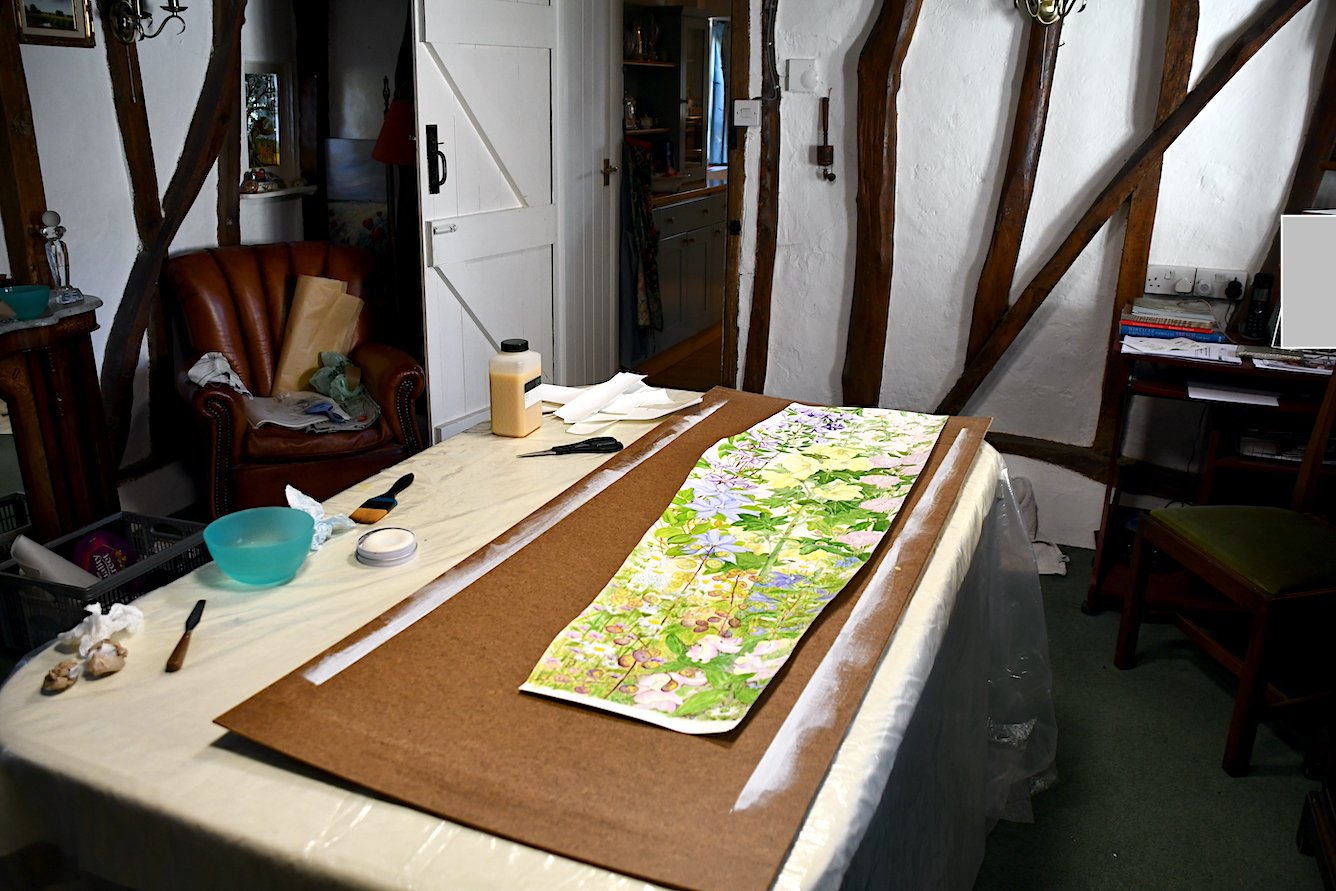
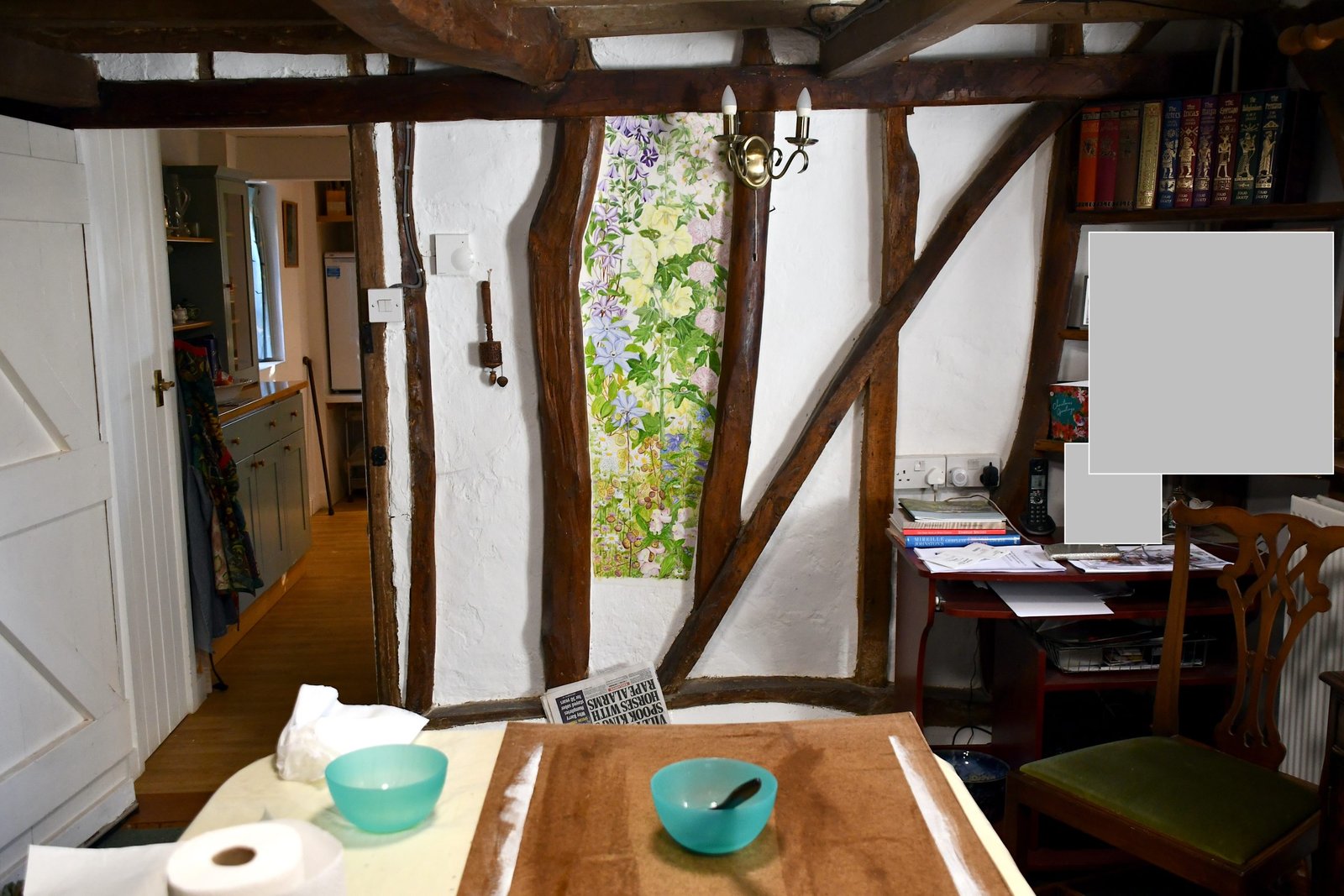
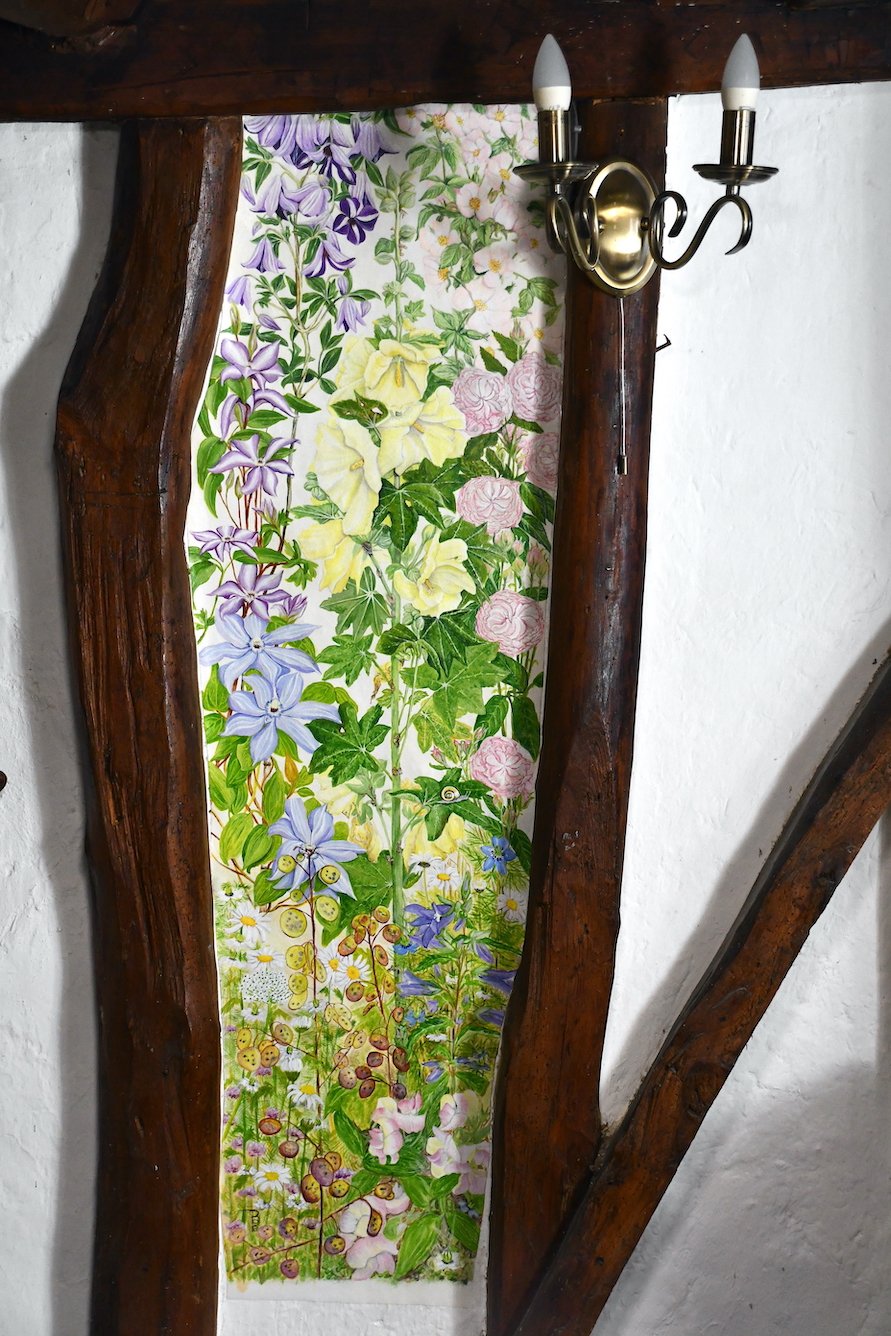
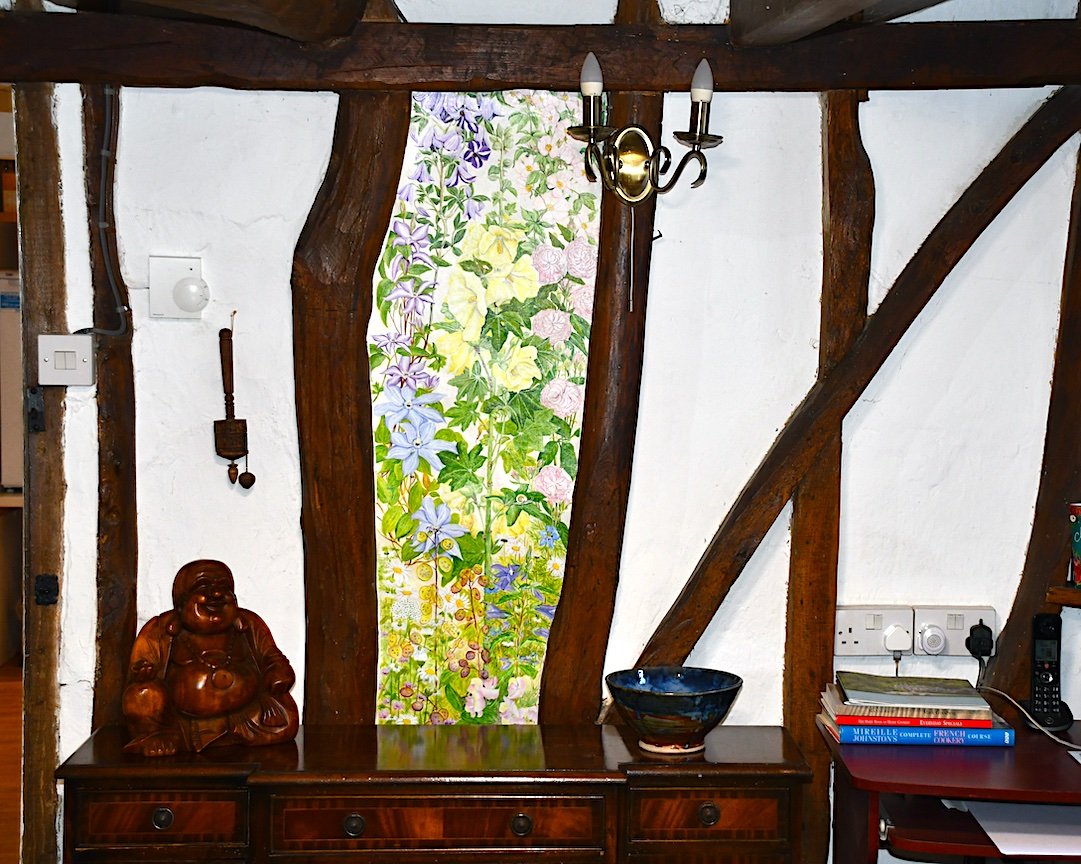
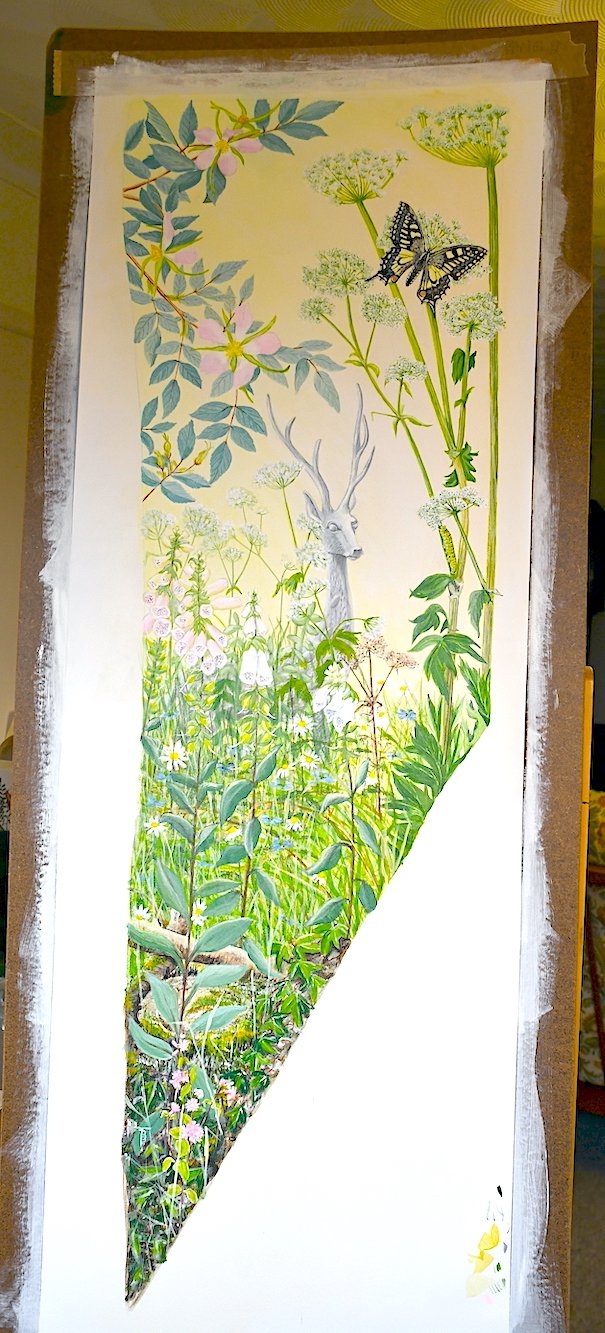
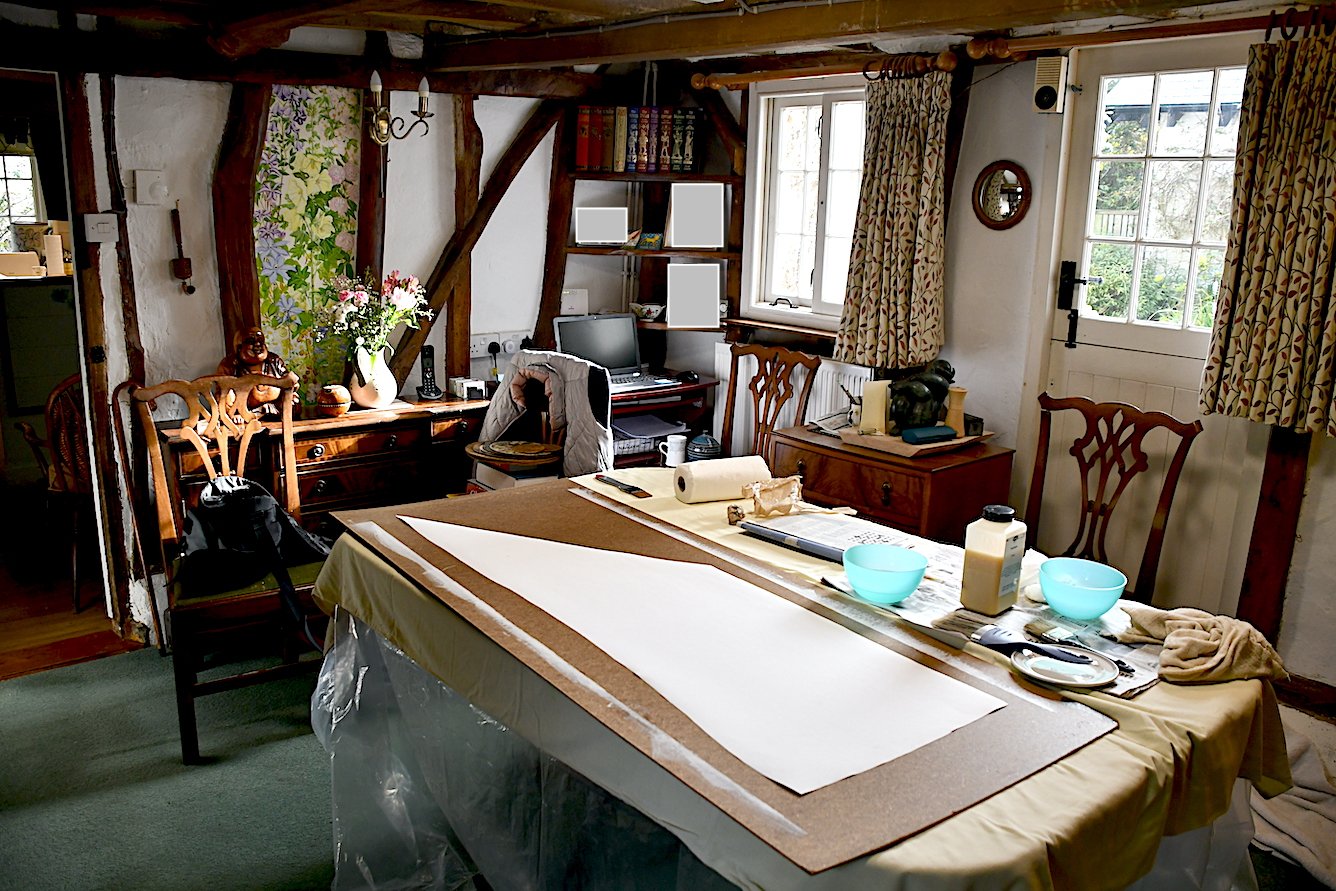
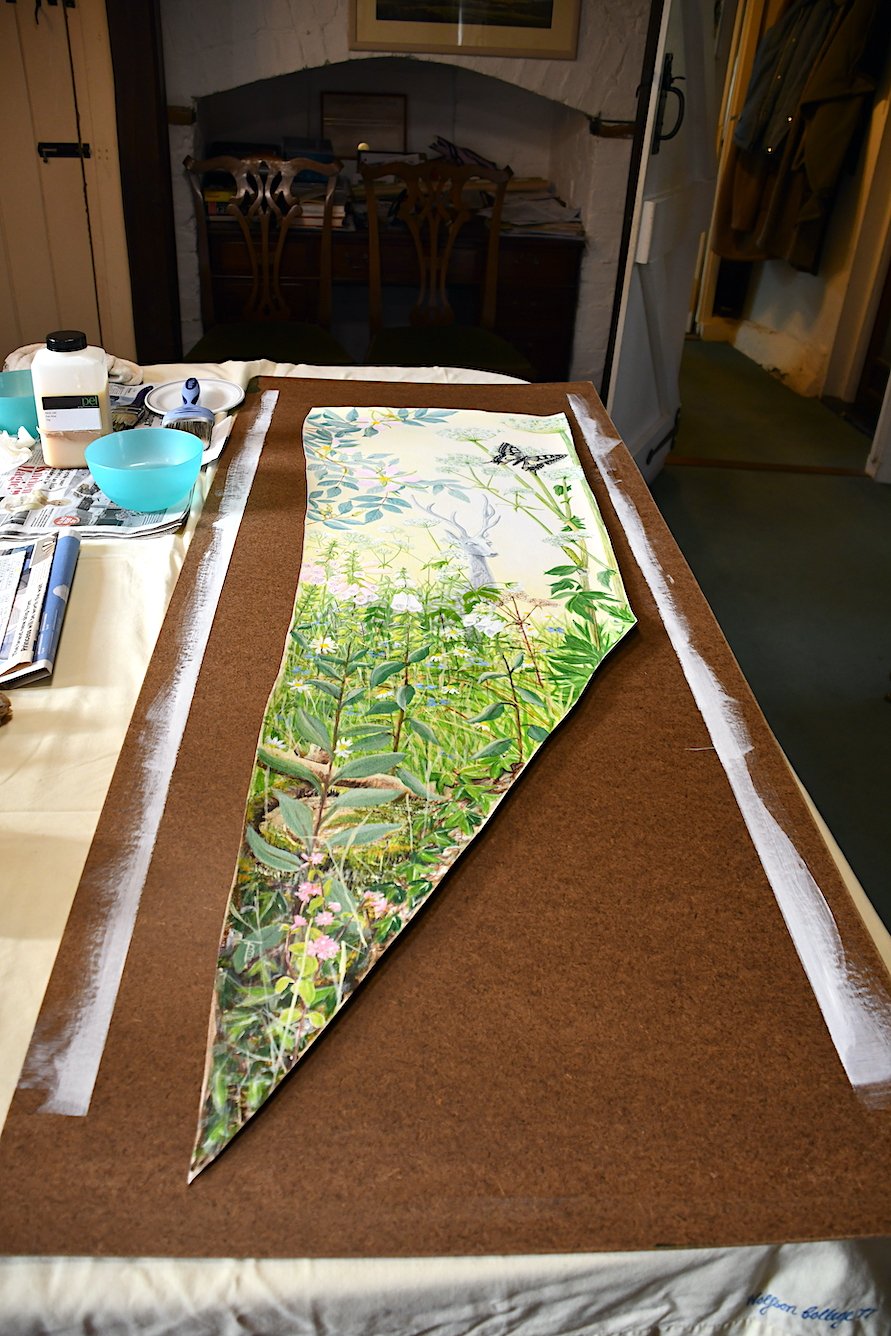
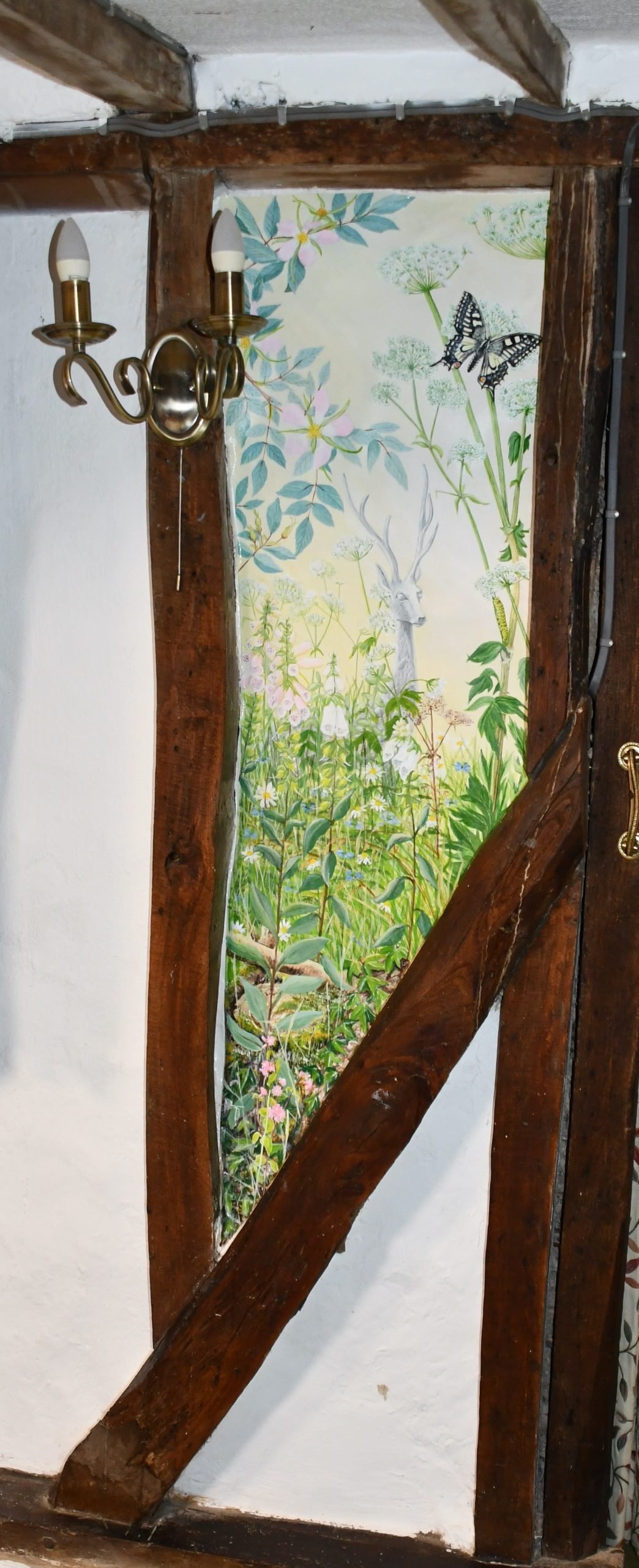
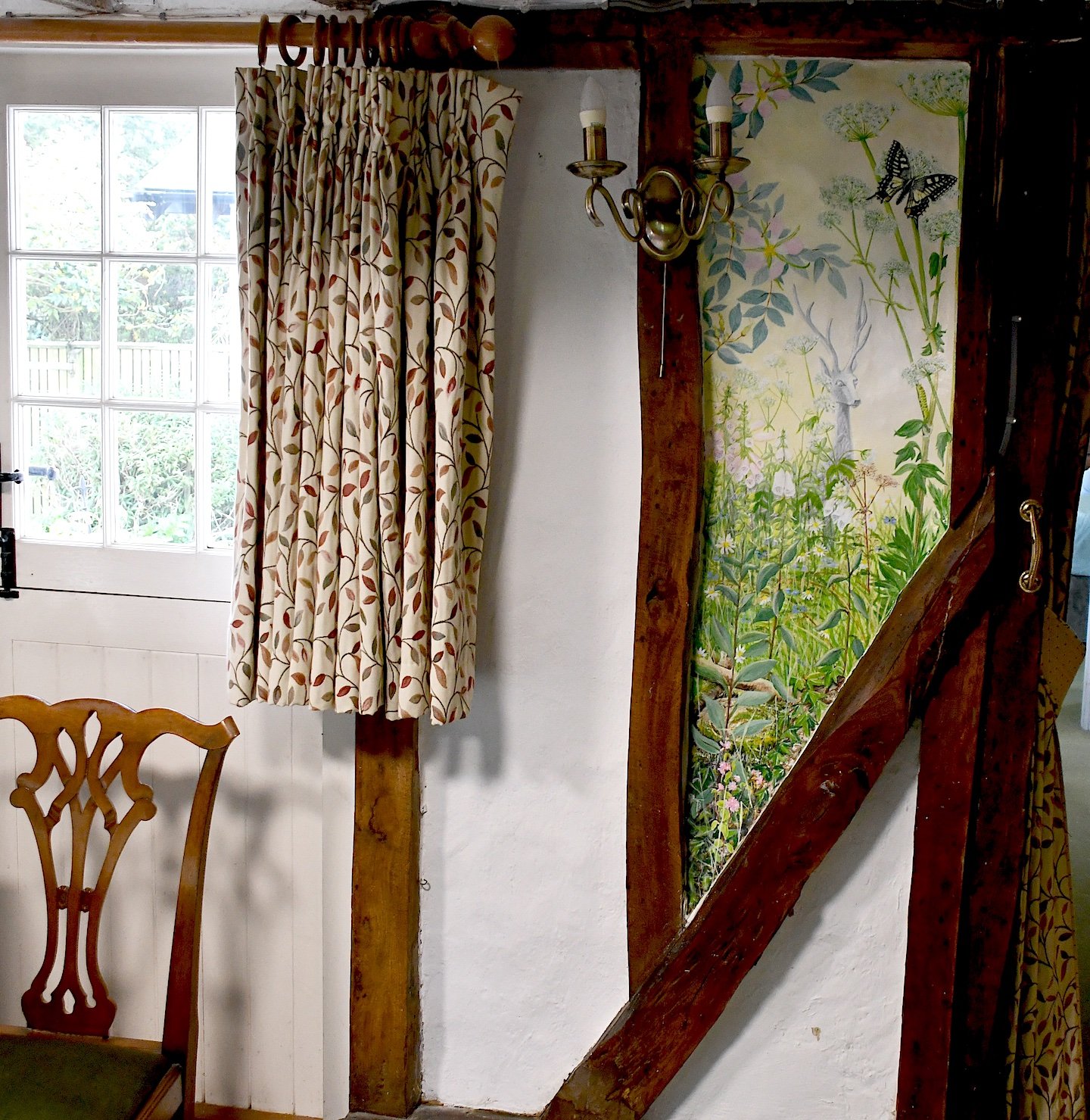
This was an unusual commission to paint two wall panels on canvas to then cut and fit between wall beams in a lovely listed cottage. Way out of my comfort zone, it took four times as long to complete as I had envisaged. But a wonderful experience nevertheless. Both panels measure nearly 50″ tall and 16″ at the widest part.
The Story behind painting Panel 1 “Bring the Garden Indoors” can be viewed here
Similarly, Panel 2’s progress “Bring the Wild Garden Indoors” can be viewed here
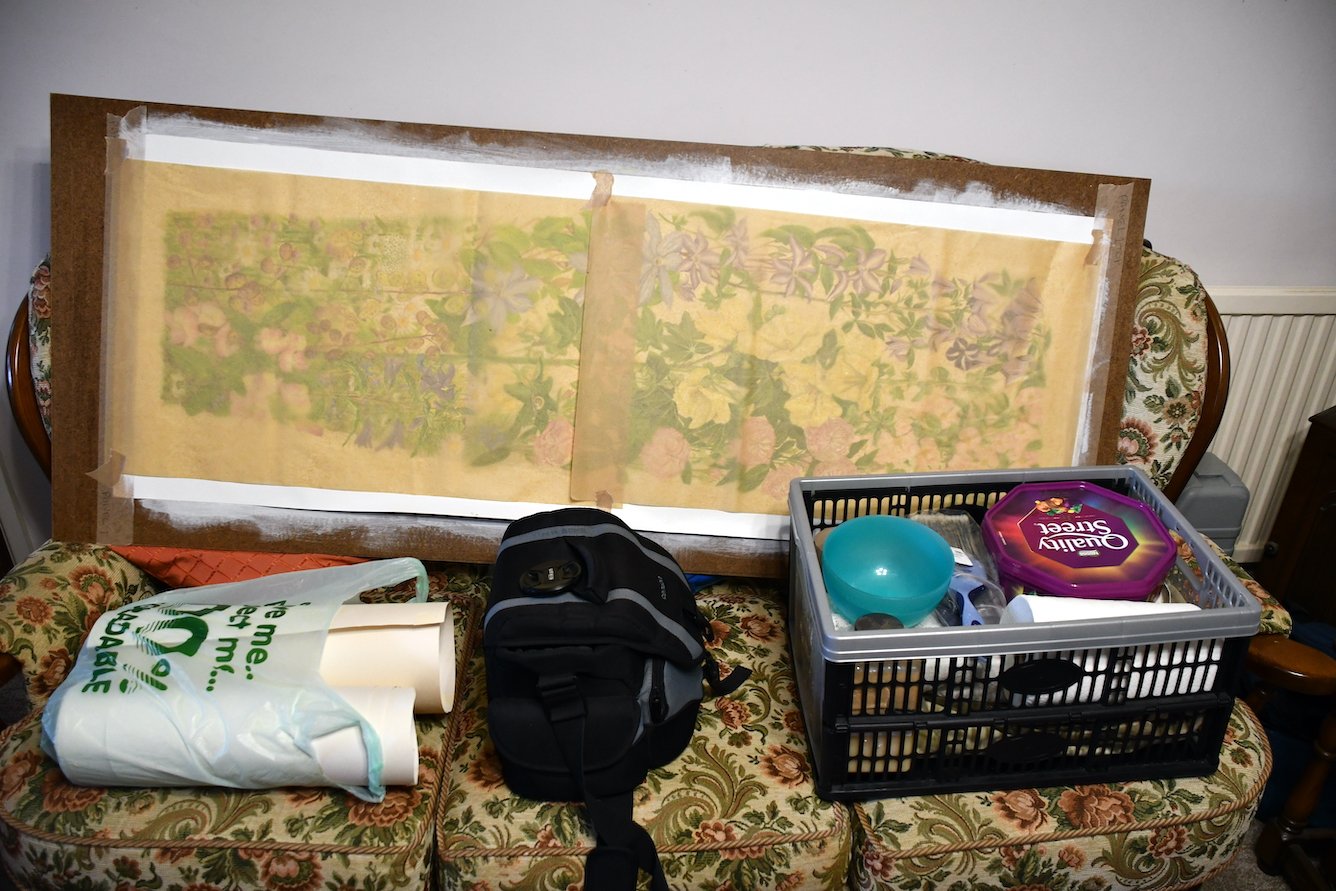
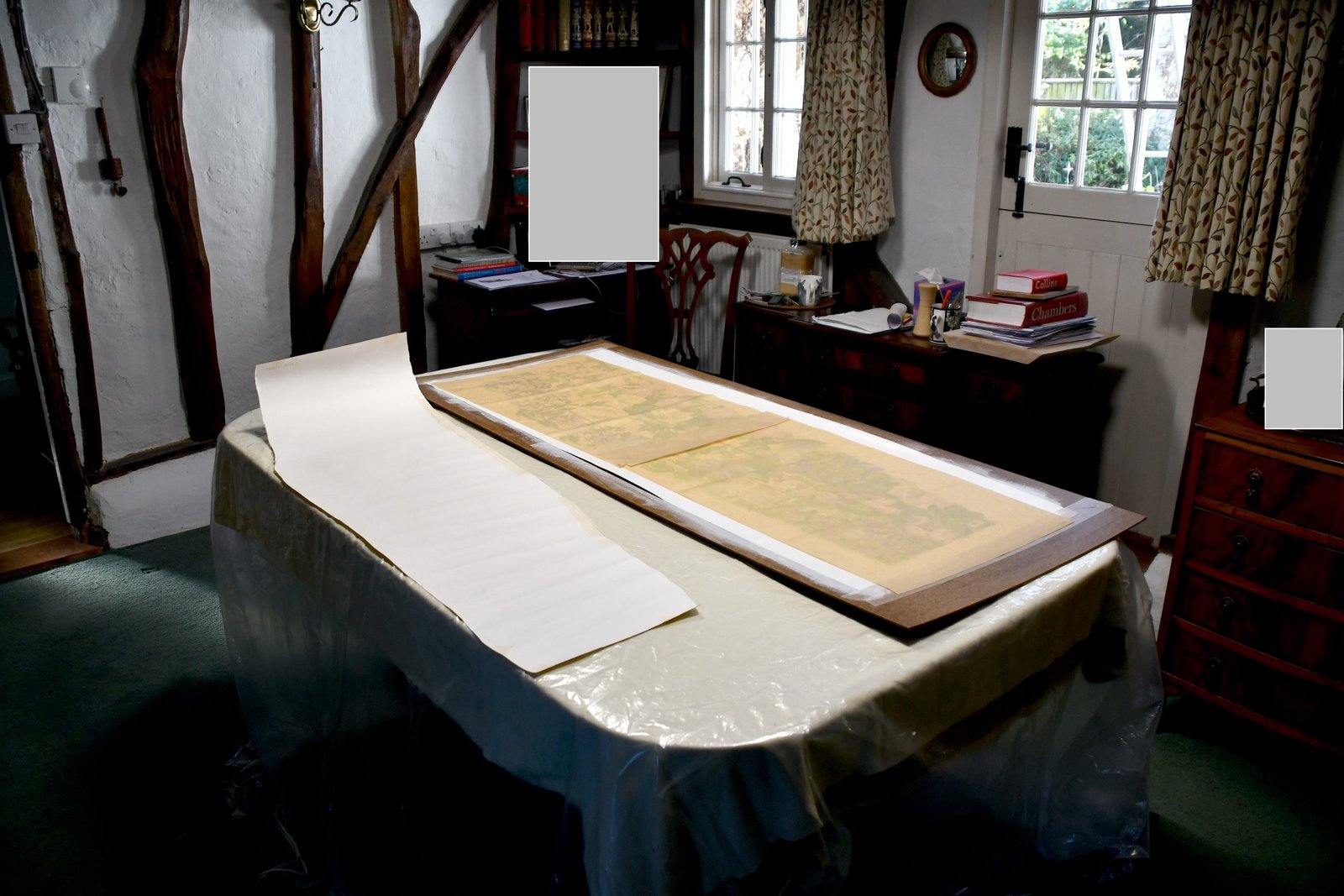
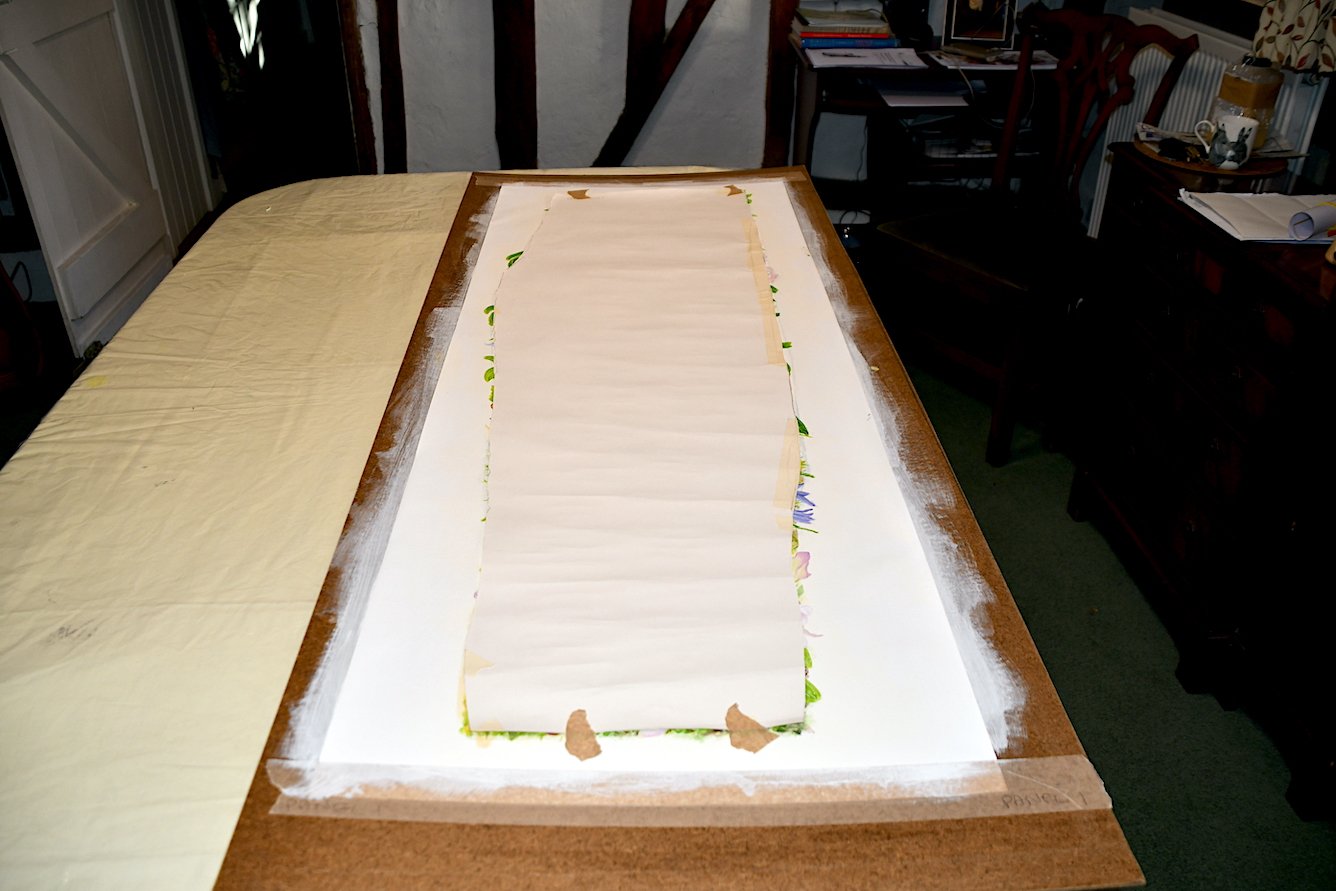
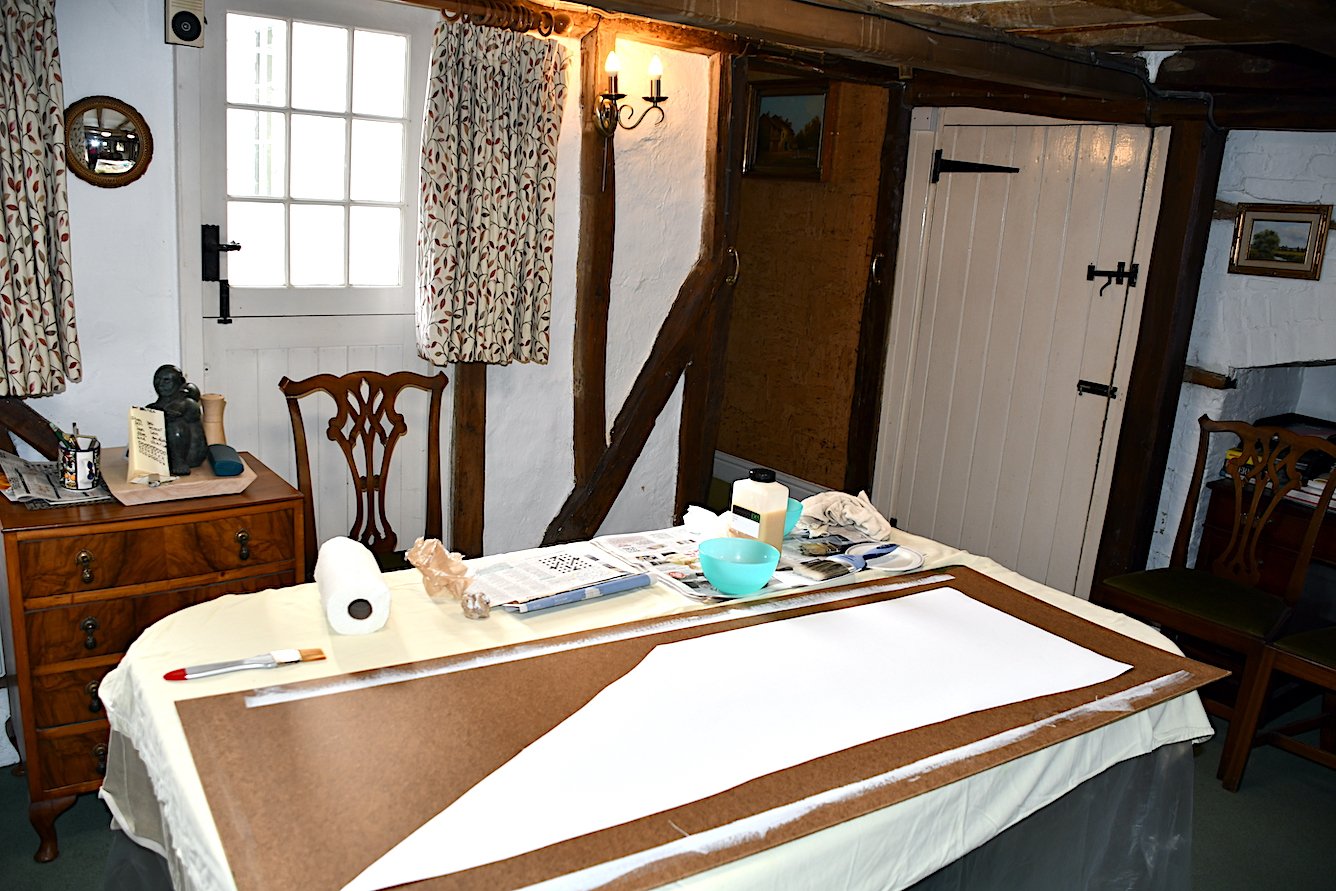
Here are a few photographs of the two panels’ installation, which in itself was a steep learning curve for me as I had to make paper templates by pressing old lining wallpaper into the shape between the wooden wall beams, then transfer these shapes to my specially purchased canvas which was silky and smooth and took 6 weeks to be delivered! Then I had to research the best glue for the job and learned all about fish glue and its archival properties. It is water based so that the artworks can easily be removed from the wall if needs be, and it worked a treat. The wall surface was extremely pitted and uneven, which meant that some areas of canvas had to be left unstuck in order not to stretch and damage the canvas and painting. I do not think I shall ever be easy about using acrylic paints. I never enjoy painting with acrylic nor do I much like the results—it will definitely NEVER be my preferred medium. The most nerve-wracking time was cutting the canvas to shape. Fortunately both times it went well and both are now nicely stuck to the wall (I hope for many years!).
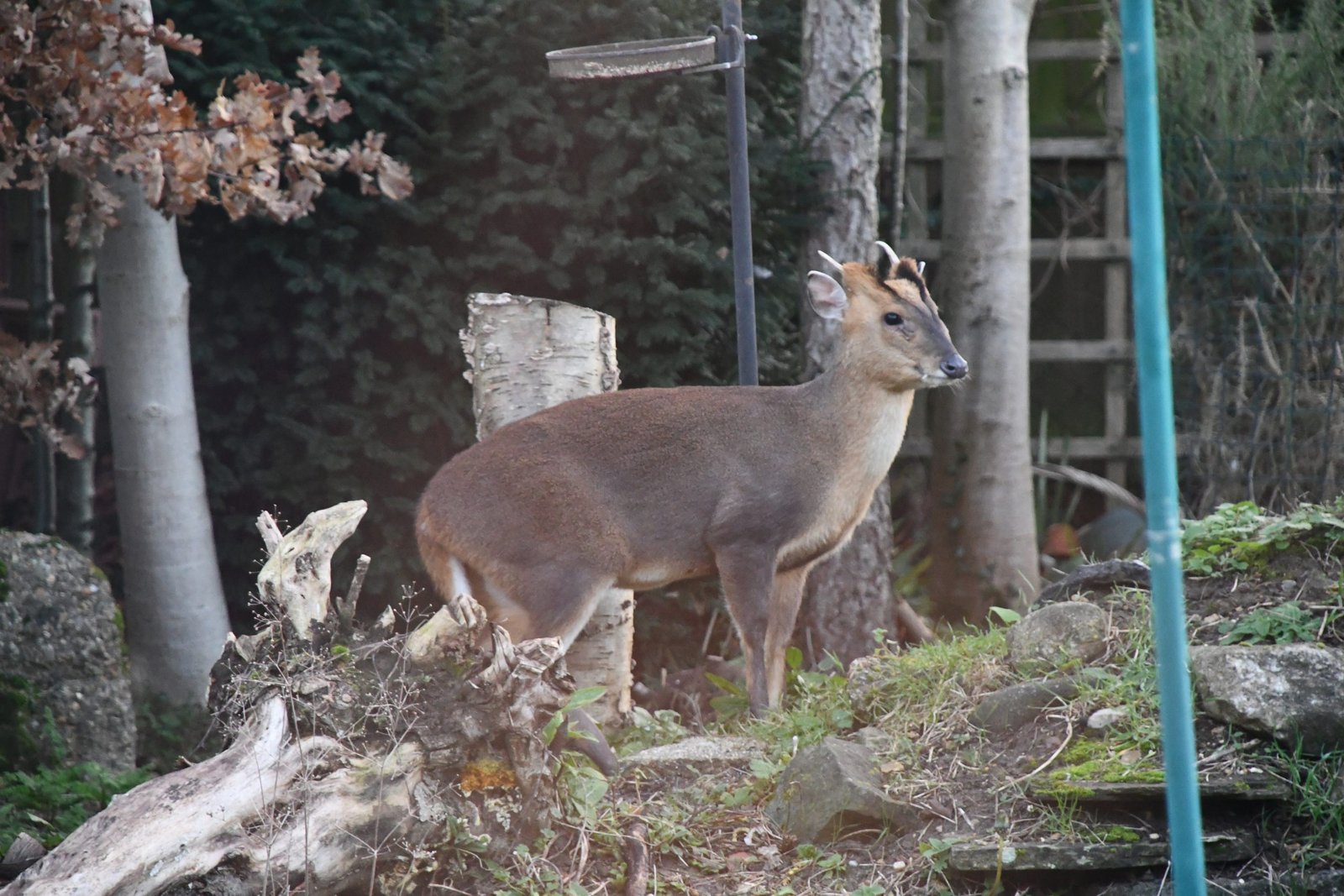
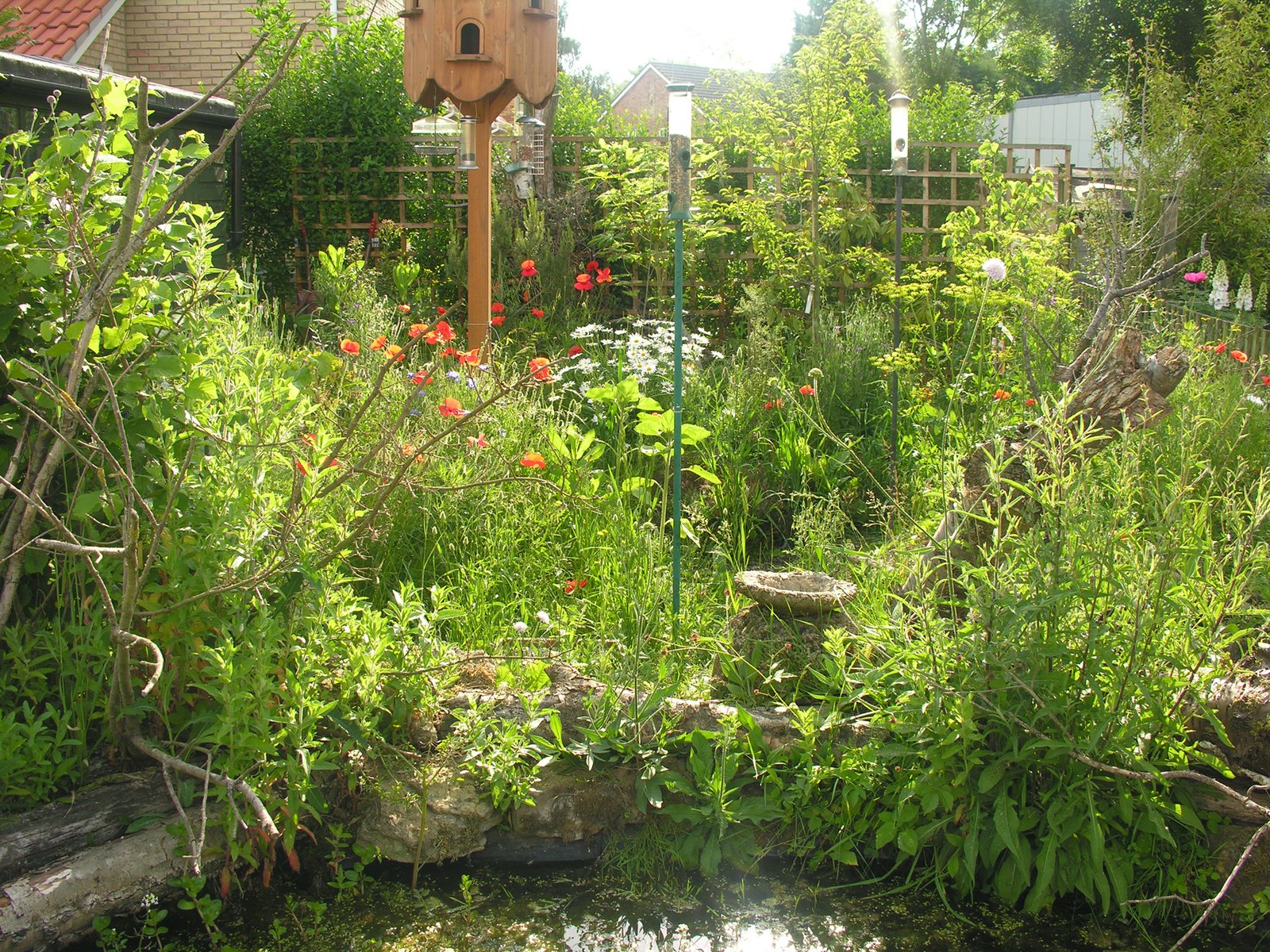
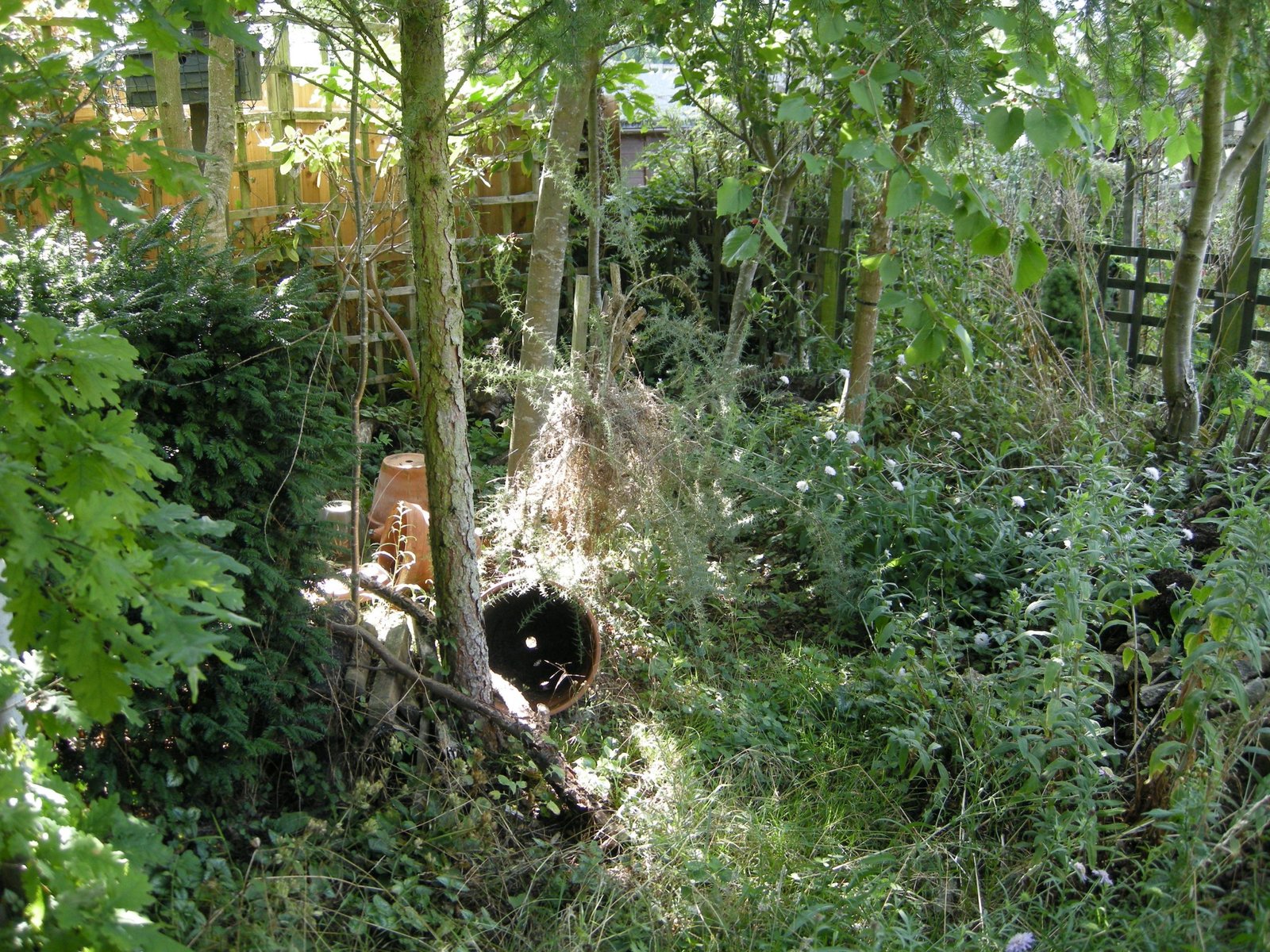
It is not a strange title really. My little wild garden has changed enormously since its original inception when we had myriad visiting animals and birds, as well as hubbie’s vegetable patch beyond. There was also a beautiful privet hedge along the bottom, which, along with mature ash trees, was supposed to be protected from removal, but which have now been removed (housing development). The photograph shows the original wild garden design which flourished with all manner of incumbents. We had hedgehogs, pheasants, muntjac, woodmice, the occasional black rat (which, in full view, chomped the seeds of common vetch), and black and grey squirrels. Birds galore included chaffinches, greenfinches, goldfinches, longtailed tits, coal tits, blue tits, great tits, red poll, starlings, blackbirds, crows, magpies, jackdaws. Amphibians and reptiles: common frog (about 50), two little toads, common newts, grass snake (from next door’s compost heap). We even had a green parakeet visit the bird feeders (view story here).
2008: Original little wild garden, veggie patch and privet hedge.This photograph was taken in June 2010 just after the trees (and dovecote) were planted. The dovecote cost £400 and disintegrated in December 2020 (husband called it my “Brown” elephant! As you can see, wild flowers and grasses are abundant, even sunflowers sprung up from dropped bird seed. Sprigs of the privet hedge are still in view, but disappeared soon after, and now (2019) a 6ft solid wooden fence has been constructed, blocking even more light – but the shade-loving wild plants such as aconite, snowdrop, lesser celandine and stinking hellebore will hopefully still grow.
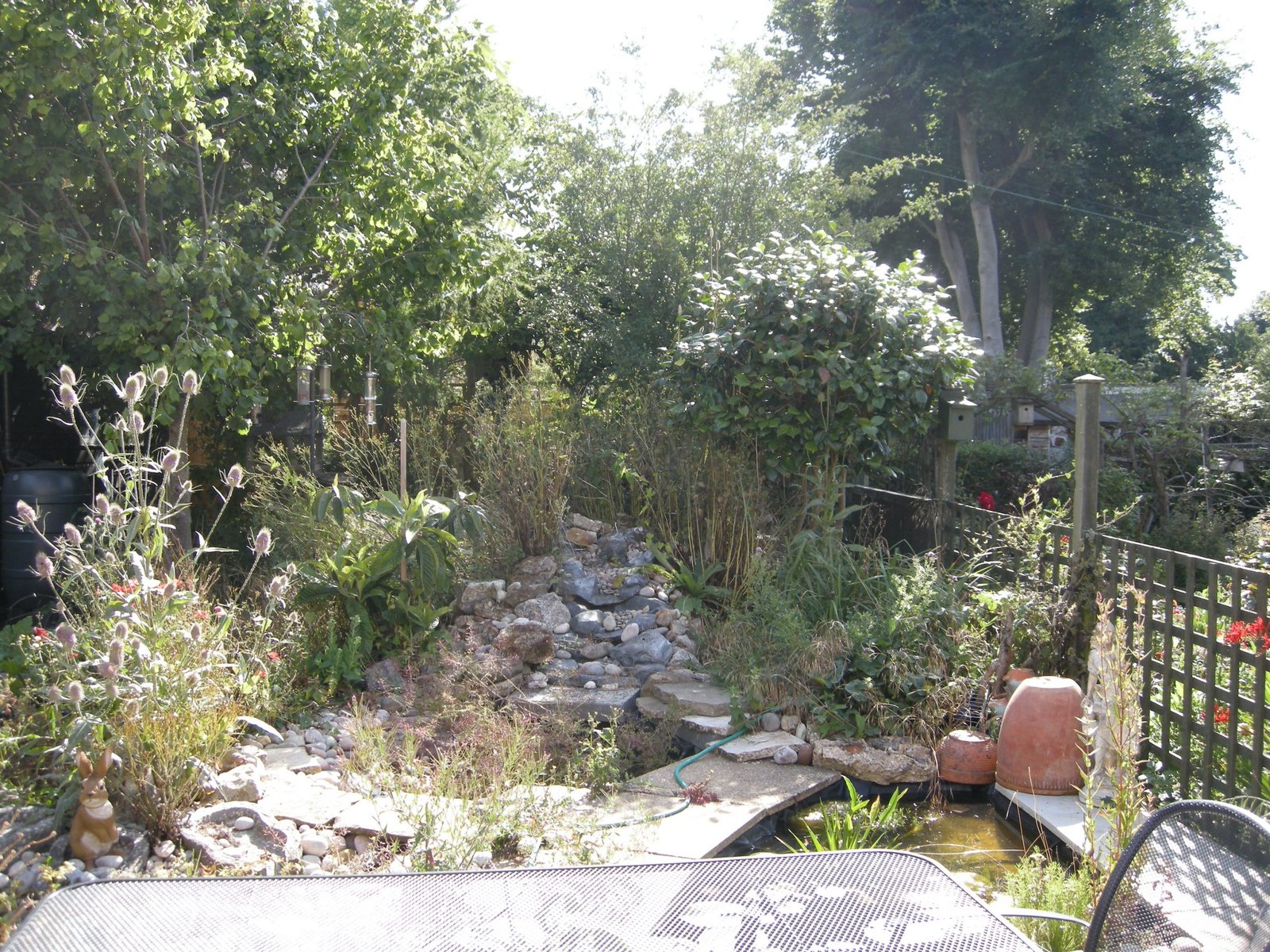
After the removal of ash trees and the privet hedge by the owner of the new property at the rear of our garden, I planted lots of trees to shield the view of the new buildings which had taken away our beautiful green-space views (and, sadly, for a while my sanity—there is so much heartache and sadness associated with losing nature, when the loss of the trees and hedges which we had enjoyed for over 40 years were very suddenly not there). Planted tree species include: holly (x2), yew, rowan, walnut, oak, cobnut, horse chestnut, larch, Scots pine, crab apple, sweet chestnut, hawthorn, box, gorse, cooking apple, mulberry, and a loquat and olive tree which have since been moved to the front of our house to the Mediterranean herb garden where they are more protected from the cold.
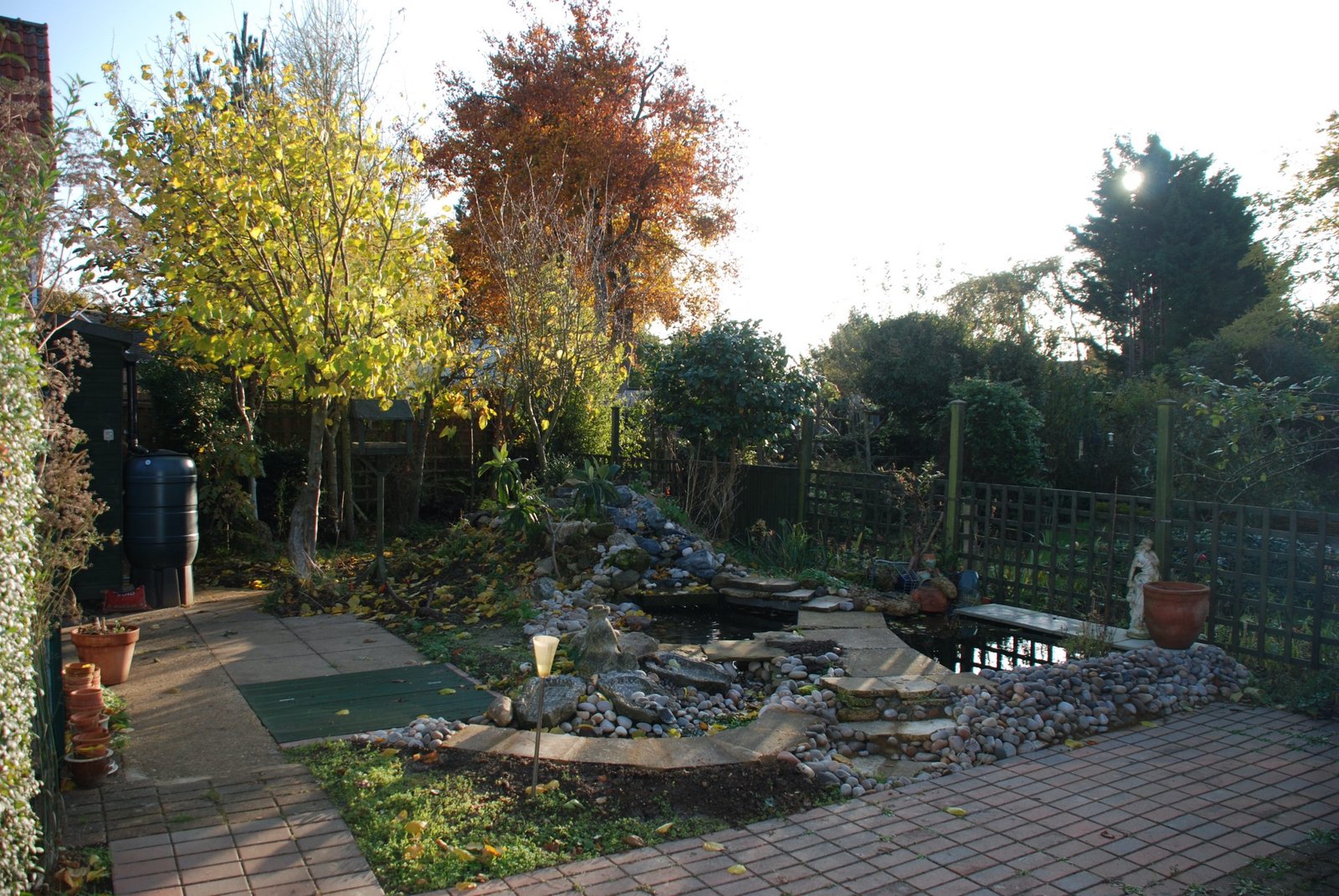
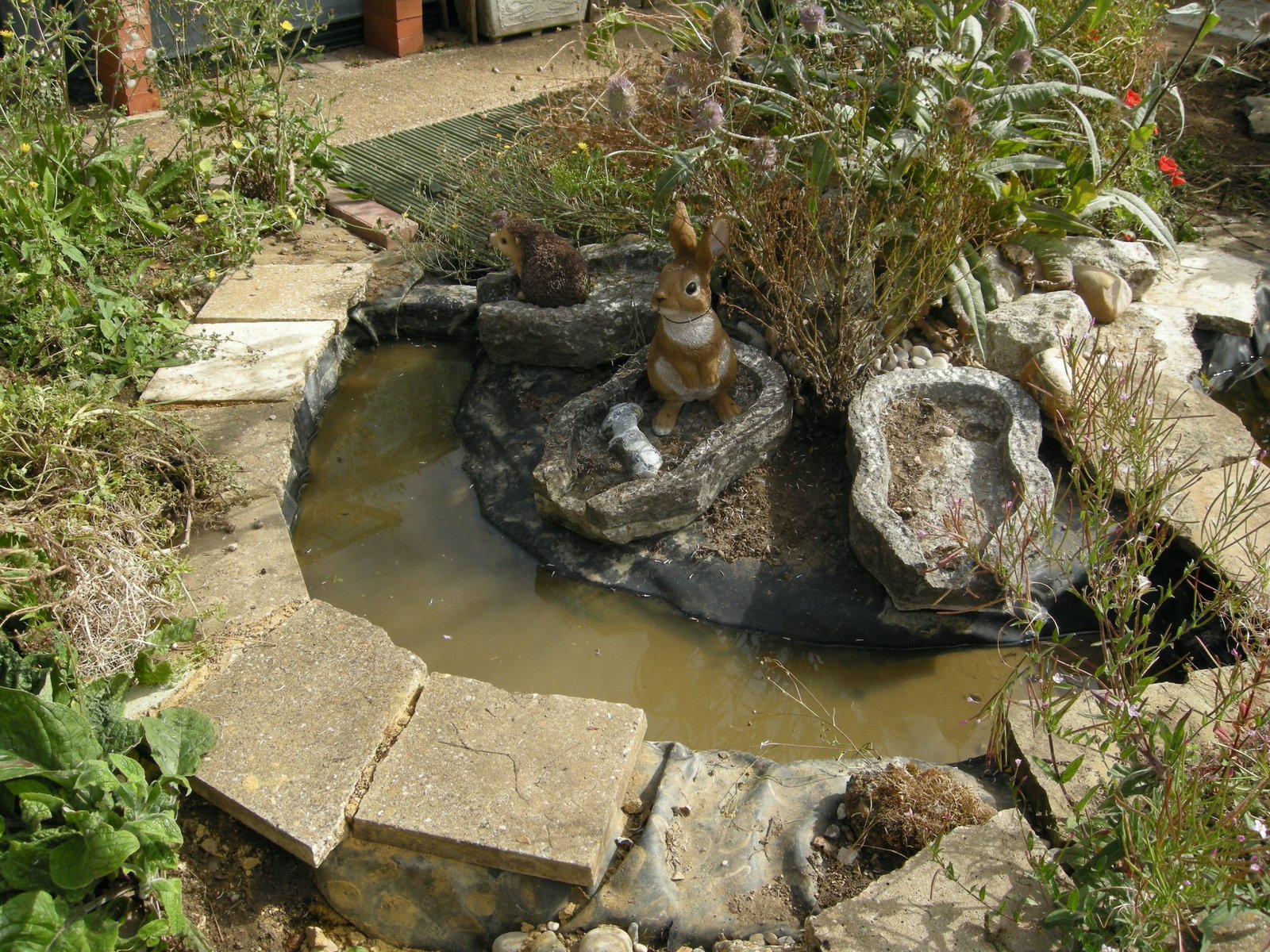
The cobnut, left, has since been removed because it ran amok! Note the large beech tree, centre, is in the telephone exchange beyond our garden, which has now been viciously “pruned”…and as we do not get any animals now I succumbed to “pretend” ones! Note the horrid colour stream with no plant life. When we first put in the stream I had water cress growing in it, but everything deteriorated over the summer. No wildlife, not even a frog or newt!Left, oak, yew, horse chestnut (behind) rowan (skinny stick) larch, crab apple, gorse in front, sweet chestnut and cooking apple. The big leaves top right belong to the mulberry tree which fruited for the first time in 2020.
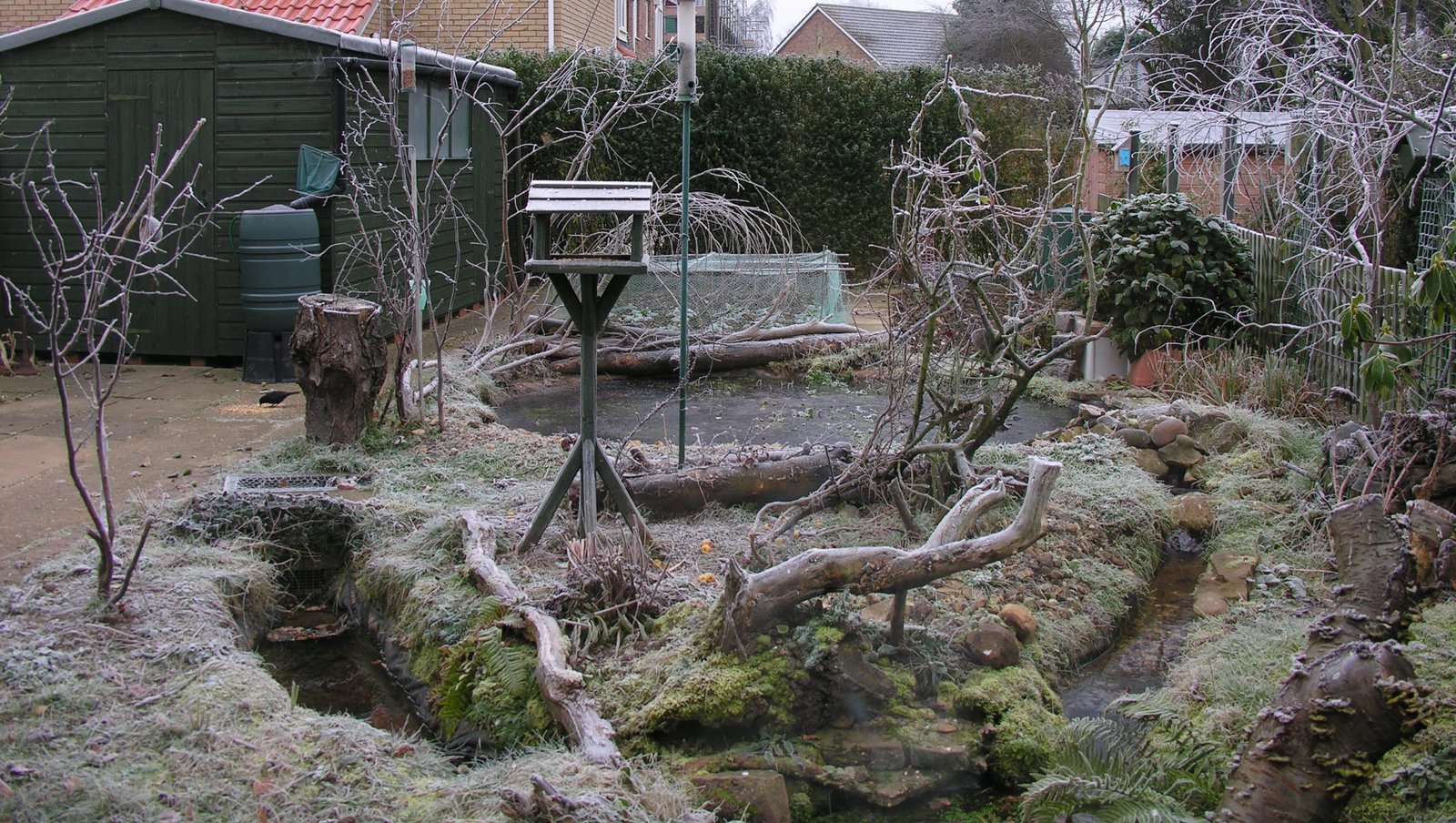
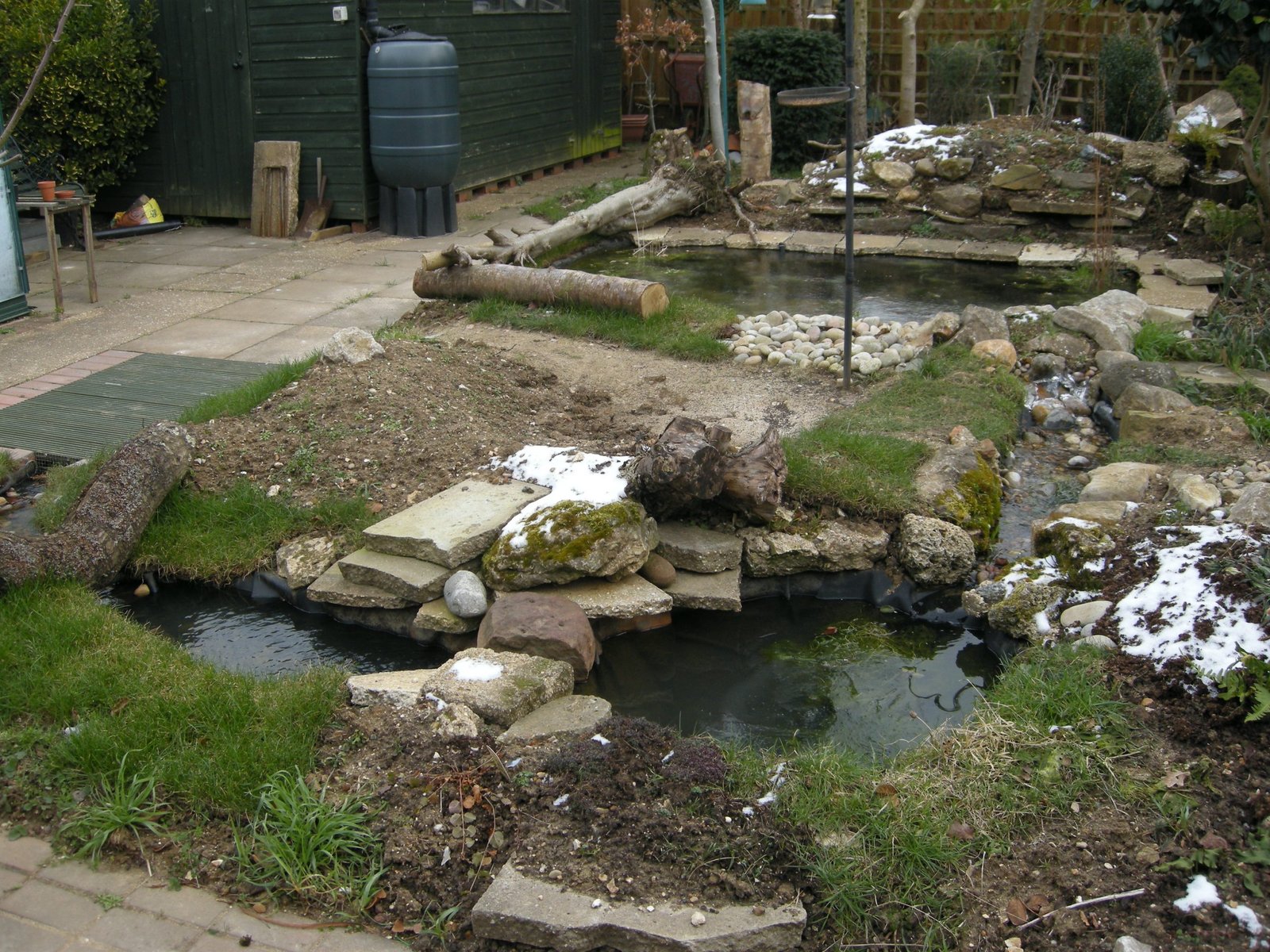
And so to the present. After much deliberation and angst, it has come to what you see below. The outlook is promising. The “chalk” stream is functioning well (Ranunculus is growing), and blackbirds and starlings have started to bathe again. The transported water plants in the pond appear to have survived, although the pond is now used so much by pigeons for their daily bath, there is much green algae growing due to the added feather-dust and poo nutrients. (Sadly, my 2021 big garden birdwatch only listed 2 blackbirds, 2 starlings, 2 wood pigeons, 2 ring-necked doves and 3 greenfinches, which have not been around for a couple of years or more.) I await the spring to see what flowers pop up, including the Pasqueflower whose seeds I will be planting on my little south-facing chalk hill which you can see in the next photograph left of centre with a large piece of chalk stone at the top! Because we are mostly clay-based soil, I have had to improvise a bit – but it is working.
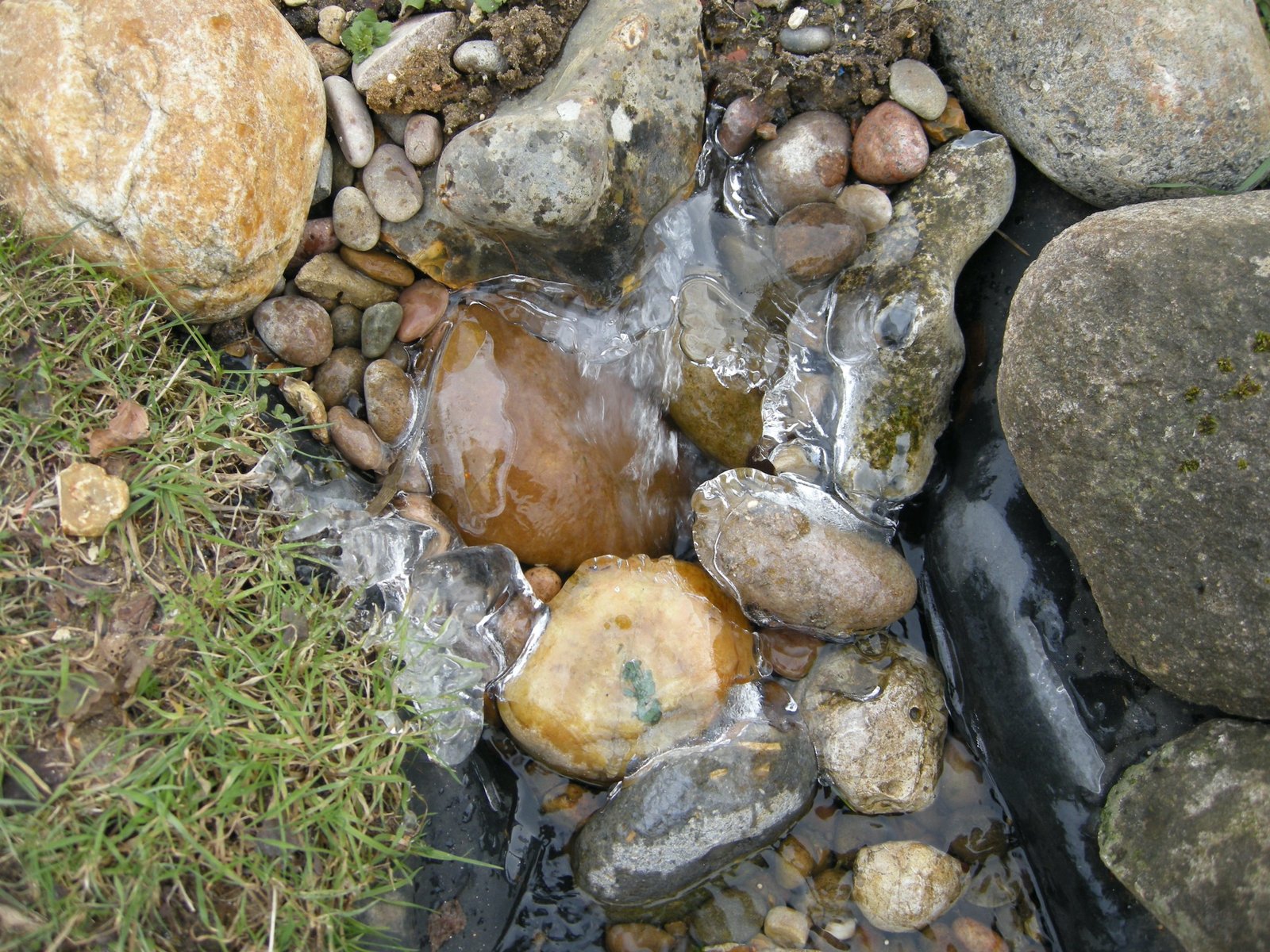
Taken this morning (14 February – ooh, Valentine’s Day!). You can see to the left of the pond that the trunk of the cobnut tree is lying prostrate to provide nourishment for insect critters etc. The log lying in front of it is one of five which I purchased from a Norfolk farmer for £20 (we managed a few days away in the caravan in October 2020) and which are dotted about the garden and will soon be “old” wood which the insects love (I hope we get lesser stag beetles again which we had in the original garden under an old cherry stump (read the story here)……and our “bubbling” spring had a ring of beautiful ice shards this morning, where it rises miraculously from the ground.
I have quite a few packets of wild seed to sprinkle about, plus I purchased some wild flower plugs last year (some of which have survived!) and intend to plant them soon. Hopefully there will be an abundance of flowers like I had before. One can only hope!